
Blog
Broward & Miami-Dade Car Owners: 3 Steps to Pick a Paint and Body Shop
South Florida car owners: three practical steps to choose a paint and body shop that documents OEM parts, handles ADAS calibration, and provides a written...
The right choice is a certified collision repair shop that documents OEM parts options, performs ADAS calibration, and puts its warranty in writing. Before you approve any work, get a written estimate, confirm who handles ADAS calibration, and ask about parts policy and expected completion date. Those three steps filter out most of the shops you should avoid.
TL;DR:
A certified collision repair shop should provide a written estimate, clarify who handles ADAS calibration, and specify parts policy and timeline before starting work.
The repair process includes seven stages from disassembly to final inspection, with hidden damage often found during disassembly, which can add time and cost.
Costs vary based on damage extent, parts choice, and paint complexity, with OEM parts generally offering better fit and performance, especially near sensors.
For EVs and luxury vehicles, shops with specialized training in structural, battery, and sensor calibration are essential to ensure safety and proper functioning.
Maintaining a detailed, written record of estimates, supplements, and communication helps protect against disputes over parts, calibration, and timelines.
Table of Contents
What Does a Paint and Body Shop Do?
A paint and body shop repairs collision damage and refinishes the exterior so the vehicle looks and performs the way it did before the accident. That sounds simple. It is not. The standard repair process runs through seven distinct stages, and understanding them is how you read an estimate instead of just trusting one.
Intake and estimate. A technician inspects the vehicle and writes a scope of work.
Insurance coordination. The shop submits the estimate for approval before deeper work begins.
Disassembly. Damaged panels come off, often exposing damage the initial inspection could not see.
Structural and frame repair. Bent unibody or frame sections get pulled back to factory specifications.
Panel repair or replacement. Dents get repaired or the panel is swapped entirely.
Paint preparation and refinish. Surfaces are primed, color matched, and clear coated.
ADAS calibration and quality control. Sensors get recalibrated and the vehicle undergoes a final inspection.
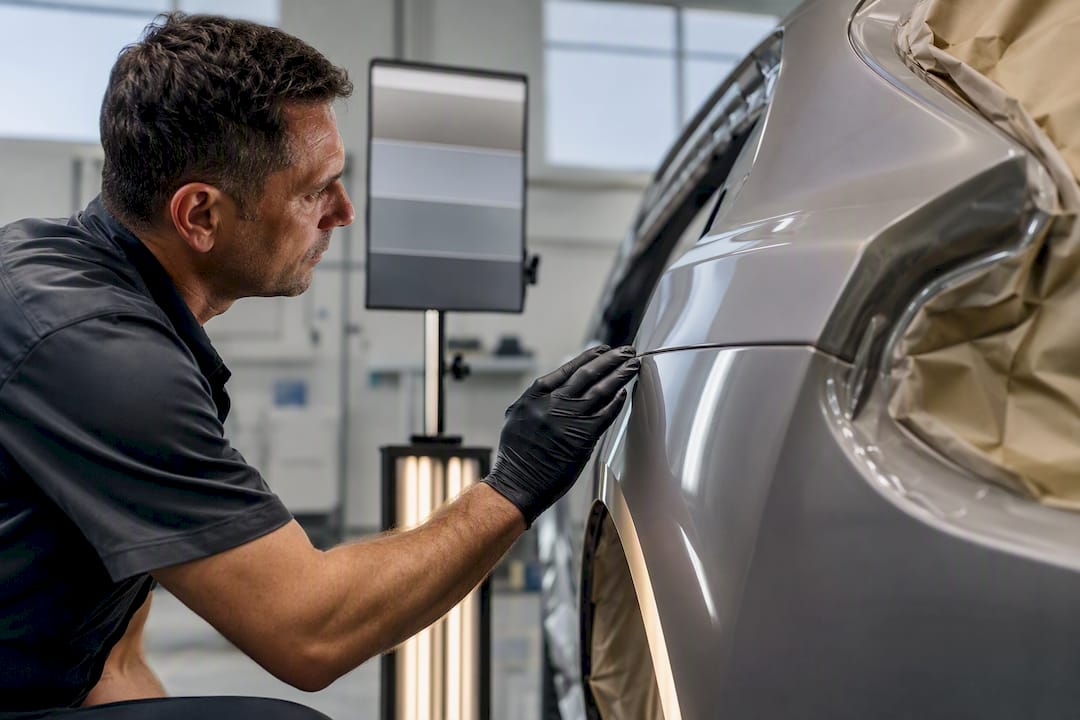
Disassembly is where estimates change. Hidden damage discovered at this stage becomes a “supplement,” a revised estimate that adds cost and time. Modern paint work also depends on tools most drivers never see. Matching a metallic or pearl finish requires a spectrophotometer to read the exact color, then blending it into adjacent panels rather than painting one panel in isolation. That blending step is what keeps a repair invisible instead of obvious from ten feet away.
How Do You Choose a Reliable Auto Body Shop?
Certifications separate serious operations from shops running on guesswork. Look for I-CAR Gold Class or ASE credentials, which signal ongoing technician training rather than a one-time class taken years ago. You can verify a shop’s certification status directly, the same way you’d check ASE and RepairPal credentials before hiring any repair provider. If you drive an EV or a vehicle with advanced driver-assist features, ask specifically whether the shop follows manufacturer repair procedures for your make, not generic aftermarket methods.
Bring these four questions to every consultation:
What parts will you use, OEM or aftermarket, and can you put that in writing?
Do you offer a written workmanship warranty, and how long does it last?
Who performs ADAS calibration, in-house or through a sublet, and how is it verified?
Will you bill my insurance directly, or do I pay and get reimbursed?
Watch for red flags while you’re there. A shop that won’t produce a written estimate, hedges on warranty terms, or gets vague about parts and calibration is telling you something. So is the shop floor itself. A cluttered, disorganized facility often reflects the same carelessness in the repair work, while clear communication and an organized bay tend to track with better outcomes.
Pro Tip: Ask to see a recent repair on a similar vehicle before you sign anything. A shop confident in its work will show you, not just tell you.
What Does a Body Shop Charge, and What Drives the Cost?
Costs swing widely because “body work” covers everything from a scuffed bumper to a full structural rebuild. A small paint touch-up on one panel sits at the low end. Partial panel repair with blending costs more. A full repaint of the entire vehicle, factoring labor, materials, and multiple coats of clear, lands at the high end of the range. Treat any number you hear before an inspection as a rough estimate, not a quote.
Several factors move the price:
Labor hours, which scale with how much disassembly and panel work the damage requires.
Parts choice, since OEM components typically cost more than aftermarket alternatives.
Structural or frame correction, which adds specialized equipment time.
Paint complexity, especially multi-stage metallic, pearl, or custom luxury finishes.
EV-specific labor, including high-voltage safety procedures and battery-adjacent component handling.
Timelines vary just as much. Most repairs run 3 to 15 business days, but OEM parts can take 5 to 10 business days to arrive on their own, and that clock often doesn’t start until insurance approves the supplement. A shop that promises a firm date before disassembly is guessing, not quoting.
OEM vs. Aftermarket Parts: What Are Your Rights?
OEM parts are made by or for the original manufacturer to exact factory specifications. Aftermarket parts come from third-party manufacturers and vary widely in fit and material quality. Salvage parts are used OEM components pulled from another vehicle, and reconditioned parts have been repaired or refinished for reuse. The tradeoffs matter more than the labels suggest: OEM parts generally offer better fit and structural performance, while some aftermarket and salvage parts require metal adjustment just to install correctly, which can affect both appearance and safety.
Insurers frequently push aftermarket parts to control claim costs. You have the right to request OEM parts, and you should push back hard when the part in question is structural or sits near an ADAS sensor, where fit tolerances affect calibration accuracy. A shop worth trusting will walk you through these tradeoffs directly rather than defaulting to whatever the adjuster suggests first.
Get every parts decision in writing before work starts.
Ask how the warranty differs between OEM and aftermarket installations.
Expect a possible out-of-pocket difference if you request OEM parts the insurer won’t fully cover.
What Should You Expect During the Repair Timeline?
At intake, you should walk away with four things: a written estimate, a documented parts plan, an estimated completion date, and a named point of contact. If a shop can’t produce all four before you drop off the keys, that’s your first warning sign.
From there, expect a sequence of milestones, and expect the shop to update you at each one:
Parts ordering and arrival, particularly for OEM components on backorder.
Disassembly, where supplements for hidden damage often surface.
Paint and refinishing, including color matching and blending.
ADAS calibration, required any time bodywork near a sensor mount occurs.
Final multi-point inspection and a road test before delivery.
Sensor misalignment is easy to underestimate. Even a minor bumper repair can knock a forward-facing camera or radar unit out of calibration, so ADAS calibration and verification belongs in the process whether the damage looks cosmetic or not.
When a supplement or timeline change comes up, insist on getting it in writing, including the reason and the new estimated date. The same standard applies to insurance disputes over parts. Document every phone call with a follow-up email, because a shop that puts things in writing without being asked twice is usually the shop that stands behind its work later.
Pro Tip: Save every revised estimate the shop sends you. If a dispute comes up later with the insurer, a paper trail of documented supplements is your best evidence.
Why Specialty Shops Matter for EVs and Luxury Vehicles
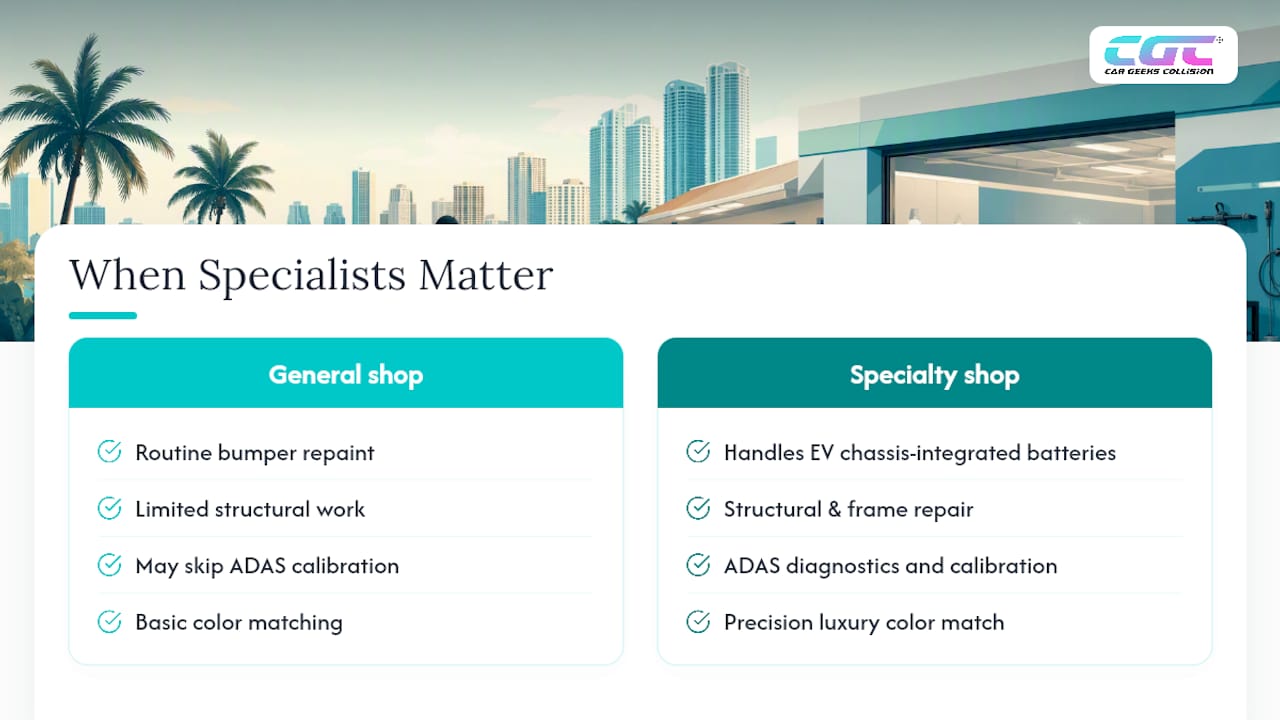
Electric vehicles and high-end luxury cars raise the technical bar on collision repair. EV structures often integrate the battery pack into the chassis, which changes how frame repairs get approached and where technicians need to exercise caution. ADAS sensors on these vehicles sit in tighter tolerances, and calibration after even routine bodywork isn’t optional. Luxury finishes, meanwhile, punish sloppy color matching in ways an economy car’s paint never will.
A general shop can handle a straightforward bumper repaint on most vehicles without issue. But once structural work, battery-adjacent components, or multi-sensor calibration enter the picture, the gap between a generalist and a specialist widens fast. Car Geeks Collision specializes in electric vehicle collision repair, luxury and exotic auto body repair, structural and frame repair, paint and refinishing, ADAS diagnostics and calibration, and insurance claim assistance, which is the combination this kind of work actually demands.
— Car Geeks Collision
Get a Shop That Handles EVs, Luxury Cars, and Insurance Without the Runaround
Some collision repair shops are built around the exact gaps this article just walked through: OEM repair procedures, ADAS diagnostics and calibration, and workmanship warranties backing the finished job. If your car is an electric vehicle or a luxury make, that combination isn’t a nice extra. It’s the difference between a repair that passes inspection and one that quietly fails a sensor test later.
Some collision repair shops coordinate directly with insurance carriers, arrange towing, and offer loaner vehicles when available, so you’re not juggling adjusters and rental cars on top of a stressful week. Our 7-step repair process documents every stage from disassembly through final road test, and parts decisions get put in writing before anything gets ordered.
If you’re in Hollywood, Fort Lauderdale, Aventura, or anywhere else across Broward or Miami-Dade County, start with a free collision repair estimate or explore our EV-specific body repair services to see how ADAS calibration and structural repair come together under one roof.
FAQ
What Does a Paint and Body Shop Actually Do?
A paint and body shop repairs collision damage to a vehicle’s structure and exterior, then refinishes the paint to match the factory color, following stages that run from estimate through disassembly, structural repair, painting, and ADAS calibration.
How Much Does It Cost to Touch Up Paint at a Body Shop?
Small, single-panel touch-ups sit at the lower end of the cost range, while the exact price depends on panel size, paint type, and whether blending into an adjacent panel is needed to match color.
What Is the Average Cost to Repaint an Entire Car?
A full repaint costs considerably more than a touch-up because it involves stripping or prepping every panel, multiple coats, and clear coat across the whole vehicle, with luxury or multi-stage finishes pushing costs higher still.
How Long Does a Typical Collision Repair Take?
Most repairs take 3 to 15 business days, though OEM parts backorders and insurance approval delays can extend that window significantly.
Should I Insist on OEM Parts for My Repair?
For structural components or anything near an ADAS sensor, requesting OEM parts is worth the potential added cost, since OEM parts are built to manufacturer specifications and typically fit and perform more reliably than aftermarket alternatives.
Recommended