
Blog
ADAS Calibration: What You Need to Know After Windshield Replacement
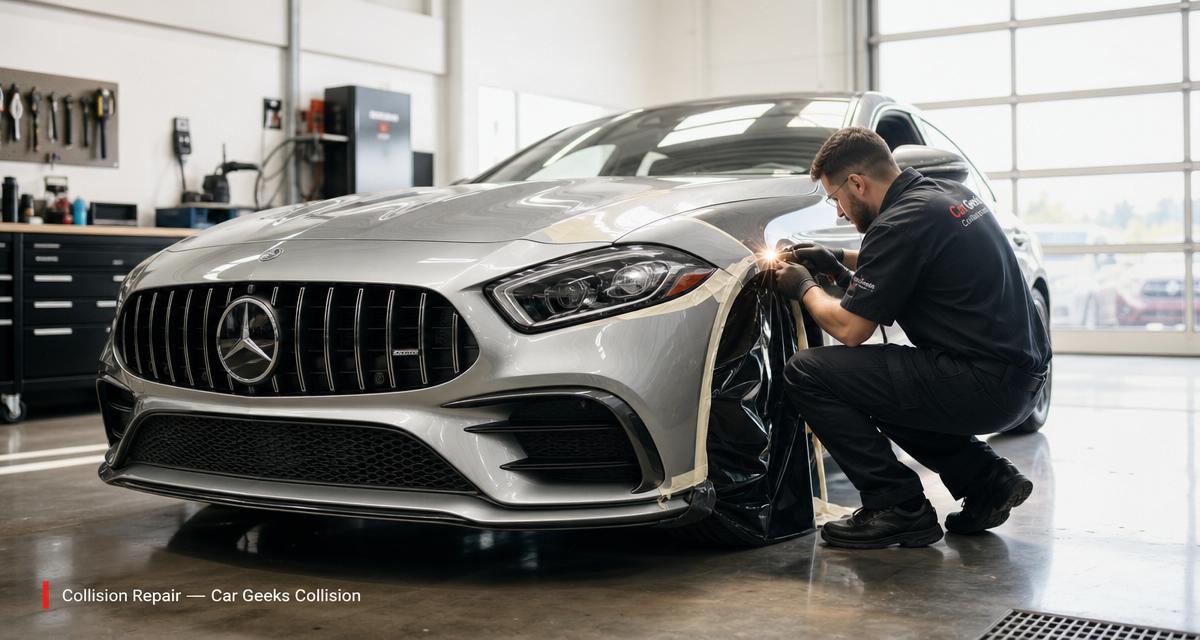
Ensure your safety after a windshield replacement. Find out how ADAS calibration works for your vehicle and why it matters.
Yes, most modern ADAS-equipped vehicles need calibration after windshield replacement. However, whether it’s legally or functionally mandatory depends on your specific VIN and OEM requirements. Your first move is simple: confirm the requirement by VIN or owner’s manual. Then, ask the shop for a written calibration report before you drive off. Look for a technician trained through the Auto Glass Safety Council (AGSC) and a documented post-calibration scan as proof the job was done right.
TL;DR:
- Calibration requirements vary by VIN and vehicle trim, with models from 2018 or newer most likely needing recalibration after windshield replacement.
- Static calibration takes 45 to 90 minutes in a controlled environment, while dynamic calibration requires 20 to 40 minutes of road driving. Both are often combined for accuracy.
- Skipping ADAS calibration can cause systems like automatic braking, lane assist, and adaptive cruise to malfunction. This increases safety risks and may void warranties.
- Verification with a printed report, a post-calibration test drive, and manufacturer-specific procedure checks are essential to confirm calibration was correctly performed.
- Only shops following OEM instructions, ideally with VIN-specific guidance, should handle calibration. Doing this in-house avoids overlooked steps and documentation gaps.
Table of Contents
Does My Vehicle Need ADAS Calibration After Windshield Replacement?
Static, Dynamic, and Dual Calibration: What’s the Difference?
How Much Does ADAS Calibration Cost, and Does Insurance Cover It?
Why Do Some Shops Skip Calibration, and When Is That Legitimate?
Get ADAS Calibration Done Right After Your Windshield Replacement
Does My Vehicle Need ADAS Calibration After Windshield Replacement?
Calibration requirements are strictly VIN-specific. Two identical Honda CR-Vs off the same lot can have different calibration needs depending on trim level and which safety packages the original buyer selected. A shop that quotes you a flat “ADAS calibration” price without pulling your VIN first is skipping a step it shouldn’t skip.
You don’t need a service manual to get a rough answer. Check for these signals:
A camera housing or bracket visible near the top center of your windshield, usually behind the rearview mirror.
Dash icons or owner’s manual references to lane departure warning, forward collision warning, or adaptive cruise control.
A model year of 2018 or newer, since a large majority of 2023 and newer model-year vehicles now require recalibration after glass replacement, per Colfax Glass’s calibration data.
If you’re still unsure, search your VIN through your manufacturer’s site or call your dealership’s service department. Ask directly whether your trim includes a forward-facing camera system.
Static, Dynamic, and Dual Calibration: What’s the Difference?
The manufacturer decides which calibration method your car needs, not the shop and not your budget. Here’s how the three methods work:
Static calibration happens entirely in the shop. It uses printed target boards positioned at exact distances from the vehicle. This typically takes 45 to 90 minutes and applies when the OEM procedure calls for a controlled, measured environment rather than real-world driving.
Dynamic calibration requires an actual road drive. This usually takes 20 to 40 minutes of driving on roads with clear lane markings at a steady speed. The camera can “learn” its surroundings in motion based on Colfax Glass’s breakdown of calibration timing.
Dual calibration combines both methods. It starts with static setup, followed by a dynamic drive to verify that the static results held up under real conditions. This can run 90 minutes to 3 hours total and is common on Subaru EyeSight systems and several Toyota, Honda, Mercedes-Benz, and BMW configurations.
Pro Tip: If a shop tells you your vehicle “only needs the quick one,” ask them to show you the OEM procedure by VIN. The manufacturer sets the method, not the shop’s schedule or equipment limitations.
Dynamic calibration also depends heavily on road and weather conditions. This is one legitimate reason a shop might reschedule rather than rush a drive on a rainy day.
What Happens If You Skip ADAS Calibration?
A forward-facing camera that’s off by just one degree can misjudge distance by roughly eight feet at 100 feet. That margin sounds small until you consider it’s the same camera your car uses to decide when to brake automatically.
Skipping calibration puts several systems at risk of misreading the road:
Automatic emergency braking (AEB) may trigger late or not at all if the camera misjudges the distance to a stopped vehicle.
Lane keeping assist can drift the wrong direction if it misreads lane markings relative to a shifted camera angle.
Adaptive cruise control may maintain an unsafe following distance based on skewed depth perception.
Forward collision warning may fire false alerts or stay silent when it shouldn’t.
Beyond the safety risk, an uncalibrated system can void manufacturer warranty coverage on the ADAS components themselves. Insurers have denied claims tied to an accident where a known calibration gap went undocumented.
How Much Does ADAS Calibration Cost, and Does Insurance Cover It?
Cost and time vary by method, and both matter when you’re scheduling around work or a rental car.

These figures come from Colfax Glass’s calibration cost data. They typically get folded into a comprehensive insurance claim tied to the windshield replacement itself. If your insurer initially quotes a windshield-only repair, ask them explicitly to include ADAS calibration as a required line item, not an optional add-on. Out-of-pocket costs are most likely when the damage was minor, cosmetic, or excluded from your policy. Either way, request an itemized quote that separates glass cost from calibration cost so you can see exactly what you’re paying for.
How Do You Know Calibration Was Done Correctly?
A legitimate calibration ends with two things: a machine-read verification and a real test drive. “Calibration complete” on a screen alone isn’t proof, according to the AGSC’s guidance on calibration verification.
Ask your shop for:
A VIN-based calibration requirement check, in writing, before work begins.
A printed or digital calibration report showing pass/fail status for each system.
Photos of target board placement if static calibration was performed.
A documented post-calibration test drive confirming the systems behave normally in real conditions.
Pro Tip: On your first drive home, pay attention to lane keeping assist and adaptive cruise. If either feels twitchy, pulls unexpectedly, or throws a warning light, go back. That’s a red flag for a shallow or incomplete calibration, not something to “wait and see” about.
Why Do Some Shops Skip Calibration, and When Is That Legitimate?
Some excuses don’t hold up. “It’s not necessary for your car” without a VIN check, or “the owner didn’t want to pay for it,” are both signs a shop is cutting a corner it shouldn’t cut. No vehicle can reliably self-calibrate after a sensor disruption.
Legitimate reasons for delay do exist:
The shop lacks the diagnostic equipment or target boards for your specific system.
Aftermarket glass caused optical distortion severe enough to block calibration, requiring OEM-spec glass instead.
Unresolved diagnostic trouble codes need clearing before calibration can even start.
Poor weather or road conditions make a dynamic drive unreliable that day.
If a shop cites one of these, ask for a referral to a certified calibrator or a rescheduled appointment, not a skipped step.
Why Trust Car Geeks Collision With ADAS Calibration?
Car Geeks Collision handles ADAS calibration and sensor alignment as a core part of collision repair, not an afterthought bolted onto glass work. We work on everything from Tesla and Rivian EVs to Porsche, Mercedes-Benz, and BMW platforms. We follow OEM repair procedures for each.
Every vehicle gets a VIN check against manufacturer calibration requirements before we quote the job. Our shop handles static in-house target-board setups and dynamic road-test calibration. This means you’re not bounced between multiple locations to finish one repair. You receive a printed or digital calibration report, and the job is backed by our lifetime workmanship warranty. Scheduling folds calibration into the same repair timeline as your collision or auto body work. Nothing gets rushed or left undocumented.
Why VIN Checks Matter More Than Trust
Forum threads and word-of-mouth tend to treat ADAS calibration as optional advice rather than a manufacturer-set requirement. This is the biggest gap in how most owners approach this decision. The conventional wisdom, “just ask the shop if it’s needed,” puts the burden on a shop’s honesty instead of on a verifiable VIN lookup. That’s backwards.
The article’s research points to one clear priority: verification over assumption. A calibration report and a documented test drive cost you nothing extra to request. Yet, they’re the only real proof the job matches your specific vehicle’s OEM procedure rather than a generic industry guess. Static, dynamic, or dual, the method isn’t a shop’s preference. It’s dictated by your VIN.
Where most owners go wrong isn’t skipping calibration outright. It’s accepting a vague “we handled it” instead of a paper trail. If a shop can’t produce a written report, that alone should end the conversation.
— Car Geeks Collision
Get ADAS Calibration Done Right After Your Windshield Replacement
Car Geeks Collision handles VIN-specific ADAS calibration in-house. This means you’re not paying for a windshield replacement at one shop and then chasing down a separate calibration appointment somewhere else.
That matters because a fragmented repair process is exactly where calibration steps get skipped or rushed. We check your VIN against OEM requirements, run static and dynamic calibration under one roof, and hand you a documented calibration report before you leave. Whether you’re dealing with a Tesla, a Porsche, or a daily driver with a factory lane-assist camera, the process stays the same: verify, calibrate, document. If you’re in Hollywood, Fort Lauderdale, Miramar, or anywhere else across South Florida, schedule your ADAS calibration with Car Geeks Collision. You’ll receive a written report you can hand to your insurer or keep for your own records.
Sources
Understanding the Importance of Calibration: What are the Facts? — AGSC
ADAS Windshield Calibration After Replacement (2026) — Colfax Glass
FAQ
Does replacing a windshield require ADAS calibration?
For most vehicles built since 2018 with a forward-facing camera, yes. You can learn more about whether your car needs ADAS calibration at Speedy Windshield Repair - San Diego, CA. The exact requirement depends on your VIN and trim. Confirm it through your manufacturer or a shop that runs a VIN check before quoting the repair.
Do I need to recalibrate sensors after a windshield replacement?
If your vehicle has lane departure warning, adaptive cruise control, or forward collision warning tied to a windshield-mounted camera, recalibration is typically required. The new glass shifts the camera’s exact aim point.
How long does calibration take after windshield replacement?
Static calibration usually takes 45 to 90 minutes. Dynamic calibration takes 20 to 40 minutes of driving. Dual calibration, which combines both, can run 90 minutes to 3 hours according to Colfax Glass’s timing data.
Can any auto glass shop recalibrate ADAS systems?
Not every shop has the diagnostic equipment or target boards needed. Look for AGSC-affiliated technicians or a shop like Car Geeks Collision that performs both static and dynamic calibration in-house with documented verification.