
Blog
Tesla OEM vs. Aftermarket Parts: How to Avoid Unexpected Repair Costs
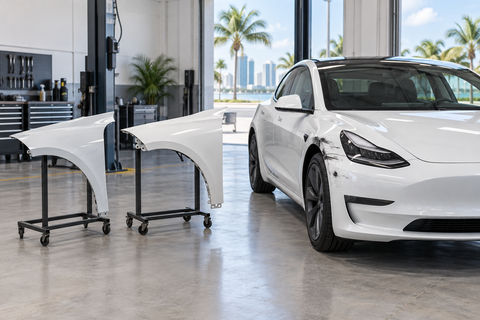
Learn why Tesla OEM and aftermarket part prices can differ after a collision, what to check before authorizing repairs, and how a second estimate may help reduce unexpected costs.
After a collision, an unexpected parts-price difference can turn an already stressful Tesla repair into a major financial concern. This commonly happens when a repair plan specifies original equipment manufacturer (OEM) parts but the insurance estimate is based on a lower-cost aftermarket alternative.
The practical answer is not that one type of part is always better. The right choice depends on the specific component, fit and compatibility, sensor or calibration requirements, safety considerations, warranty terms, parts availability, and what your policy covers.
Quick answer: A suitable aftermarket part may reduce or eliminate an additional parts-price charge on some repairs. Your deductible and any other non-covered items remain separate.
Reviewed by the Car Geeks Collision repair team in Hollywood, Florida.
At Car Geeks Collision in Hollywood, Florida, we review the estimate, the damaged components, and the available replacement options before you authorize repairs.
OEM vs. Aftermarket Tesla Parts: What Is the Difference?
OEM parts are genuine replacement parts supplied through the vehicle manufacturer’s parts network. Aftermarket parts are produced by other manufacturers for use on compatible vehicles.
Aftermarket does not automatically mean equivalent to OEM—and OEM is not automatically the only reasonable choice for every component. Quality, fit, corrosion protection, mounting points, material specifications, warranty coverage, and compatibility can vary by part and manufacturer.
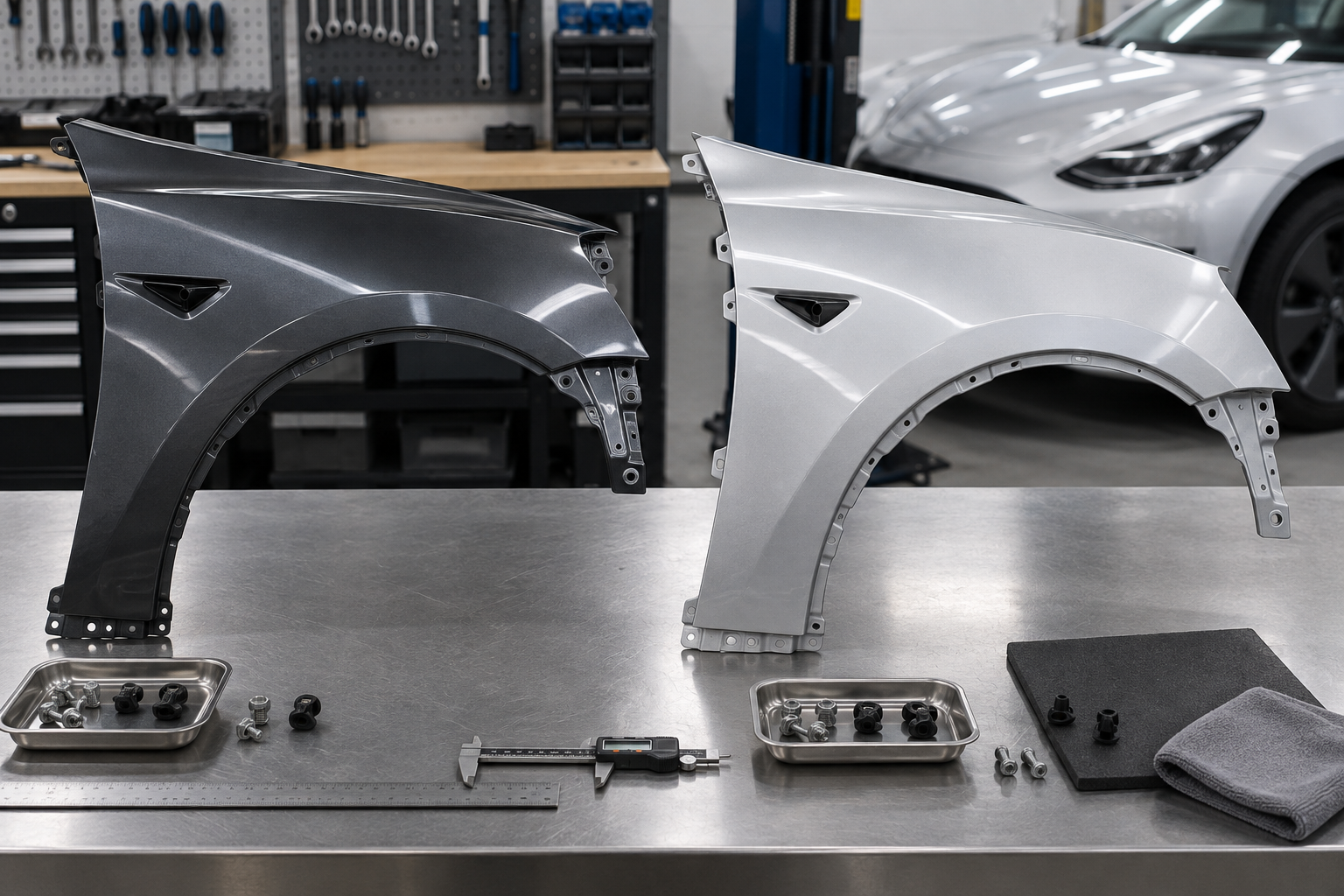
Why Can a Parts-Price Difference Appear?
An insurance estimate may list an aftermarket, recycled, reconditioned, or alternative part when one is available. A repair facility may determine that a different part is needed based on the repair plan, vehicle condition, manufacturer procedures, availability, or fit and safety considerations.
If the insurer’s allowance is lower than the price of the part selected for the repair—and the insurer does not approve additional payment—there may be a customer responsibility amount.
A Simple Cost Example
Suppose an OEM replacement part costs $1,250 and the insurer allows $750 for an aftermarket alternative. If the insurer does not revise its allowance and the repair requires the $1,250 part, the unresolved parts-price difference would be $500. That amount would be separate from any applicable deductible.
This example is hypothetical. Actual pricing, coverage, supplements, and customer responsibility depend on the vehicle, policy, claim, repair plan, and parts availability.
Related reading: Tesla body repair costs and post-collision checklist.
When Might an Aftermarket Part Be Appropriate?
A suitable aftermarket part can be a practical option when it meets the repair’s requirements and is accepted for the claim. The evaluation should consider more than price.
Before choosing a part, the repair facility should evaluate:
• Fit and panel alignment
• Mounting points and attachment methods
• Material type, finish, and corrosion protection
• Compatibility with cameras, radar, parking sensors, wiring, and other electronics
• Whether removal or replacement triggers scanning or calibration requirements
• Part warranty, supplier support, and availability
• The component’s role in occupant protection or vehicle structure
Not every component or repair is a candidate for an aftermarket alternative. An insurer listing a part does not, by itself, establish that it is appropriate for the vehicle.
How Car Geeks Collision Can Help
Learn more about our EV and Tesla body-repair services and insurance-claim assistance.
As an independent collision repair facility with experience working on Tesla vehicles, Car Geeks Collision can review both OEM and suitable aftermarket options for the specific repair.
When an appropriate aftermarket part is available, accepted for the claim, and covered by the insurer’s allowance, it may eliminate the additional charge associated with selecting a more expensive OEM part.
On qualifying repairs, this can mean no out-of-pocket parts-price difference. Your deductible, prior damage, maintenance items, betterment, policy exclusions, and any other uncovered expenses are separate and will be identified in the written estimate.
If you prefer genuine Tesla parts, we can also discuss OEM options and explain any potential price or coverage difference before work begins.
What to Ask Before Authorizing Your Tesla Repair
Use these questions when reviewing an estimate:
• Which line items specify OEM, aftermarket, recycled, or reconditioned parts?
• Is the proposed part appropriate for this exact model, model year, and repair?
• Are sensors, brackets, wiring, cameras, or calibration requirements involved?
• Does the part include a warranty, and who provides it?
• Has the shop requested a supplement if the original estimate is incomplete?
• What amount, if any, will I owe beyond my deductible?
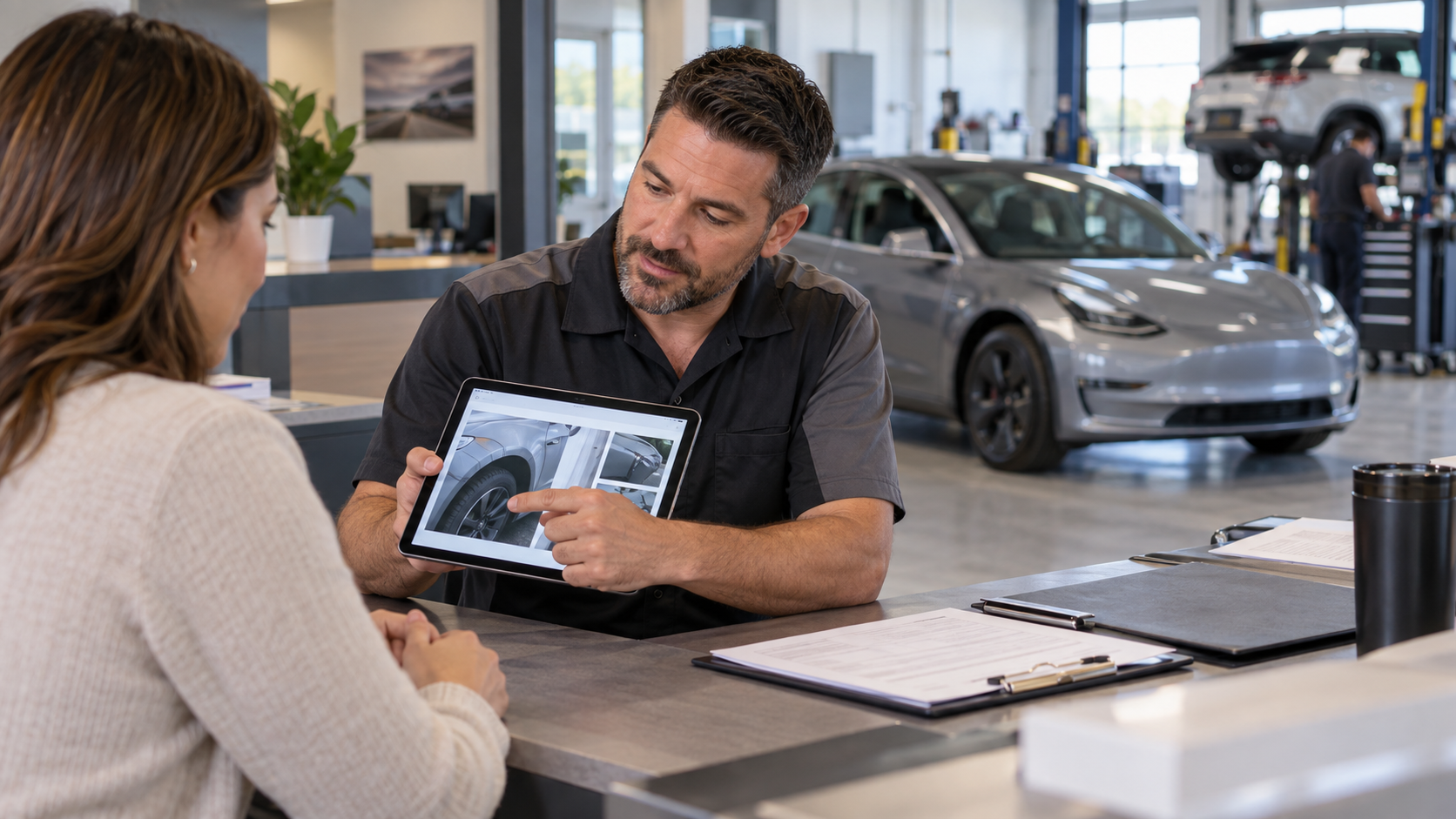
Get a Second Estimate Before Paying the Difference
If you have been told that you must pay extra because your insurance estimate does not cover the selected replacement part, send Car Geeks Collision your estimate and clear photos of the damage.
We will review the proposed parts, explain the available options, and determine whether the covered repair may be completed without an additional parts-price charge. We will also identify situations in which an OEM part or another repair approach may be more appropriate.
Request a Tesla Repair Estimate to send your information to Car Geeks Collision.
Frequently Asked Questions
Are aftermarket parts always lower quality than OEM parts?
No. Aftermarket quality varies by manufacturer and component. Some parts may be suitable for a repair, while others may present fit, finish, compatibility, warranty, or availability concerns. Each part should be evaluated individually.
Will using an aftermarket part affect my Tesla warranty?
Warranty questions depend on the part, the repair, and the applicable warranty terms. Ask for the part manufacturer’s warranty information and review any vehicle-warranty concerns before authorizing the repair.
Can I request OEM parts?
You can discuss an OEM-parts preference with the repair facility and insurer. Whether the insurer pays the full OEM price depends on the policy, claim, applicable requirements, and the insurer’s approval. Any potential customer responsibility should be confirmed in writing.
Can a repair estimate change after disassembly?
Yes. Hidden damage or additional operations may be discovered after parts are removed. The repair facility may submit a supplement to the insurer for review. Approval and payment can vary by claim.
Contact Car Geeks Collision
Car Geeks Collision 2133 Pembroke Road Hollywood, FL 33020 Call 786-786-1387 https://cargeekscollision.com
Parts availability, repair suitability, insurance coverage, policy terms, and customer responsibility vary by vehicle and claim. Any out-of-pocket amount will be identified in your written estimate. This article provides general information and is not legal, insurance-coverage, or warranty advice.