
Blog
Porsche Suspension Problems: Warning Signs, Diagnosis and Repair in South Florida
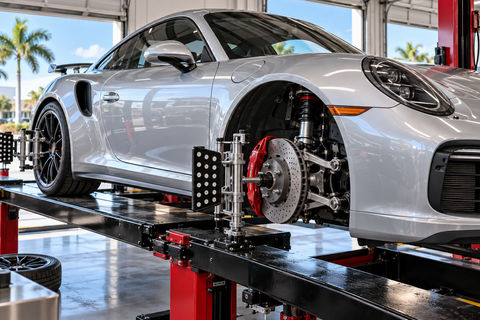
If your Porsche starts pulling, clunking, vibrating, sitting unevenly, or feeling less stable after a pothole, curb strike, or collision, reduce speed and arrange an inspection. An alignment reading can show that wheel angles are wrong, but it cannot identify a bent component, damaged wheel, shifted mounting point, or electronic suspension fault. When a Porsche suspension concern needs prompt attention Avoid driving and arrange safe transport if a wheel appears displaced, a tire contacts the...
If your Porsche starts pulling, clunking, vibrating, sitting unevenly, or feeling less stable after a pothole, curb strike, or collision, reduce speed and arrange an inspection. An alignment reading can show that wheel angles are wrong, but it cannot identify a bent component, damaged wheel, shifted mounting point, or electronic suspension fault.
When a Porsche suspension concern needs prompt attention
Avoid driving and arrange safe transport if a wheel appears displaced, a tire contacts the body, the vehicle sits unusually low, steering feels unstable, or severe noise began after an impact. These conditions can affect control of the vehicle or cause additional tire and component damage.
For less severe symptoms, record when the problem occurs: over bumps, while braking, during turns, at highway speed, or only after the vehicle has been parked. That information helps guide diagnosis.
Common Porsche suspension warning signs
Clunking, knocking, squeaking, or rattling over bumps
Pulling or drifting to one side
A steering wheel that is no longer centered
Vibration through the steering wheel or body
One corner sitting higher or lower than the others
Excessive bouncing, harshness, or reduced body control
Uneven or rapid tire wear
A wheel that appears farther forward, rearward, or inward than the opposite side
A suspension, chassis, or ride-height warning
Fluid near a shock, strut, or related component
A symptom can narrow the inspection, but it should not be used to order parts without confirming the cause.
Wear, wheel damage, or impact damage?
Porsche suspension symptoms may result from worn components, tire or wheel problems, a pothole or curb strike, collision forces, or a fault in an electronically controlled system. The correct repair depends on distinguishing among these possibilities.
Worn or loose suspension components
Bushings, joints, links, mounts, shocks, struts, springs, control arms, and related hardware help control wheel position and vehicle movement. Wear or looseness may create noise, steering changes, poor body control, or uneven tire wear.
Wheel and tire concerns
A bent wheel, damaged tire, incorrect pressure, or mismatched tire condition can create vibration or pulling that feels like a suspension problem. The wheel and tire should be evaluated together with the surrounding suspension.
Pothole, curb, and collision forces
An impact at the wheel can transmit force into the hub, suspension links, steering components, subframe, and structural mounting areas. Damage may extend beyond the component closest to the impact even when exterior body damage appears limited.
Electronic damping or air-suspension concerns
Some Porsche models use electronically controlled damping or air-suspension components. Uneven height, a warning message, or an unexpected change in ride quality may involve sensors, wiring, controls, air supply, calibration, or mechanical parts. The exact system and vehicle configuration should be identified before repair is recommended.
What to do after hitting a pothole or curb
Move the vehicle to a safe location when possible and look for tire damage, a visibly tilted or displaced wheel, leaking fluid, loose parts, or contact between the tire and body. Do not crawl underneath a vehicle that is not correctly supported.
Before contacting a repair facility, record:
The Porsche model, year, mileage, and drivetrain if known
Where the impact occurred and which wheel was involved
When the noise, pull, vibration, or warning began
Whether the symptom changes while braking, turning, or crossing bumps
Any recent tire, wheel, alignment, or suspension work
Photographs of the wheel, tire, adjacent body, and dashboard warning
If the incident may become an insurance claim, keep photographs, estimates, claim information, and earlier repair records together. Coverage depends on the cause, policy, and insurer’s determination.
Why alignment may not be the first repair
Wheel-alignment measurements describe wheel angles; they do not explain why an angle is outside specification. A bent arm, damaged wheel, loose joint, worn bushing, shifted subframe, damaged strut, or distorted mounting point may prevent the vehicle from holding a stable alignment.
Components and mounting areas should be inspected before final alignment. Otherwise, the Porsche may continue to pull, wear tires unevenly, or lose the adjustment. Learn more about suspension and steering repair.
How a professional Porsche suspension inspection should proceed
The process should match the symptom, impact history, and exact vehicle. Depending on the concern, an inspection may include:
Confirming the owner’s description and road behavior when safe
Checking tire condition, wheel condition, pressure, and visible wheel position
Comparing ride height and left-to-right component condition
Inspecting joints, bushings, links, arms, mounts, fasteners, shocks, and struts
Looking for impact marks, cracks, bends, leaks, or interference
Examining the subframe and surrounding structural mounting areas
Scanning applicable vehicle systems when a warning is present
Reviewing vehicle-specific procedures for the installed suspension system
Measuring alignment after damaged or loose parts have been addressed
Verifying operation and road behavior after authorized repairs
The objective is to identify the source of the symptom and verify the result, not simply silence a noise or clear a warning temporarily.
When collision damage reaches the suspension or structure
Collision damage can affect the wheel, tire, hub, steering, suspension links, shock or strut, subframe, mounting points, and adjacent body panels. Measurements and a complete inspection help determine whether the concern is limited to replaceable components or involves a wider structural condition.
Photograph the vehicle before additional driving or disassembly when a claim may be involved. If wheel position or handling has changed, do not authorize a repair plan based only on visible panel damage. See how collision repair and structural and frame repair address damage beyond the exterior panel.
Repair, replacement, calibration, and final verification
The correct repair depends on the diagnosed condition. Some concerns may involve fastening, adjustment, wiring, calibration, or replacement of a damaged component. A part that is bent, cracked, leaking, loose, or unable to maintain its intended geometry may require replacement rather than cosmetic correction.
Ask for a written explanation of the findings, recommended work, parts involved, and verification steps. Porsche models do not all use the same suspension components or procedures, so the exact model, year, powertrain, and installed options matter.
Porsche suspension diagnosis and repair in Hollywood, Florida
Car Geeks Collision is an independent collision and auto repair center in Hollywood, Florida. When a Porsche suspension concern follows a pothole, curb strike, or accident—or when the wheel position, adjacent body panels, subframe, or mounting areas may be involved—the first step is a careful inspection and repair plan.
Porsche owners from Hollywood, Fort Lauderdale, Aventura, and nearby South Florida communities can contact Car Geeks Collision to describe the symptoms and determine the appropriate inspection, transport, or repair next step. Learn more about the shop’s approach to luxury and exotic vehicle repair.
Frequently asked questions
Why does my Porsche clunk over bumps?
A clunk may involve a joint, bushing, link, mount, loose component, worn part, or impact damage. The location and timing of the sound help guide inspection, but noise alone does not identify the failed component.
Can a pothole damage Porsche suspension?
Yes. A strong impact can affect the tire, wheel, alignment, suspension, steering, subframe, or mounting area. Request an inspection if handling, wheel position, vibration, ride quality, or tire pressure changes afterward.
Why is my Porsche sitting lower on one side?
Uneven height may involve a spring, shock or strut, mount, sensor, air-suspension component where equipped, loading issue, or collision damage. The installed system should be identified and inspected before a repair is recommended.
Should suspension damage be checked before alignment?
Yes. Bent, worn, loose, or displaced components can prevent the vehicle from holding a correct alignment. Inspection and necessary repairs should generally come before final alignment.
Is it safe to drive with a suspension or chassis warning?
That depends on the warning and the vehicle’s physical condition. Avoid driving if the Porsche is unstable, sitting unusually low, making severe noises, contacting a tire, or has an obviously displaced wheel.
Will insurance cover Porsche suspension damage?
Coverage depends on the cause, policy, and insurer’s decision. Collision- or impact-related damage may be treated differently from wear or maintenance, so document the condition and review the findings with the insurer and repair facility.
What should I photograph after a wheel impact?
Photograph the wheel and tire, their position relative to the body, nearby panel damage, any visible fluid, and dashboard warnings. Include wider views of the vehicle corner as well as close-ups.
Request a Porsche suspension inspection
If your Porsche pulls, clunks, vibrates, sits unevenly, or handles differently after an impact, contact Car Geeks Collision in Hollywood, FL. Share the model, year, symptoms, warnings, and photographs so the team can help determine the appropriate inspection, transport, or repair next step.