Blog
BMW Suspension Problems: Warning Signs, Diagnosis and Repair in South Florida

If your BMW begins pulling, clunking, bouncing, sitting unevenly, or showing a suspension warning, reduce speed and arrange an inspection. After a pothole, curb strike, or collision, do not assume an alignment alone will solve the problem—damaged or displaced components should be identified first. Common BMW suspension warning signs Suspension problems can affect ride quality, steering response, tire wear, and vehicle stability. Watch for: Clunking, knocking, squeaking, or rattling over bumps...
If your BMW begins pulling, clunking, bouncing, sitting unevenly, or showing a suspension warning, reduce speed and arrange an inspection. After a pothole, curb strike, or collision, do not assume an alignment alone will solve the problem—damaged or displaced components should be identified first.
Common BMW suspension warning signs
Suspension problems can affect ride quality, steering response, tire wear, and vehicle stability. Watch for:
Clunking, knocking, squeaking, or rattling over bumps
The vehicle pulling or drifting to one side
Uneven ride height or one corner sitting lower
Excessive bouncing, nose-diving, or a harsh ride
Steering-wheel vibration or looseness
Uneven or rapid tire wear
A crooked steering wheel when traveling straight
Wheel, tire, or suspension warnings on the instrument panel
Visible wheel misalignment after an impact
Fluid near a strut, shock, or suspension component
A new noise or handling change should not be ignored, particularly after an accident or hard impact. If the wheel appears displaced, the tire contacts the body, or the vehicle feels unstable, avoid driving until it has been evaluated.
Why a BMW suspension may feel different
BMW suspension designs vary by model, model year, drivetrain, and installed options. Similar symptoms can have different causes, which is why diagnosis should come before parts replacement.
Worn or damaged suspension components
Control arms, bushings, ball joints, links, mounts, struts, shocks, springs, and related hardware help locate and control each wheel. Wear or impact damage can produce noise, looseness, uneven tire wear, or changes in steering response.
Wheel and tire damage
A bent wheel, damaged tire, incorrect pressure, or shifted wheel position can create vibration or pulling that resembles a suspension fault. The wheel and tire should be inspected together with the surrounding suspension.
Alignment changes
Potholes, curb impacts, collisions, worn parts, or displaced mounting points can change alignment. However, an alignment measurement does not repair a bent component or structural problem. The underlying condition must be identified first.
Electronic or air-suspension concerns
Some BMW models use electronically controlled or air-suspension components. A warning, uneven height, or change in ride quality may involve sensors, wiring, calibration, air supply, or mechanical parts. The applicable system should be identified for the specific vehicle before recommending repair.
What to do after a pothole, curb strike, or collision
Move the vehicle to a safe location if possible and look for an obviously tilted wheel, tire damage, fluid, contact between the tire and body, or loose components. Do not crawl beneath a vehicle that is not properly supported.
Before arranging service, record:
The BMW model, year, mileage, and drivetrain if known
The location and severity of the impact
When the noise, pull, vibration, or warning began
Whether the symptom changes during braking, turning, or driving over bumps
Any recent tire, wheel, alignment, or suspension work
Photos of the wheel position, tire, body damage, and dashboard warning
If the concern followed a collision, keep the claim number, insurer contact information, estimates, and previous repair records together. Coverage depends on the policy and insurer's determination.
Why an alignment may not be the first repair
Alignment readings describe wheel angles; they do not explain why an angle is outside specification. A bent control arm, damaged strut, shifted subframe, worn joint, distorted mounting point, or wheel damage may prevent a stable alignment.
A useful repair plan should inspect components and mounting areas before final alignment. Otherwise, the vehicle may continue to pull, wear tires unevenly, or fail to hold the adjustment.
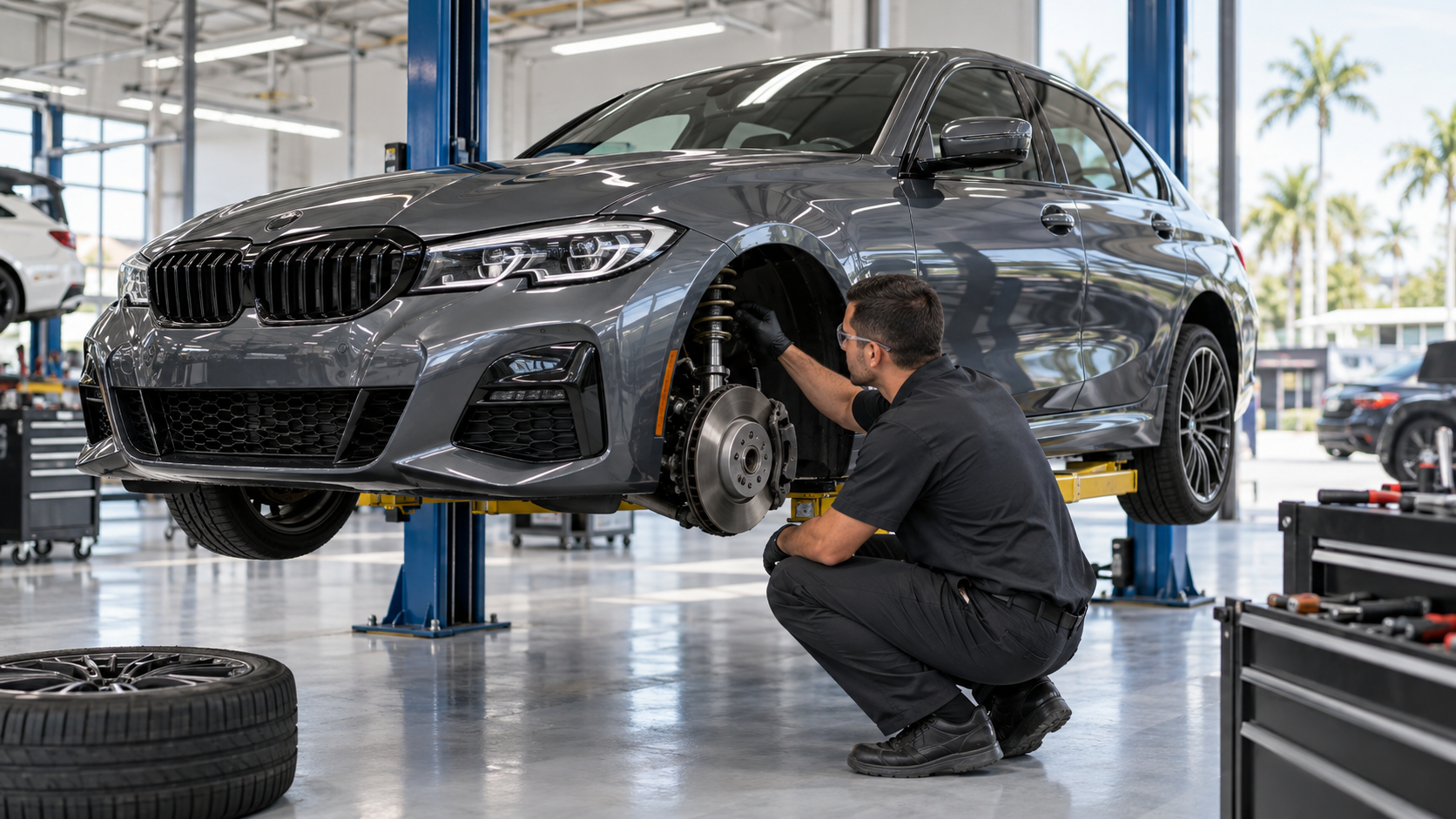
How a professional suspension inspection should proceed
Depending on the symptoms and BMW model, an inspection may include:
Confirming the owner's description and road behavior when safe
Checking tires, wheels, ride height, and visible wheel position
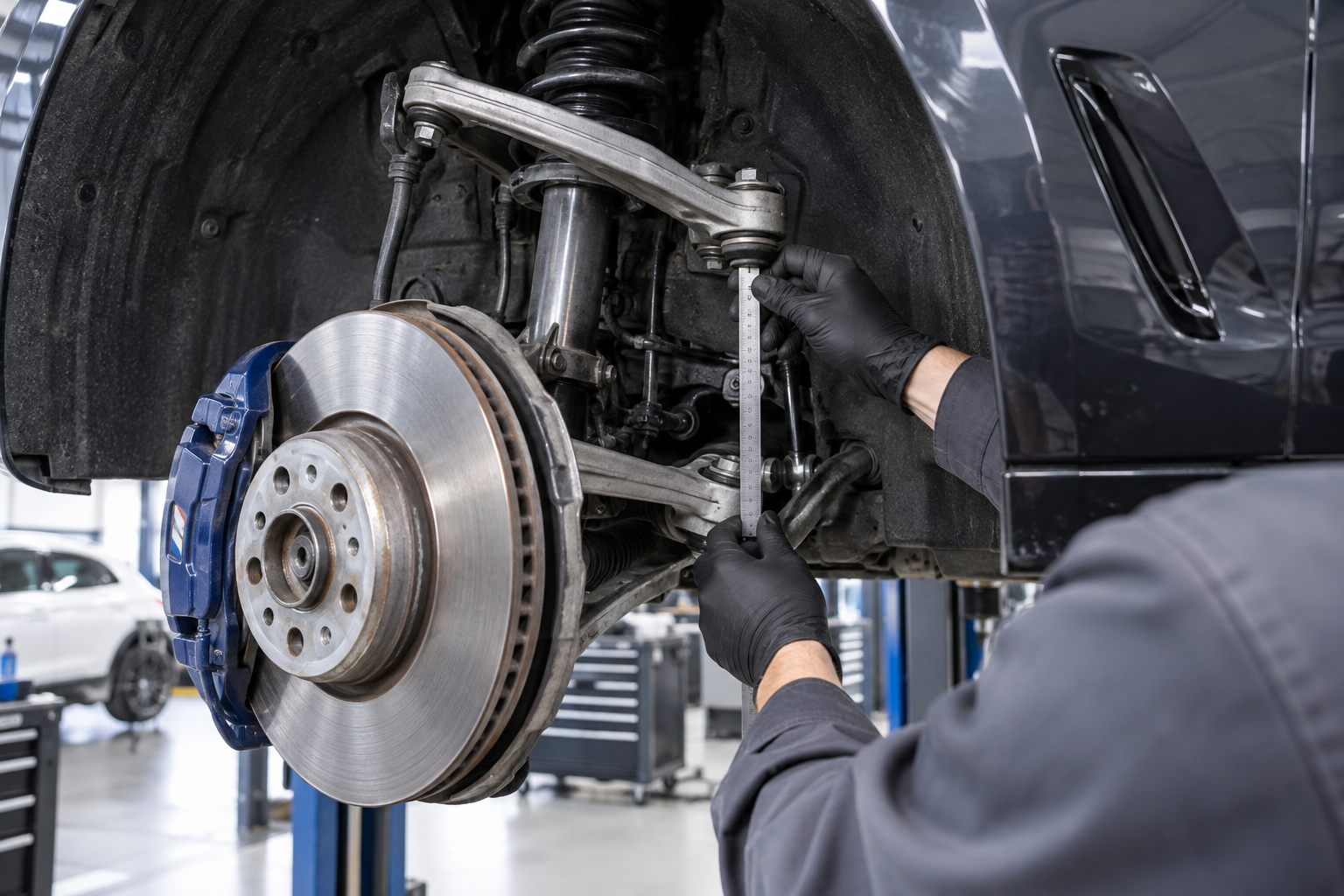
Inspecting suspension components, fasteners, joints, bushings, and mounts
Looking for impact marks, cracks, bends, leaks, or interference
Examining adjacent body, subframe, and structural mounting areas
Scanning applicable vehicle modules when a warning is present
Comparing left and right components and measurements
Measuring alignment after damaged or loose parts have been addressed
Verifying operation and road behavior after authorized repairs
The goal is to identify the source of the symptom, not simply silence a noise or reset a warning temporarily.
When collision damage affects BMW suspension
A wheel can transmit collision force into the suspension, steering, subframe, and surrounding body structure. Damage may extend beyond the component nearest the impact. A vehicle can also have significant alignment or mounting concerns even when exterior body damage appears limited.
The repair plan may need to consider the wheel, tire, hub, suspension links, strut or shock, steering components, subframe, mounting points, and adjacent panels. Measurements help determine whether the concern is limited to replaceable components or involves a wider structural condition.
Photograph the vehicle before additional driving or disassembly when an insurance claim may be involved. Do not authorize a parts list based only on the most visible damage if the wheel position or handling has changed.
Repair or replacement?
The correct decision depends on the diagnosed condition. Some concerns may involve adjustment, fastening, wiring, calibration, or replacement of a damaged component. Parts that are bent, cracked, leaking, or unable to maintain their intended geometry may require replacement rather than cosmetic correction.
Ask for a written explanation of the findings, recommended work, parts involved, and the planned verification steps. BMW models do not all use the same components or procedures, so the vehicle's exact configuration matters.
BMW suspension inspection in South Florida
Car Geeks Collision is an independent collision and auto body repair center in Hollywood, Florida. When a BMW suspension concern follows an accident, pothole, or curb impact—or when the wheel position, adjacent body panels, subframe, or structural mounting areas may be involved—the first step is a careful inspection and repair plan.
Drivers from Hollywood, Fort Lauderdale, Aventura, and nearby South Florida communities can contact Car Geeks Collision to describe the symptoms and determine the appropriate next step. If a specific mechanical or electronic suspension component requires another specialty, that need should be established through diagnosis rather than guesswork.
Frequently asked questions
Why does my BMW clunk over bumps?
A clunk can involve a worn joint, bushing, mount, link, loose component, or impact damage. The location and timing of the noise help guide inspection, but the sound alone does not identify the failed part.
Can a pothole damage BMW suspension?
Yes. A strong pothole impact can affect a tire, wheel, alignment, suspension component, steering part, or mounting point. Inspect the vehicle if handling, ride quality, wheel position, or tire pressure changes afterward.
Why is my BMW sitting lower on one side?
Uneven height may involve a spring, strut, mount, sensor, air-suspension component where equipped, loading issue, or collision damage. Avoid assuming the cause before the system is inspected.
Should suspension damage be checked before alignment?
Yes. Bent, loose, worn, or displaced components can prevent the vehicle from holding a correct alignment. Inspection and necessary repairs should generally come before final alignment.
Is it safe to drive with a suspension warning?
That depends on the warning and the vehicle's condition. If the BMW is unstable, sitting unusually low, making severe noises, or has an obviously displaced wheel, avoid driving and arrange safe transport.
Will insurance cover BMW suspension damage?
Coverage depends on the cause, policy, and insurer's decision. Collision- or impact-related damage may be handled differently from wear or maintenance. Document the condition and review it with the insurer and repair facility.
Request an inspection
If your BMW pulls, clunks, vibrates, sits unevenly, or handles differently after an impact, contact Car Geeks Collision in Hollywood, FL. Share the model, year, symptoms, warning messages, and any photos so the team can help determine the appropriate inspection and next step.