
Blog
ADAS Calibration Cost: What Drivers Pay in 2026
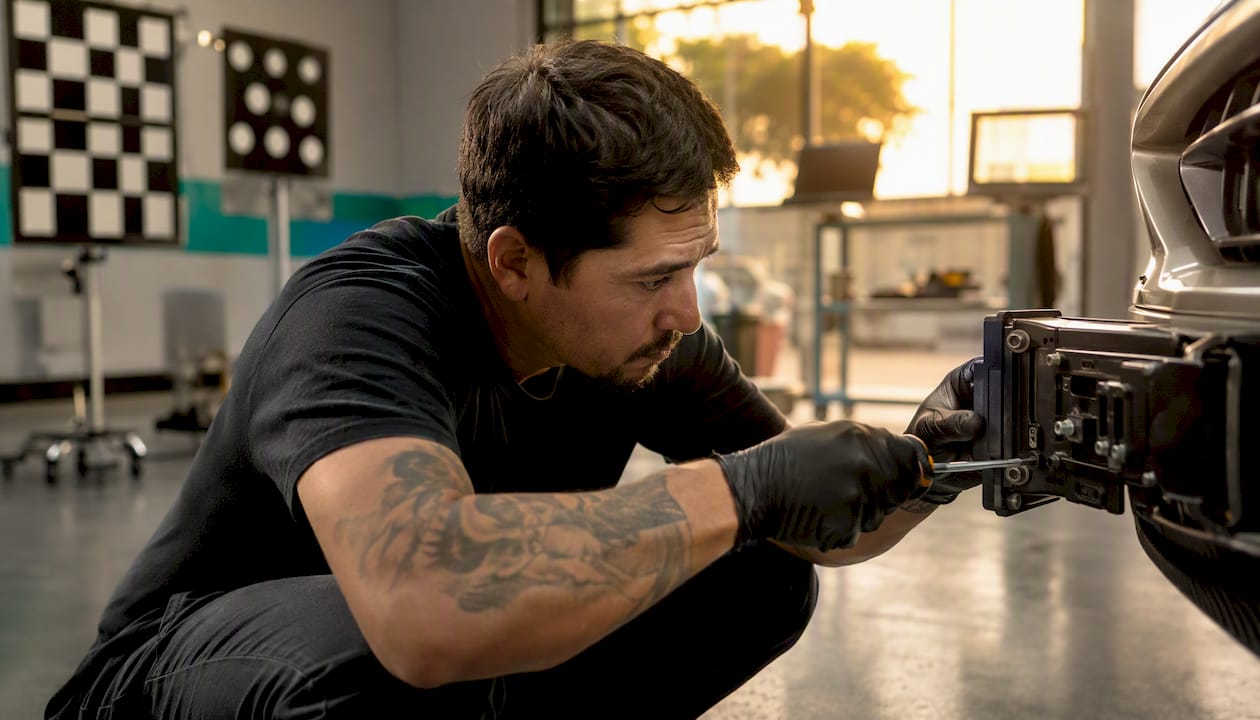
Discover the breakdown of ADAS calibration costs for 2026, including what drivers can expect to pay based on different scenarios and coverage.
Most ADAS calibrations run $150–$600 per system, though a vehicle with multiple sensors damaged in a single collision can push the total invoice to $1,000 or more. When calibration is required as part of a covered collision or glass claim, your insurer typically pays for it — provided the shop documents the work correctly.
Here is how pricing breaks down across the three most common scenarios:
Low end ($150–$300): Single-system static calibration at an independent shop or mobile technician — most common after a windshield replacement with one forward camera.
Typical ($300–$600): Dynamic or dual calibration, or a static calibration at a dealership service department. Industry pricing data places most single-system jobs in this band.
High end ($600–$1,500+): Multi-system events — a front-end collision that displaces a radar, a camera, and a lane-keep sensor simultaneously, or a luxury or EV platform with proprietary calibration requirements.
Pro Tip: When you receive a repair estimate after any collision or windshield job, ask the shop to list calibration as a separate line item on the insurance claim before the adjuster approves the scope. Adding it as a supplement after the fact is slower and sometimes denied.
Key Takeaways
Most ADAS calibrations cost $150–$600 per system, with total invoices often reaching $700 or more once pre-scan, post-scan, and parts are included — and insurance typically covers it when documentation is complete.
Point
Details
Typical cost per system
Single-system calibration runs $150–$600; multi-system collisions can total $1,200–$2,000 in calibration charges alone.
Insurance usually pays
Insurers cover calibration when it’s part of a covered repair and the shop provides pre-scan, post-scan, and OEM procedure documentation.
Dealers cost significantly more
Dealerships often charge 2–3x independent shop rates for equivalent calibration work; an independent with proper equipment is the better value.
Skipping calibration is a safety risk
Miscalibrated sensors can impair AEB, ACC, and lane-keep systems, and active DTCs can complicate future insurance claims.
Cargeekscollision
Offers in-house ADAS calibration with OEM documentation, insurance claim support, and a lifetime workmanship warranty in South Florida.
Table of Contents
What we see at the shop: calibration patterns and best practices
What does the total ADAS calibration bill actually look like?
Why fair ADAS calibration pricing matters more than most drivers realize
Cargeekscollision handles ADAS calibration and insurance claims in South Florida
What is ADAS and which systems need calibration?
Advanced Driver Assistance Systems (ADAS) is the collective term for the sensors, cameras, and software that help your vehicle avoid crashes and stay in its lane. The hardware is precise by design — and that precision is exactly why it needs recalibration after any repair that moves, replaces, or even slightly shifts a component.
The systems most commonly requiring calibration include:
Forward-facing camera / automatic emergency braking (AEB): Mounted on or near the windshield; disturbed by any glass replacement.
Front radar / adaptive cruise control (ACC): Sits behind the front bumper or grille; affected by any front-end impact.
Blind-spot monitoring radar: Located in rear quarter panels or bumper corners; disturbed by rear-corner or bumper repairs.
Lane-keep assist: Often shares the forward camera; recalibration required when the camera is moved.
Parking sensors and surround-view cameras: Ultrasonic sensors in bumpers; affected by bumper replacements or repaints.
Rear cross-traffic alert: Rear bumper-mounted radar; requires calibration after any rear collision work.
Consumer Reports survey data confirms that most drivers who have these systems say they helped prevent crashes — which makes proper calibration a genuine safety matter, not a billing formality. Most vehicles built since approximately 2020 include at least one calibratable ADAS feature, and many carry four or more.
What does ADAS calibration actually involve?
Calibration means aligning your vehicle’s sensors and cameras back to the manufacturer’s exact specifications using diagnostic scan tools, physical targets, road tests, or a combination of all three. Car and Driver’s technical explainer notes that even small misalignments in forward-facing radars and cameras can produce faulty data or trigger diagnostic trouble codes (DTCs) — which is why OEM procedures specify exact target distances, lighting conditions, and surface requirements.
There are four distinct service types, and they carry different costs:
Pre-scan (diagnostic scan only): Performed before repairs begin to identify existing DTCs and establish a baseline. Billed as a separate line item, typically $50–$150.
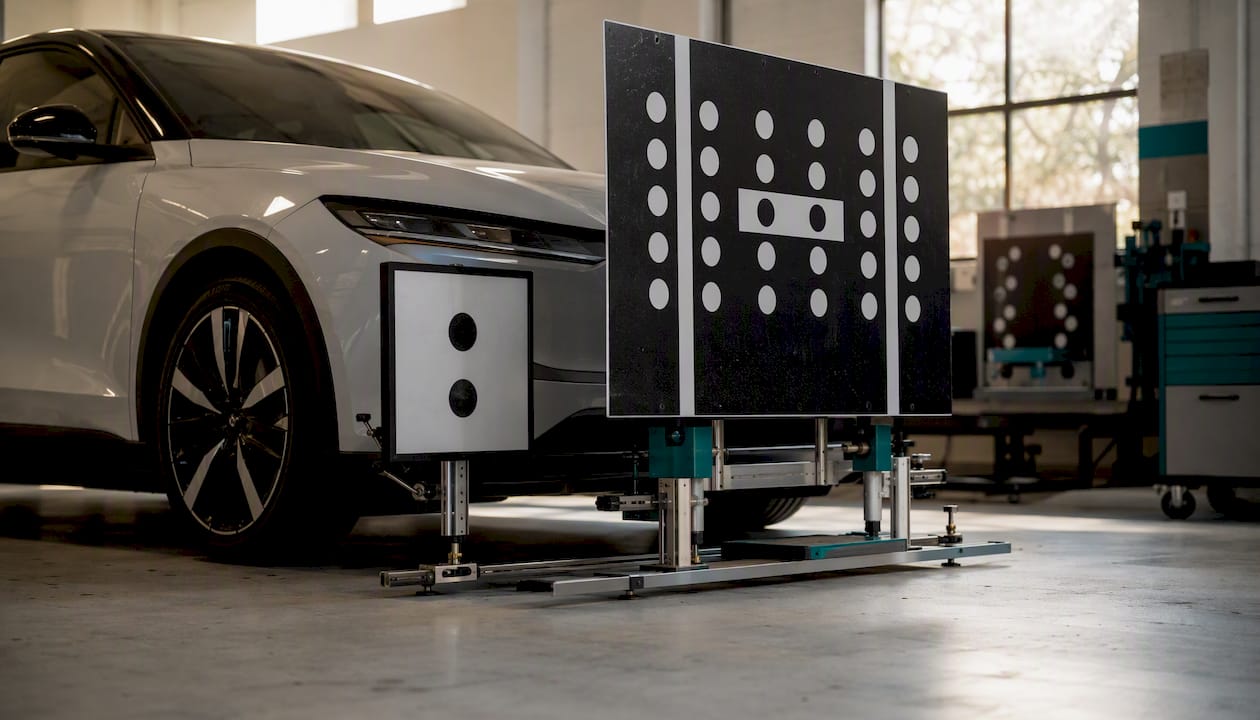
Static calibration: The vehicle sits stationary in a controlled environment while technicians position calibration targets at precise OEM-specified distances. No road test required. Best for forward cameras and some radar systems.
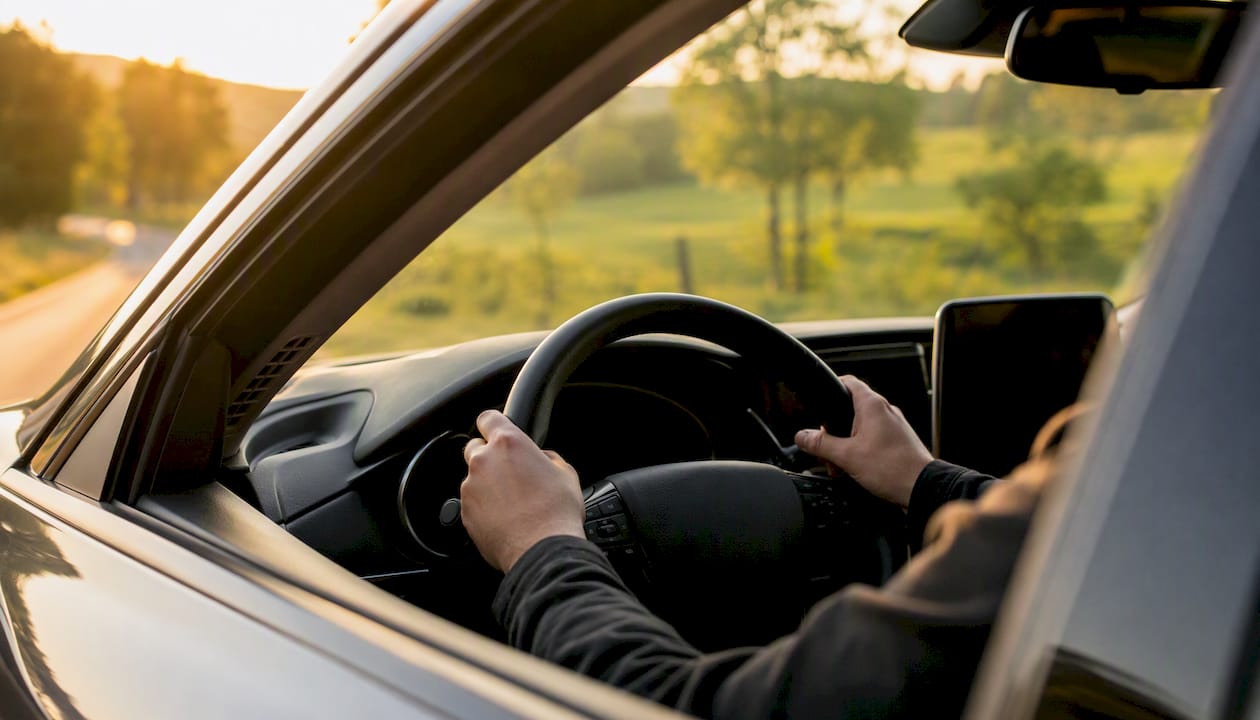
Dynamic calibration: The technician drives the vehicle at specific speeds on roads with clear lane markings while the system self-calibrates. Required for some ACC and lane-keep systems.
Dual calibration: Static first, then dynamic. Required by many OEMs for windshield-mounted cameras and certain radar systems. Longest and most expensive method.
Post-scan: Final diagnostic scan after calibration to confirm all DTCs are cleared and systems are operating within spec. Also billed separately.
Pro Tip: Before you approve any repair, ask the shop to reference the OEM calibration procedure by name or document number on the repair order. That reference protects you if the insurer questions the method later and gives you proof the correct process was followed.
How much does ADAS calibration cost? Typical price ranges
A single-system calibration at an independent shop generally falls between $150 and $600, with the method driving most of the variation. Multi-system repairs stack those fees quickly.
Calibrated Component
Low Range
High Range
Notes
Front camera (static)
$150
$300
Most common after windshield replacement
Front radar (static or dynamic)
$175
$400
Front-end collision; may require dual
Rear camera
$100
$250
Often included with bumper repair
Side/blind-spot radar
$150
$360
Per side; rear-corner impacts
Parking/ultrasonic sensors
$75
$200
Per bumper; often bundled
Statistic: AAA found that relocating ADAS components during windshield replacement and performing the required calibration averaged $360 and represented a significant share of the average total windshield-replacement repair estimate across their three-vehicle study sample.
Common invoice scenarios that combine multiple fees:
Windshield replacement with forward camera: Glass cost + $250–$450 for camera transfer and static calibration. Total repair often $1,200–$1,800.
Front bumper repair with radar work: Bumper labor + $175–$400 for radar recalibration. Front-end collision repairs frequently exceed $2,500 once calibration is included.
Mirror replacement with integrated camera: Mirror part + $150–$300 for camera calibration. Easily overlooked on estimates.
What factors push your calibration price up or down?
Not every shop quotes the same job the same way. Several variables move the number significantly:
Number and type of sensors: Each system requiring calibration adds its own fee. A luxury SUV with front radar, a windshield camera, blind-spot sensors, and a surround-view system can generate four separate calibration line items from a single collision.
OEM vs. aftermarket glass: Many windshield-mounted cameras require OEM glass to achieve the correct optical properties for calibration. Aftermarket glass can cause calibration failures or require repeated attempts. Read more about OEM vs. aftermarket parts and why the choice matters for your warranty.
Calibration method: Static costs less than dynamic; dual costs the most. The OEM procedure — not the shop’s preference — dictates which method is required.
Dealer vs. independent shop: Benchmarking data shows dealership service departments often charge 2–3x what independent shops charge for equivalent calibration work. One documented example: $1,240 at a dealership versus $310 at an independent shop for the same calibration.
Equipment and licensing costs: Industry analysis reports that top-tier calibration rigs cost approximately $70,000, standalone frames run in the high $30,000s to low $40,000s, and comprehensive systems exceed $100,000. Shops pass those capital costs through to consumers, which is why shops with full in-house capability sometimes charge more than mobile sublets — and why not every shop can offer it at all.
Regional labor rates: South Florida rates differ from rural Midwest rates. Expect higher calibration fees in metro markets.
Pro Tip: If your vehicle has a windshield-mounted camera, confirm with the shop before glass is ordered whether OEM glass is required for your specific make and model. Switching to OEM after aftermarket glass has already been cut wastes time and money.
Does insurance cover ADAS calibration?
Yes, in most cases — when calibration is required as part of a covered repair and the shop documents it properly. The key phrase is “required as part of.” Insurers do not pay for elective recalibrations; they pay when a covered collision or glass claim makes calibration necessary.
Documentation the insurer will want to see:
Pre-scan report showing existing DTCs before repairs began.
Post-scan report confirming all DTCs are cleared after calibration.
OEM procedure citation on the repair order, referencing the manufacturer’s calibration specification by name or document number.
Parts list showing any replaced sensors or cameras, with OEM part numbers when applicable.
Calibration method used (static, dynamic, or dual) and the equipment used to perform it.
Carrier benchmarking data shows pay-rate ranges vary meaningfully by insurer: static calibration payments typically fall between $165 and $375, and dynamic between $135 and $275, depending on the carrier. Sublet markups are also carrier-specific. Invoicing pre-scan and post-scan as separate line items — rather than bundling them into a single “calibration” charge — materially improves approval rates.
Pro Tip: When submitting a supplement for calibration, attach the scan-tool printout and the OEM procedure reference directly to the supplement. Adjusters who can see the documentation alongside the charge approve them faster and deny them less often.
How long does ADAS calibration take?
The calibration itself is often faster than drivers expect. Scheduling and parts delays are where time disappears.
Pre-scan or post-scan only: 15–30 minutes.
Static calibration: 30–90 minutes in the bay, plus 15–30 minutes of setup time to position targets precisely.
Dynamic calibration: 30–90 minutes including the road test, depending on how quickly the system achieves a confirmed calibration state.
Dual calibration: Typically 1.5–3 hours combining both methods.
The end-to-end timeline from damage detection to completed calibration usually follows these steps:
Initial pre-scan to identify affected systems (same day as drop-off in most shops).
Parts ordering and repair work (1–5 days depending on parts availability).
Static calibration, if required (scheduled in-house or sublet to a specialist).
Dynamic calibration road test, if required (same day as static in most cases).
Post-scan verification and documentation.
Final repair order with all scan reports attached.
Equipment scarcity is a real constraint. Shops that sublet calibration to a mobile technician or specialist may wait days for an available appointment, which extends the overall repair timeline even when the body work is finished.
Where should you get your ADAS calibration done?
Four provider types handle ADAS calibration, and each has trade-offs:
Dealership service departments: Have OEM scan tools and direct access to manufacturer procedures. Also the most expensive option, often by a wide margin.
Independent collision shops with in-house capability: Shops that have invested in professional calibration equipment can match OEM-grade results. Ask specifically which scan tool and calibration frame they use.
Mobile calibration technicians: Lower overhead often means lower prices for static calibrations. Confirm they carry OEM procedure access and provide printed scan reports.
Specialist sublet providers: Some collision shops sublet to a dedicated ADAS calibration company. Results are typically solid; confirm the sublet provider’s equipment and that reports come back on the repair order.
Questions to ask any provider before you commit:
What calibration equipment do you use, and does it cover my vehicle’s OEM procedures?
Do you provide printed pre-scan and post-scan reports with every job?
Is OEM glass required for my windshield-mounted camera?
What is your warranty on calibration work?
Will the calibration be performed in-house or subletted?
Pro Tip: Independent specialists often deliver OEM-equivalent results at significantly lower prices than dealerships. Ask for the scan report printout before you leave — if a shop hesitates to provide it, that is a signal worth taking seriously.
What happens if you skip ADAS calibration?
Skipping calibration after a repair that disturbs a sensor is not a cost-saving move. The consequences are concrete:
Impaired AEB performance: A misaligned forward camera may fail to detect obstacles at the correct distance, reducing or eliminating automatic braking response.
ACC errors: Adaptive cruise control may follow too closely or brake unnecessarily when radar is out of spec.
Lane-keep malfunction: The system may generate false lane-departure warnings or fail to intervene when the vehicle actually drifts.
Active DTCs: Out-of-calibration sensors trigger diagnostic trouble codes that illuminate warning lights and can cascade into other electrical diagnostics.
Insurance complications: A subsequent crash involving a system that was never recalibrated after a prior repair can give an insurer grounds to question the prior claim’s completeness or deny coverage for related damage.
Consumer Reports data underscores the stakes: drivers consistently report that ADAS features helped them avoid crashes. A system that is physically present but miscalibrated provides none of that protection while creating a false sense of security.
Industry commentary also notes that missed calibrations after glass and bumper repairs are among the most common undocumented repair failures — systems that appear to function normally but are operating outside OEM tolerances.
Checklist for getting an accurate calibration estimate
Use this list when gathering quotes so you can compare them on equal terms:
VIN and full vehicle details: Year, make, model, and trim level. Calibration requirements differ by trim even within the same model year.
List of parts being replaced: Every sensor, camera, or module being replaced needs its own calibration line item.
Windshield replacement status: Specify OEM or aftermarket glass. If OEM is required, confirm it before ordering.
OEM procedure reference: Ask the shop to identify the manufacturer calibration procedure that applies to your vehicle.
Pre-scan and post-scan as separate line items: Confirm both appear individually on the estimate, not bundled into a single “calibration” charge.
Calibration method required: Static, dynamic, or dual — the OEM procedure dictates this, not the shop’s preference.
Sublet disclosure: If calibration is being subletted, ask who performs it and confirm their equipment and documentation practices.
Warranty terms: Get the calibration warranty in writing, including what it covers and for how long.
Pro Tip: A quote that bundles pre-scan, post-scan, and calibration into one line item is harder to get approved by an insurer and harder to supplement if something is missed. Separate line items protect you and the shop.
What we see at the shop: calibration patterns and best practices
At Cargeekscollision in Hollywood, Florida, certain patterns show up consistently across ADAS calibration jobs:
Windshield + forward camera is the single most common combination. Most drivers don’t realize the camera transfer and calibration are separate charges from the glass itself until they see the estimate.
Rear bumper repairs on luxury vehicles frequently involve blind-spot radar and rear cross-traffic alert calibration that gets missed when shops aren’t ADAS-aware.
Multi-system front-end collisions on Tesla, BMW, Mercedes-Benz, and Audi platforms routinely require three or more calibration procedures, each with its own OEM procedure reference.
Sublet delays are the most common reason a vehicle stays in the shop longer than expected after the body work is complete.
Every calibration job at Cargeekscollision includes OEM procedure documentation, printed pre-scan and post-scan reports stored with the estimate, and a lifetime workmanship warranty on the calibration work. For EV owners, our EV-specific repair capabilities extend to the unique sensor architectures on Tesla, Rivian, and Lucid platforms.
Pro Tip: Request that the repair order include the OEM calibration procedure reference, both scan reports, and the written warranty before you pick up your vehicle. Those documents protect your insurance claim, your resale value, and your ability to dispute any future warranty issue.
What does the total ADAS calibration bill actually look like?
The per-system ranges above are useful benchmarks, but the real number on your invoice includes several ancillary fees that drivers often don’t anticipate.
A realistic total for a single-system calibration at an independent shop looks like this: pre-scan ($75–$150) + calibration labor ($150–$400) + post-scan ($75–$150) = $300–$700 all-in for one system. Add a replaced sensor or camera and the parts cost alone can add $200–$800 depending on the component. AAA’s per-sensor repair data shows front radar replacement running $500–$1,300 and front camera replacement at $600–$800 before calibration labor.
For a multi-system collision — say, a front-end impact that displaces a radar, a camera, and triggers blind-spot recalibration — the total calibration-related charges alone can reach $1,200–$2,000 on top of structural and paint costs. On a luxury or EV platform, that number climbs further. The key takeaway: calibration is not a $200 add-on. On a complex repair, it is a meaningful share of the total invoice, and it belongs on the insurance claim from the start.
From damage to done: the full calibration timeline
Understanding the sequence helps you set realistic expectations and catch delays before they compound.
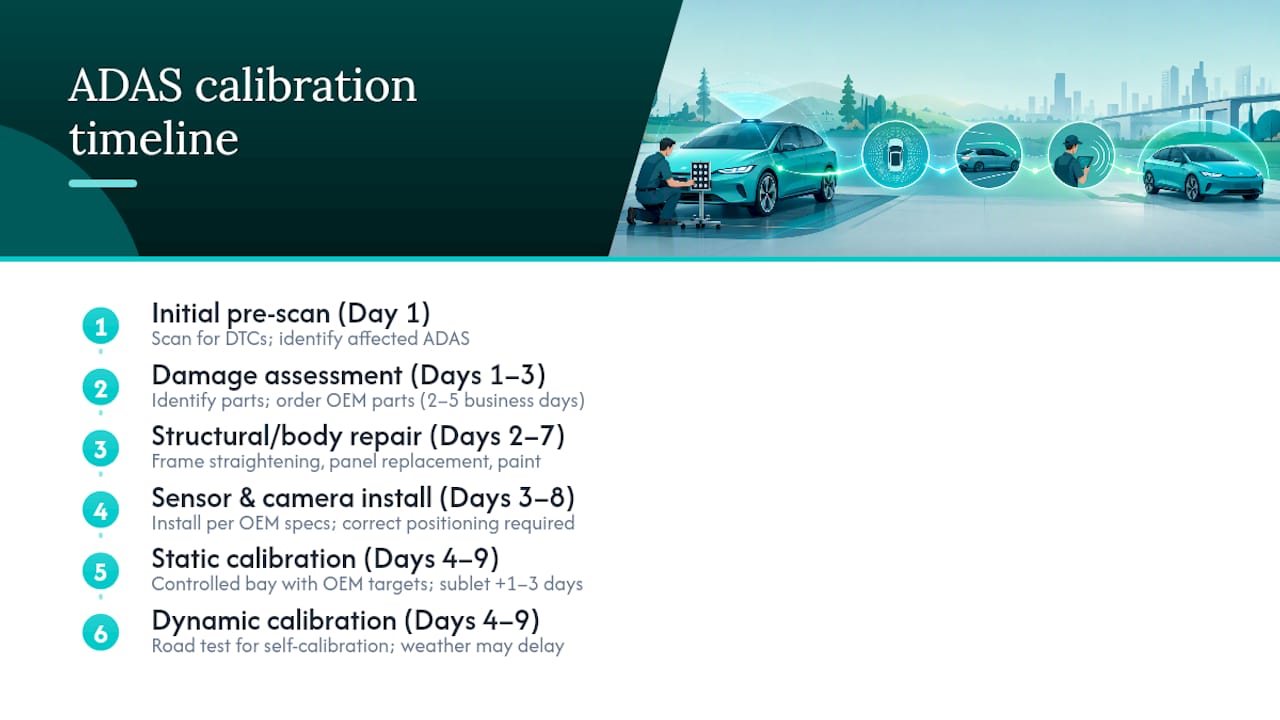
Step 1 — Initial pre-scan (Day 1): The shop scans the vehicle on arrival to document all existing DTCs and identify which ADAS systems are affected. This scan drives the repair plan.
Step 2 — Damage assessment and parts ordering (Days 1–3): The estimator identifies all sensors, cameras, and modules requiring replacement. OEM parts for luxury and EV platforms can take 2–5 business days to arrive.
Step 3 — Structural and body repair (Days 2–7): Frame straightening, panel replacement, and paint work are completed before calibration begins. Calibration cannot be performed on a vehicle that is still dimensionally incorrect.
Step 4 — Sensor and camera installation (Days 3–8): Replacement components are installed per OEM torque and positioning specifications. Incorrect installation position invalidates calibration.
Step 5 — Static calibration (Days 4–9): Performed in a controlled bay with targets positioned to OEM specifications. Some shops sublet this step, which can add 1–3 days for scheduling.
Step 6 — Dynamic calibration road test (Days 4–9, same day as static when possible): The technician drives the vehicle to complete the self-calibration sequence. Weather and road conditions can delay this step.
Step 7 — Post-scan and documentation (Final day): A final scan confirms all DTCs are cleared. Scan reports, OEM procedure references, and warranty documentation are attached to the repair order.
Step 8 — Delivery: The vehicle is released with a complete repair file. Total elapsed time for a straightforward single-system repair: 3–5 business days. A complex multi-system collision on a luxury or EV platform: 10–20 business days is realistic when parts and sublet scheduling are factored in.
Why fair ADAS calibration pricing matters more than most drivers realize
The pricing variation in this market is not random. It reflects real differences in equipment investment, OEM procedure access, technician training, and shop overhead. A shop charging $600 for a dual calibration that another shop quotes at $200 may simply be the shop doing it correctly — with a calibrated frame, OEM targets, and printed scan reports. The $200 quote may be a mobile tech with a generic scan tool and no documentation.
What you should expect from any reputable shop:
A written repair order that lists pre-scan, calibration, and post-scan as separate line items with OEM procedure references.
Printed scan reports provided to you at delivery, not just stored internally.
A written warranty on calibration work, not a verbal assurance.
The equipment cost reality is real: industry analysis shows comprehensive calibration systems exceed $100,000, which is why not every shop can offer full in-house capability. Shops that have made that investment deserve to recover it — but they should also be able to show you the documentation that proves the work was done correctly.
Cargeekscollision handles ADAS calibration and insurance claims in South Florida
For drivers in South Florida who need ADAS calibration done right the first time, Cargeekscollision offers in-house diagnostics and calibration with full OEM documentation — no sublet delays, no missing scan reports.
Here is what you get when you bring your vehicle to Cargeekscollision:
In-house ADAS diagnostics and calibration for all major makes, including Tesla, BMW, Mercedes-Benz, Audi, Porsche, Range Rover, and other luxury and EV platforms.
OEM repair procedures followed on every job, with procedure references documented on the repair order.
Pre-scan and post-scan reports provided to you at delivery and submitted directly to your insurer.
Insurance claim assistance from estimate through final approval, including supplement support for calibration line items.
Lifetime workmanship warranty on all calibration and collision repair work.
Courtesy loaner vehicles when available, so you are not without transportation during a complex repair.
Request your free collision and calibration estimate online, or visit our ADAS calibration service page to learn more about our capabilities and documentation practices. Serving Hollywood, Fort Lauderdale, Aventura, Hallandale Beach, Pembroke Pines, Miramar, and surrounding South Florida communities.
Sources
The following sources informed this guide and are worth reviewing directly if you want to go deeper on any specific topic:
ADAS Calibration Cost in 2026 | Static, Dynamic & Dual Calibration Prices — Glass and Auto
What ADAS calibration pays in 2026: carrier-by-carrier breakdown — Claimory Blog
Most drivers say safety systems helped prevent crashes, survey shows — Consumer Reports
Dealerships charge 3x more for ADAS recalibration than repair shops — MechanicNow
Recommended