
Blog
Where to Find Your Tesla Paint Codes and What They Mean
Discover how to locate your Tesla paint codes and what they mean for accurate color matching and repairs. Get started today!
Your Tesla’s factory paint code sits on a label reading “PNT:” followed by a four-character code, located on the driver-side door jamb or B-pillar, or in Car Details inside the Tesla app. That code, not the color name, is what a body shop or paint supplier needs to mix an accurate match, according to Tesla’s own body repair documentation.
A handful of codes show up on most Teslas on the road today:
PPSW – Pearl White Multi-Coat
PBSB – Solid Black
PMNG – Midnight Silver Metallic
PPMR – Red Multi-Coat
PR01 – Ultra Red
Check the driver-side door jamb first. If the sticker is faded or missing, open the Tesla app and confirm the color name under Car Details, then cross-reference it against a factory code list like Car Editor’s Tesla paint code tool. At Car Geeks Collision, we ask every Tesla owner for that exact code before we ever open a can of paint.
Key Takeaways
Locating your Tesla’s four-character factory paint code on the driver-side door jamb or B-pillar is the single most important step toward an accurate color match.
Point
Details
Find the “PNT:” label
Check the driver-side B-pillar on Model 3/Y or the door jamb on Model S/X and Cybertruck.
Use the app as backup
The Tesla app’s Car Details screen shows the color name, not the technical code, so treat it as a starting point only.
Match code to color
Reference codes like PPSW, PBSB, PMNG, PPMR, and PR01 against a factory paint code table before ordering.
Know when to call a pro
Multi-coat and metallic finishes typically require shop-grade mixing rather than a touch-up pen.
Bring the right details
Car Geeks Collision matches Tesla finishes using OEM-approved paint systems, so bring your paint code, photos, and vehicle year when you book.
Table of Contents
Where Is the Tesla Paint Code Sticker on Each Model?
Tesla doesn’t put the paint code in the same spot on every model, and that trips up a lot of owners who go looking in the wrong place.
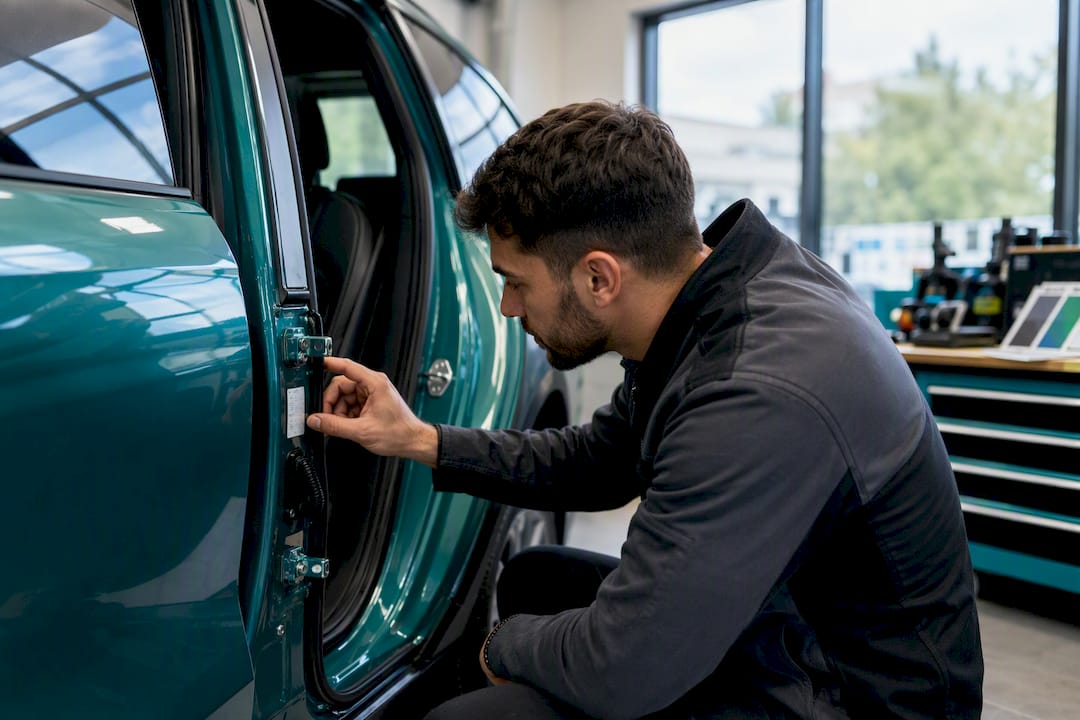
Model 3 and Model Y: Check the driver-side B-pillar, the vertical strip of metal between the front and rear doors. Open the driver’s door and look at the sticker on the pillar itself.
Model S and Model X: The label sits on the driver-side door jamb, usually near the door latch mechanism or along the inner door frame edge.
Cybertruck: The paint code label follows the same driver-side door jamb convention, though owners should confirm placement since panel design differs from the sedan and crossover lineup.
On every model, look for the “PNT:” prefix. That’s your marker. It’s followed directly by a four-character alphanumeric code, no spaces, and it sits alongside other manufacturing data like the VIN and trim codes on the same label.
Pro Tip: If the sticker looks sun-bleached or has been painted over during a previous repair, don’t guess. Pull up the Tesla app, tap into Car Details, and note the exact color name shown there. It won’t give you the raw code, but it narrows down which entry to check on a factory code reference.
If a panel has been replaced and the new part lacks a sticker entirely, that’s a sign to call Tesla service or a repair center that can verify the color by VIN instead of guessing from memory.
What Do the Common Tesla Paint Codes Look Like?
Once you’ve got your code, matching it to a color name and finish type takes seconds. Here’s a reference for the codes owners run into most often:
Factory Code
Color Name
Typical Finish
PPSW
Pearl White Multi-Coat
Multi-coat
PBSB
Solid Black
Solid
PMNG
Midnight Silver Metallic
Metallic
PPMR
Red Multi-Coat
Multi-coat
PR01
Ultra Red
Multi-coat
PMSS
Silver Metallic
Metallic
PBSW
Solid White
Solid
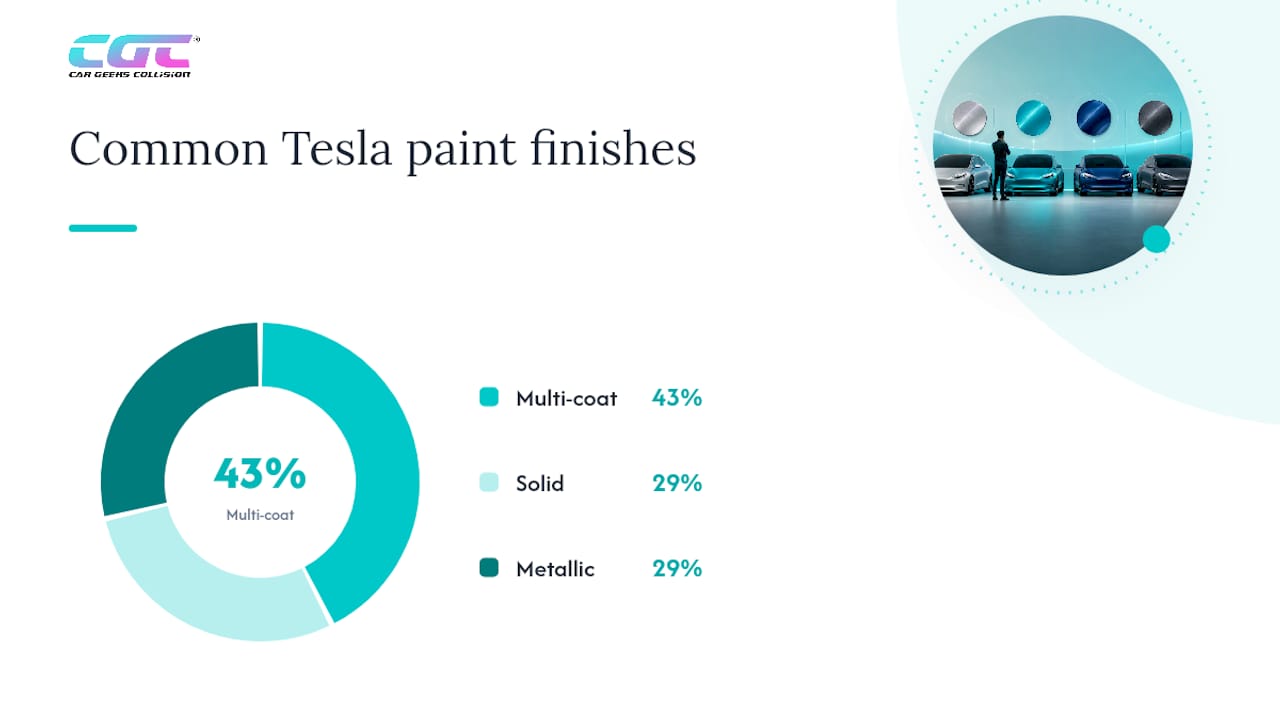
A more complete list, including hex values and less common regional colors, is maintained by Car Editor’s paint code database, which is worth bookmarking if you own more than one Tesla or work on them professionally.
A few things to keep in mind before you order anything based on this table. Tesla has discontinued certain colors over the years and introduced new ones, so a code on an older Model S might not appear on a current parts list. Guides that catalog historical Tesla color mappings note that some discontinued shades now require custom mixing rather than an off-the-shelf match.
Also, don’t confuse a body paint code with a wheel code. Tesla documents wheel and rim finishes separately from body paint, and owners occasionally hand a shop the wrong code because they assumed one label covered both. If you’re touching up a scuffed rim, that’s a different lookup entirely.
How Do You Actually Use the Paint Code?
The four-character format matters more than it looks. Tesla’s codes almost always start with “P,” and that structure is what separates a technical identifier from a marketing name. “Midnight Silver Metallic” tells a paint supplier what to picture. “PMNG” tells them exactly which formula to mix.
Here’s the practical order of operations once you’ve got your code:
Read the “PNT:” entry off the door jamb or B-pillar sticker.
Confirm your model and year, since some codes shift meaning across production runs.
Provide the code, along with a clear photo of the panel, to your paint supplier or body shop.
Ask specifically whether the job needs an OEM-approved system with tri-coat or mid-coat components, especially for multi-coat colors like PPSW or PPMR.
If the sticker is gone and you’re working from memory, a shop can often verify the color through your VIN. That’s a fallback, not a first choice. Some suppliers note that certain Tesla codes require both a base coat and a mid coat supplied together, which the app’s color name alone won’t tell you. Treat that name as a starting point, never as the final word a supplier needs.
When Should You Trust a DIY Touch-Up vs. Call a Shop?
Solid colors like PBSB forgive small mistakes. Multi-coat and metallic finishes like PMNG, PPSW, or PPMR do not, and here’s why: those colors are built from layered coats, a base layer, sometimes a mid-coat carrying mica or pearl particles, and a clear coat on top. Get the ratio or application angle even slightly off and the repaired spot reflects light differently than the surrounding panel, especially in direct sun.
Ask yourself these questions before reaching for a touch-up pen:
Is the damage smaller than a dime and on a solid color like PBSB?
Is it in a low-visibility spot, like below the bumper line?
Is the finish solid rather than metallic or multi-coat?
If you answered no to any of those, it’s a shop job. Tesla’s own repair procedures require approved paint systems for body work precisely because chemical composition and light reflectivity have to match the factory finish, not just look close under a garage bulb. Professional shops that specialize in automotive painting also rely on controlled booths and calibrated mixing systems that a driveway repair simply can’t replicate.
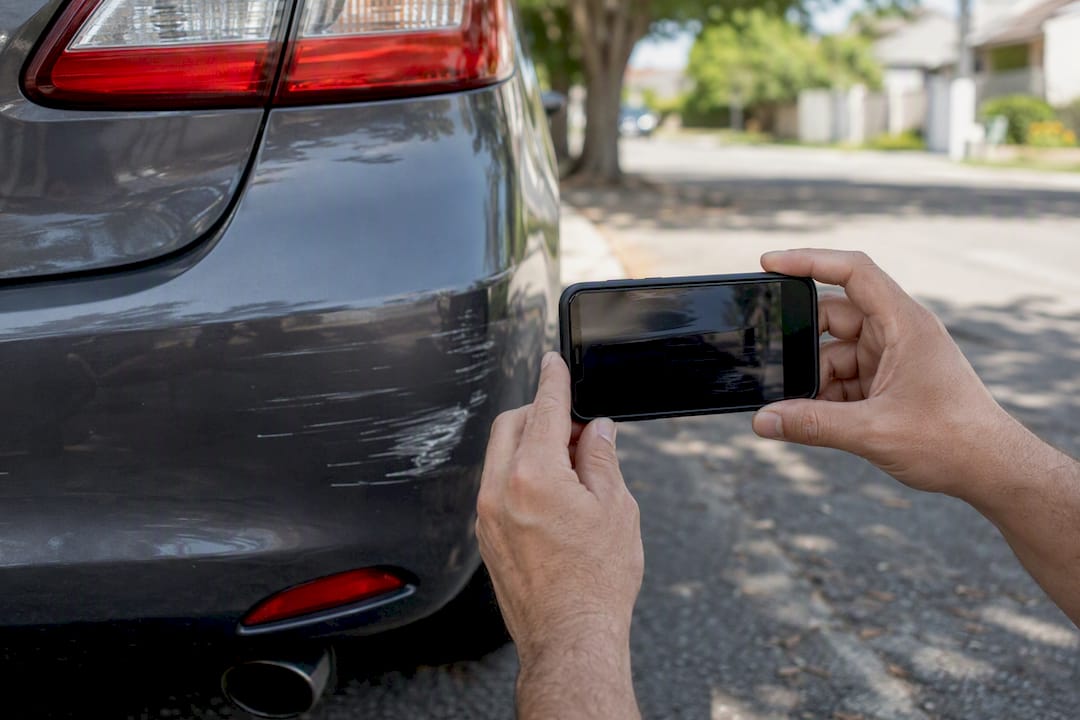
Pro Tip: Before you bring your car in anywhere, photograph the damage in direct daylight, not under garage lighting, and have your “PNT:” code, model, and year ready. A high-resolution close-up saves the shop a diagnostic step and gets you a faster, more accurate quote.
A shop’s honest take on paint codes
The code gets you in the door, not out of it. Anyone can read a “PNT:” label and hand it to a supplier, but matching a multi-coat metallic finish so it disappears under direct sun takes shop-grade mixing equipment and hands that have sprayed that exact formula before. At Car Geeks Collision, our EV and Tesla repair work leans on that OEM process experience precisely because a technically correct code, applied carelessly, still leaves a visible seam.
Bring Your Paint Code to Car Geeks Collision for an Exact Match
Car Geeks Collision gives Tesla owners something a generic body shop can’t: repair work built specifically around EV structures, OEM-approved paint systems, and the ADAS recalibration your Tesla’s cameras and sensors need after any body work near the windshield or bumpers.
When you book with us, bring three things: your “PNT:” code from the door jamb or B-pillar, clear photos of the damage in daylight, and your vehicle’s model and year. If you’re filing a claim, we’ll also coordinate directly with your insurance carrier, and we offer courtesy towing plus loaner vehicles when available so you’re not stuck without a car during the repair. Every job carries a lifetime workmanship warranty. Start by visiting our EV and Tesla body repair page to see what a proper OEM-matched repair looks like, or reach out with your paint code and photos to get a quote started today.
Sources
FAQ
How Do I Check My Tesla’s Paint Code?
Open the driver-side door and look for a sticker on the B-pillar (Model 3/Y) or door jamb (Model S/X, Cybertruck) reading “PNT:” followed by a four-character code.
What Is the Rarest Tesla Color?
Rarity shifts by model year since Tesla periodically discontinues colors; guides that track historical Tesla color mappings note that several early limited-run shades are no longer offered and now require custom mixing to match.
Is Tesla Paint Code PR01 a Three-Stage Finish?
PR01 (Ultra Red) is a multi-coat finish, meaning it uses layered coats rather than a single solid application, which is why professional application matters more for this code than for solid colors like PBSB.
Can I Find My Paint Code by VIN Number?
Yes. If the physical sticker is missing or unreadable, Tesla service or a body shop like Car Geeks Collision can typically verify your factory color through your VIN rather than the door jamb label.
Recommended