
Blog
Does Your Tesla High-Voltage Battery Need Repair or Replacement?

Tesla battery warning, charging problem, range loss, or collision damage? Learn how diagnosis determines repair, used or remanufactured pack replacement, or another solution.
A Tesla high-voltage battery should not be replaced based only on reduced displayed range, a warning message, or a charging problem. Those symptoms can involve the battery pack, battery-management system, thermal system, charging components, low-voltage system, wiring, software, driving conditions, or another vehicle system. The correct decision begins with model-specific diagnosis.
Car Geeks Collision in Hollywood, Florida performs in-house Tesla battery diagnostics, module-level repair when appropriate, BMS programming and calibration, documented battery-health reporting, and complete high-voltage pack replacement. Model S, Model 3, Model X, Model Y, and Cybertruck compatibility is confirmed using the VIN, diagnosis, parts availability, and the requirements for the individual vehicle.
High-Voltage Battery or Low-Voltage Battery?
The traction battery stores energy used to propel the Tesla. The separate low-voltage battery supports electronics, locks, controls, contactors, and vehicle startup functions. A low-voltage fault can create warnings or prevent normal operation without proving that the high-voltage pack has failed.
Signs That Justify Professional Diagnosis
Arrange diagnosis for persistent battery or charging warnings, inability to charge, unexpectedly reduced power, repeat thermal warnings, a substantial unexplained range change, coolant concerns, isolation faults, or symptoms following collision or flood exposure. A warning should be documented exactly as displayed rather than translated into a guessed repair.
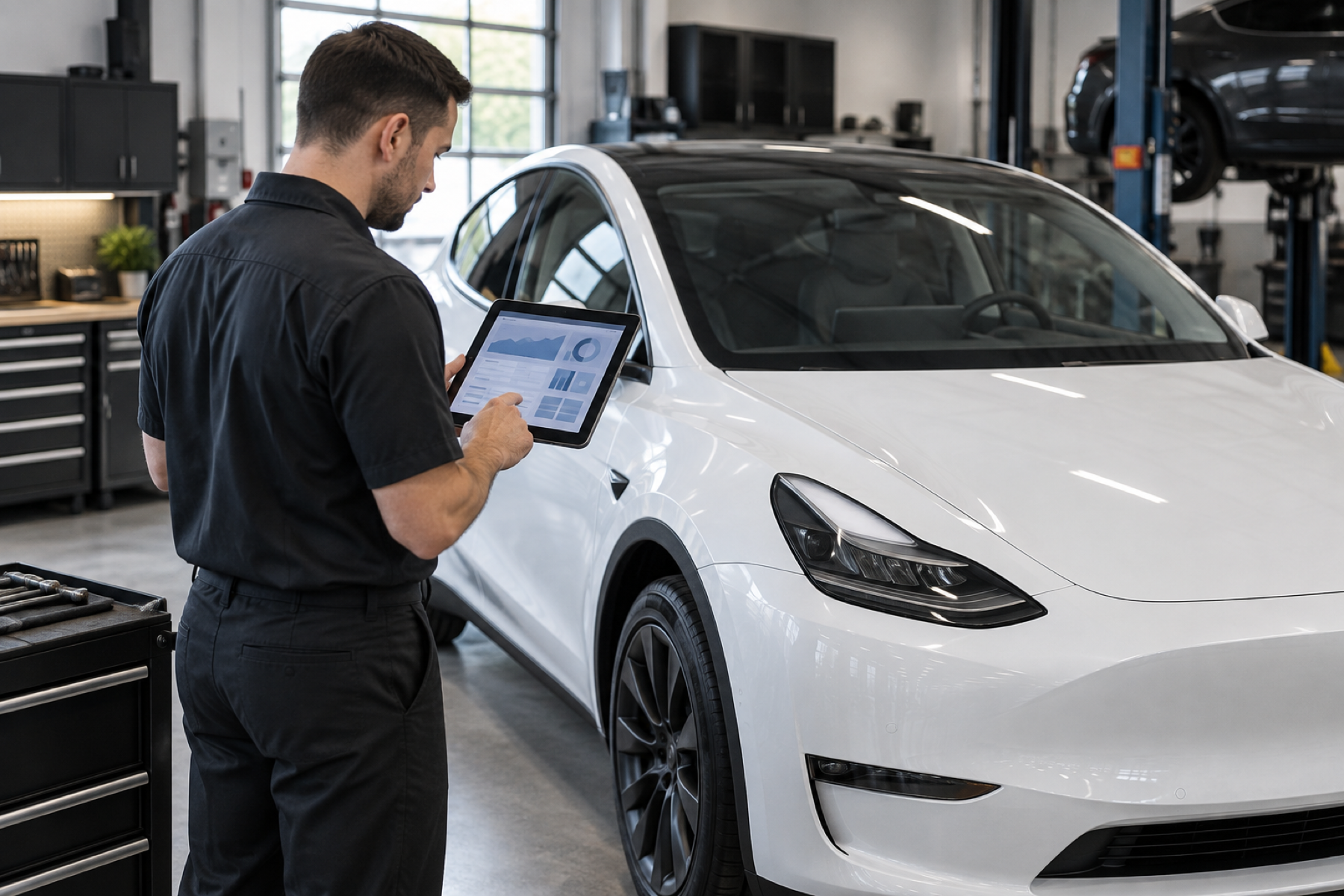
Illustrative image: Diagnostic findings should determine whether repair or replacement is appropriate.
Why Range Loss Does Not Automatically Mean Pack Replacement
Displayed range is an estimate affected by temperature, speed, climate-control use, elevation, tires, driving history, software calculations, charging habits, and battery condition. Tesla also states in its warranty documentation that range estimates are an imperfect measure of battery capacity. A capacity concern needs diagnostic evidence rather than an estimate based only on the dashboard number.
Charging Problems Can Start Outside the Battery
A Tesla that will not charge may have a concern involving the charging equipment, charge port, onboard charging hardware, thermal system, wiring, communication, software, low-voltage supply, or the high-voltage battery. Testing should isolate the cause before a battery pack is ordered.
Exterior Battery Enclosure and Underbody Inspection
After an underbody impact or collision, the exterior battery enclosure and surrounding structure should be evaluated without assuming that visible body damage represents the full condition. The inspection plan depends on the exact Tesla model, impact location, warnings, and manufacturer information.
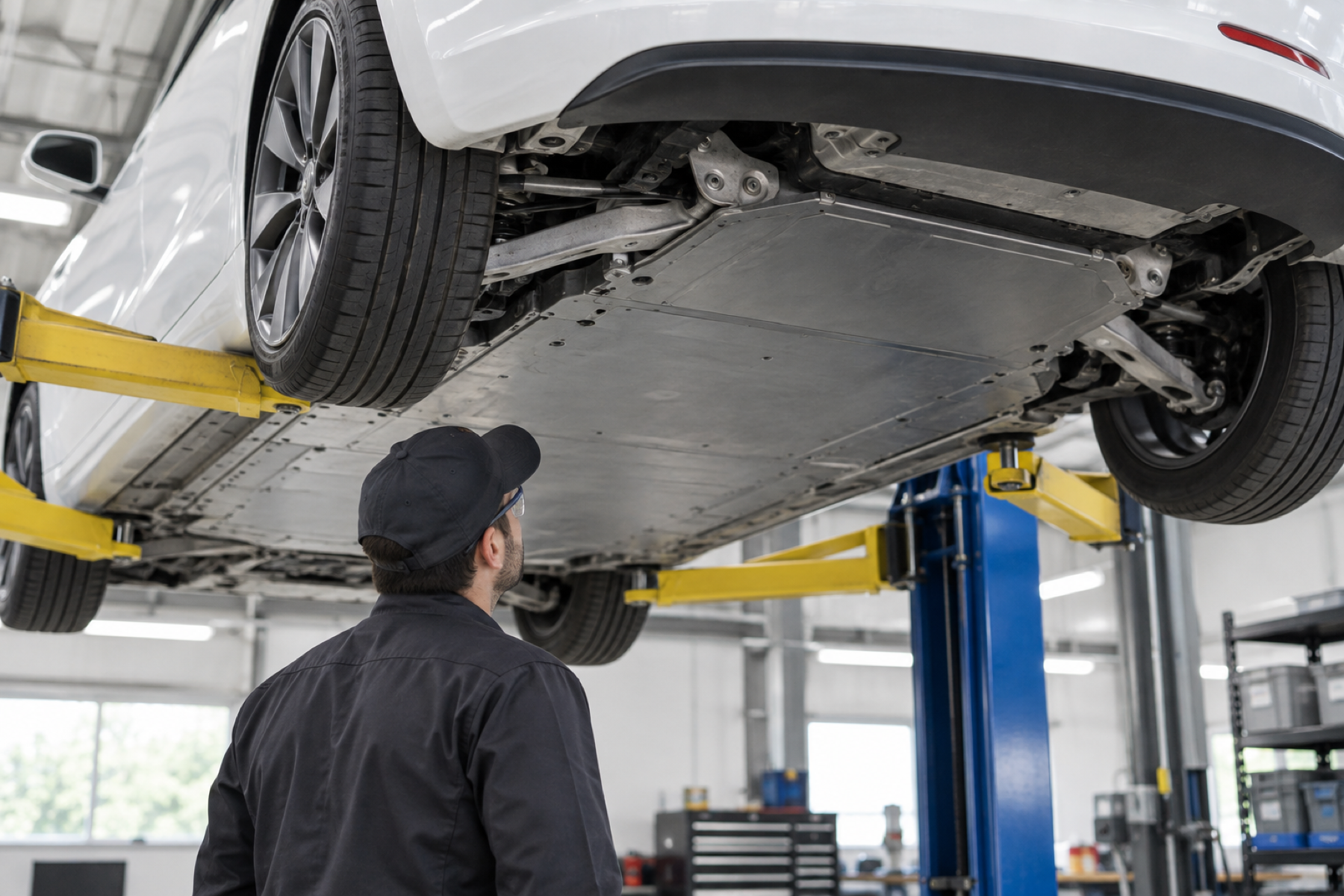
Illustrative image: A non-invasive exterior inspection of the sealed underbody battery enclosure.
When Tesla Battery Repair May Be Considered
Module-level or related component repair may be considered when the design, confirmed fault, parts availability, vehicle condition, and applicable procedure support it. Car Geeks confirms repairability after diagnosis; not every battery fault can or should be repaired at module level.
When Complete Pack Replacement May Be Considered
Replacement may be considered when diagnosis identifies pack damage or degradation that cannot be addressed appropriately through a narrower repair, when collision damage affects the enclosure or internal system, or when replacement is the technically and economically supported option. The estimate should identify why replacement is recommended.
Used and Remanufactured Tesla Battery Packs
Car Geeks can offer used or remanufactured Tesla battery-pack options when compatible and available. The written estimate should identify the pack type, source, compatibility, condition information available, included parts, programming or calibration requirements, and warranty terms. A lower purchase price should not replace proper compatibility and condition checks.
12-Month Parts-and-Labor Warranty
Car Geeks Collision provides a 12-month warranty on parts and labor for qualifying Tesla high-voltage battery repairs and replacements. The written estimate and final repair documents should identify the installed pack or components and explain the coverage and applicable limitations.
Collision, Flood and Fire Safety
Tesla high-voltage systems have no owner-serviceable parts. Do not remove high-voltage components or touch orange cables, connectors, or connected components. Following a collision, treat high-voltage components as energized until appropriately evaluated and follow the transportation instructions for the exact model.
If there is smoke, fire, sparks, unusual heat, escaping gas, or another emergency, move away and call 911. Do not attempt to open the battery pack, measure voltage, disconnect high-voltage components, or drive or charge a vehicle that may be unsafe.
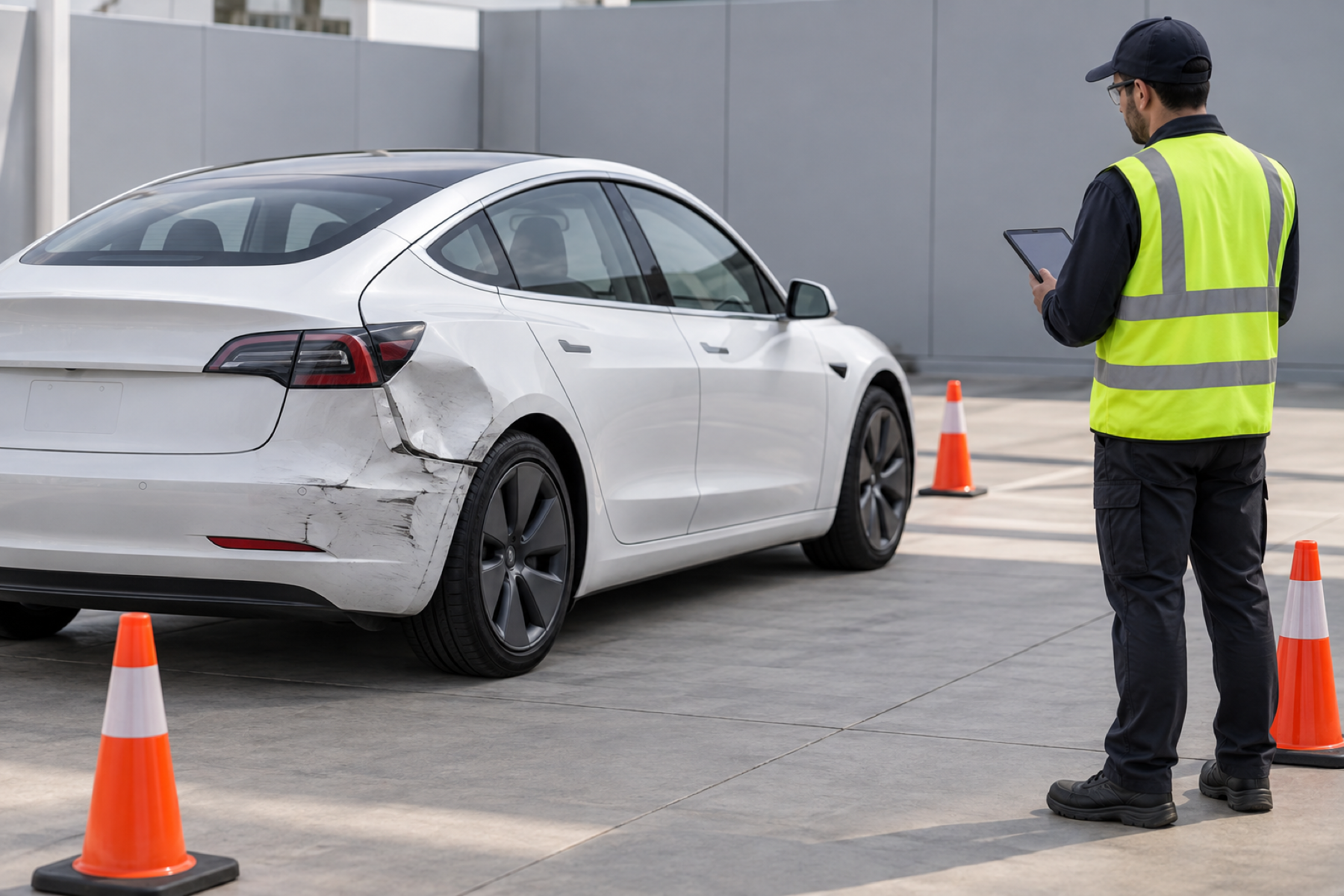
Illustrative image: A collision-damaged Tesla should be evaluated using a controlled safety process.
What a Tesla Battery Diagnostic Should Document
A useful diagnostic record should identify the VIN and configuration, customer symptoms, warning messages, relevant scan findings, charging behavior, battery and thermal-system information available, collision or flood history, and the basis for recommending repair, replacement, warranty review, or further testing.
Ask whether the proposed pack is used or remanufactured, what compatibility was confirmed, what programming or calibration is required, what is included in the estimate, and how the 12-month parts-and-labor warranty applies.
Tesla Battery Repair and Replacement FAQs
Does reduced range mean my Tesla battery needs replacement?
Not necessarily. Range estimates change for many reasons. Diagnosis must distinguish normal variation and outside influences from a confirmed battery-capacity or system problem.
Can a Tesla battery be repaired instead of replaced?
Sometimes. The answer depends on the confirmed fault, battery design, vehicle configuration, condition, parts availability, and whether an appropriate module-level or related repair is supported.
Can Car Geeks install a used or remanufactured Tesla battery?
Yes, subject to diagnosis, VIN compatibility, pack availability, and condition verification. The pack type and warranty terms should be identified in writing before installation.
What warranty does Car Geeks provide?
Qualifying Tesla high-voltage battery repairs and replacements include a 12-month parts-and-labor warranty, with the applicable terms and limitations provided in the repair documentation.
What if the warning appeared after a collision?
Avoid touching damaged electrical components and arrange an appropriate collision and high-voltage evaluation. Call 911 for smoke, fire, sparks, unusual heat, or another emergency.
Request a Tesla High-Voltage Battery Evaluation
If your Tesla has a battery warning, charging problem, unexplained range concern, thermal-system symptom, or possible collision damage, contact Car Geeks Collision for an in-house diagnostic and written repair-or-replacement estimate.
Illustrative image: Review the diagnostic findings, pack option and written warranty before authorizing work.
Related Tesla Guides
The vehicles and workshop scenes shown are illustrative. Specifications, procedures, compatibility, parts availability, and repair decisions vary by Tesla model, configuration, condition, and diagnostic findings.