Blog
Rolls-Royce Suspension Problems: Warning Signs, Diagnosis and Repair

Learn what uneven ride height, suspension warnings, noises, handling changes, and impact damage may mean—and how Rolls-Royce suspension concerns should be diagnosed.
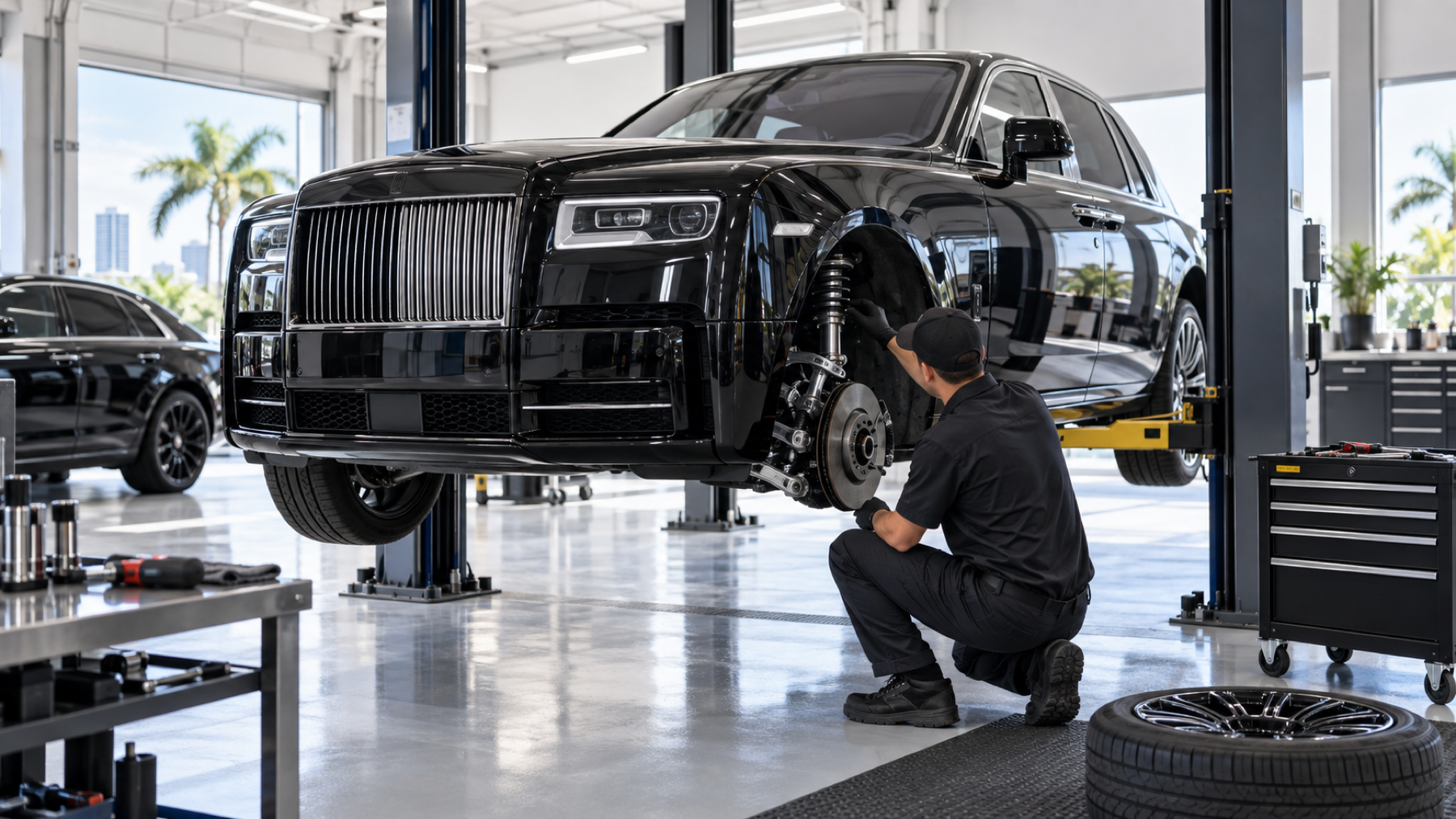
A Rolls-Royce that leans, sits unusually low, feels harsher than normal, makes new noises, or displays a suspension warning needs a proper inspection. Those symptoms can involve air-suspension components, sensors, mechanical joints, wheels, tires, alignment, or damage from an impact. The symptom alone does not identify the failed part.
Car Geeks Collision in Hollywood, Florida, helps owners evaluate luxury vehicles after collision, curb, pothole, and road-impact damage. The right starting point is diagnosis—not replacing parts based on a warning message or appearance alone.
When should a Rolls-Royce suspension concern be inspected?
Arrange an inspection when you notice one or more of the following:
One corner or one axle sits lower than the rest of the vehicle.
The vehicle loses ride height after being parked.
A suspension, chassis, or ride-height warning appears.
The ride feels unusually harsh, bouncy, unstable, or noisy.
The steering wheel is no longer centered or the vehicle pulls.
A tire shows rapid or uneven wear.
The vehicle struck a curb, pothole, roadway object, or another vehicle.
If the tire is damaged, a wheel is visibly displaced, the vehicle is difficult to control, or the body is contacting a tire, avoid driving it. Arrange appropriate towing or roadside assistance instead.
Why leaning or dropping does not prove which component failed
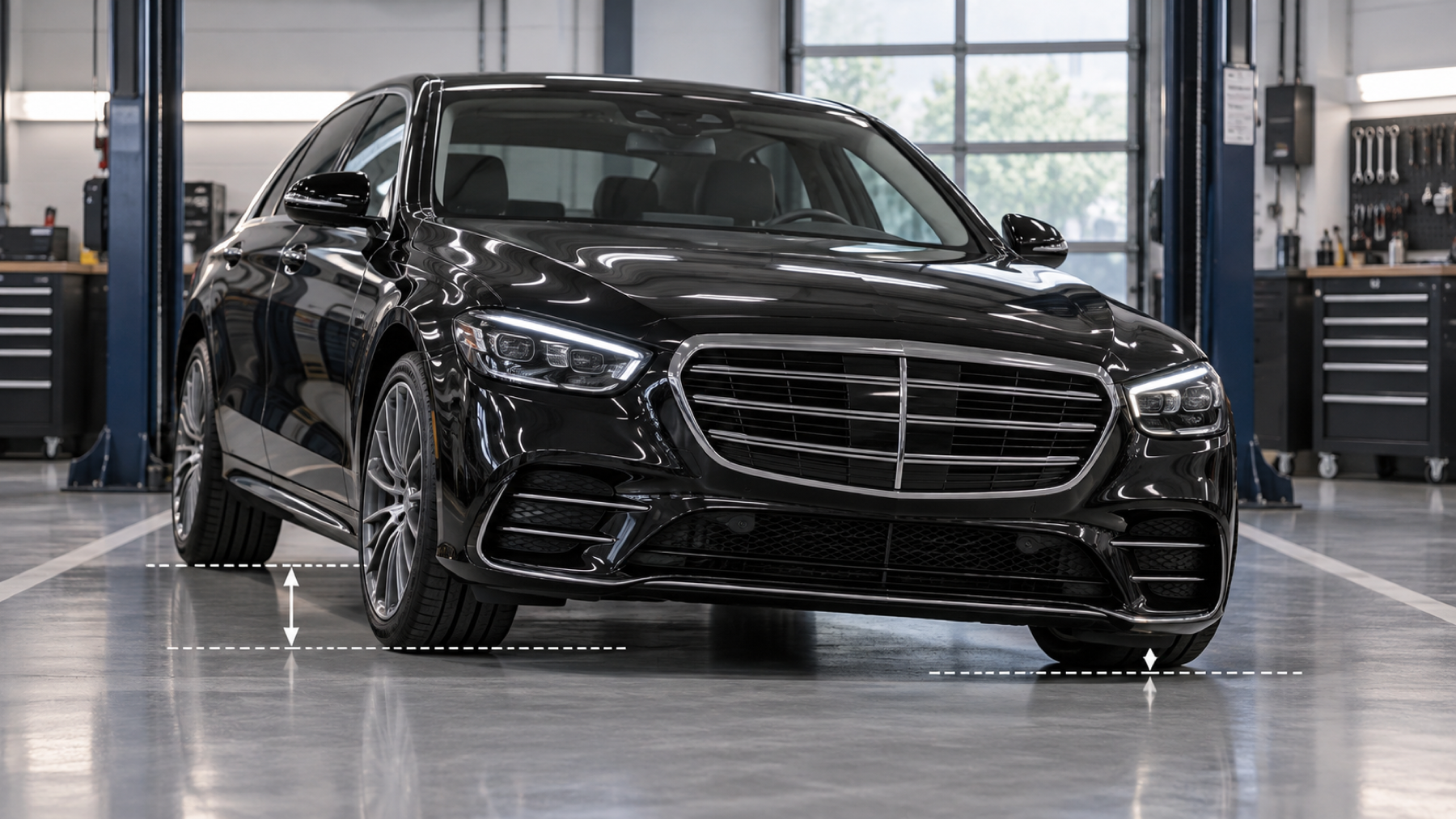
A vehicle that sits low may have an air leak, but the source could be a line, fitting, valve, air spring or strut assembly, or another part of the system. A ride-height sensor or control issue can also affect how the system behaves. On the mechanical side, worn joints, bushings, links, arms, wheel bearings, wheels, and tires can create symptoms that feel like a suspension fault.
That is why replacing the most obvious or most expensive component first is not a sound diagnostic strategy. The goal is to identify the cause, verify any related damage, and define the repair scope for that specific vehicle.
How a professional suspension diagnosis should work
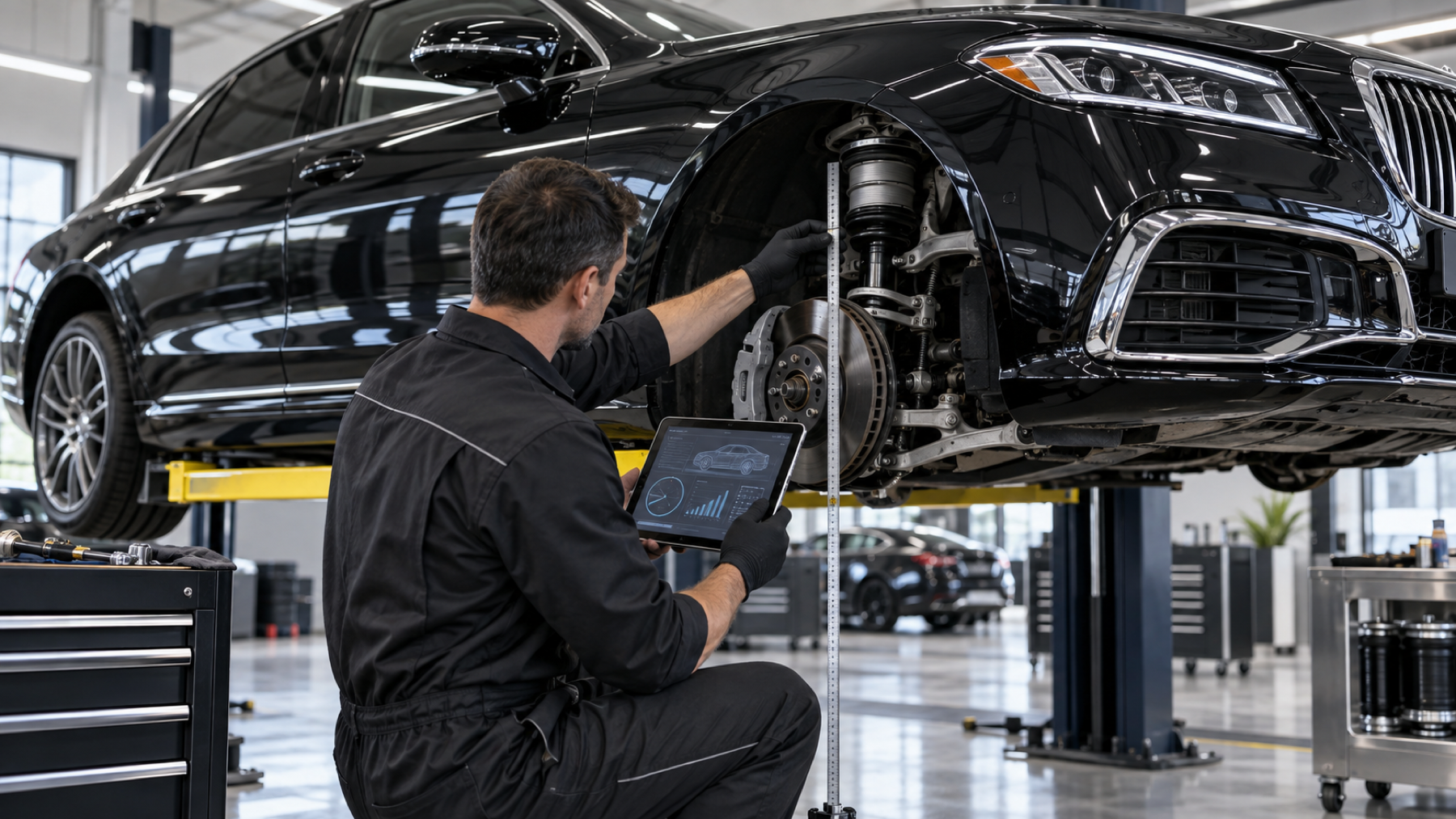
A useful diagnosis combines electronic information with a physical inspection. Depending on the model, model year, symptoms, and incident history, the process may include:
Confirming the owner’s symptoms and when they occur—while driving, after parking, after rain, or after an impact.
Checking the vehicle on level ground and comparing ride height from side to side.
Scanning relevant vehicle systems and recording fault information before clearing anything.
Inspecting wheels, tires, suspension joints, arms, links, mounting points, visible air-system components, and nearby collision damage.
Testing suspected leaks or components using procedures appropriate to the vehicle.
Confirming parts availability and developing a repair plan before work is authorized.
Verifying ride height, warnings, handling, and related functions after the approved repair.
Can a diagnostic scan identify the failed suspension part?
Not by itself. A fault code identifies the system or condition the vehicle detected; it does not always prove that the named component is defective. Wiring, voltage, calibration, communication, mechanical damage, and related components can produce overlapping symptoms. Scan data should guide the inspection, not replace it.
Suspension concerns after a collision, curb strike, or pothole
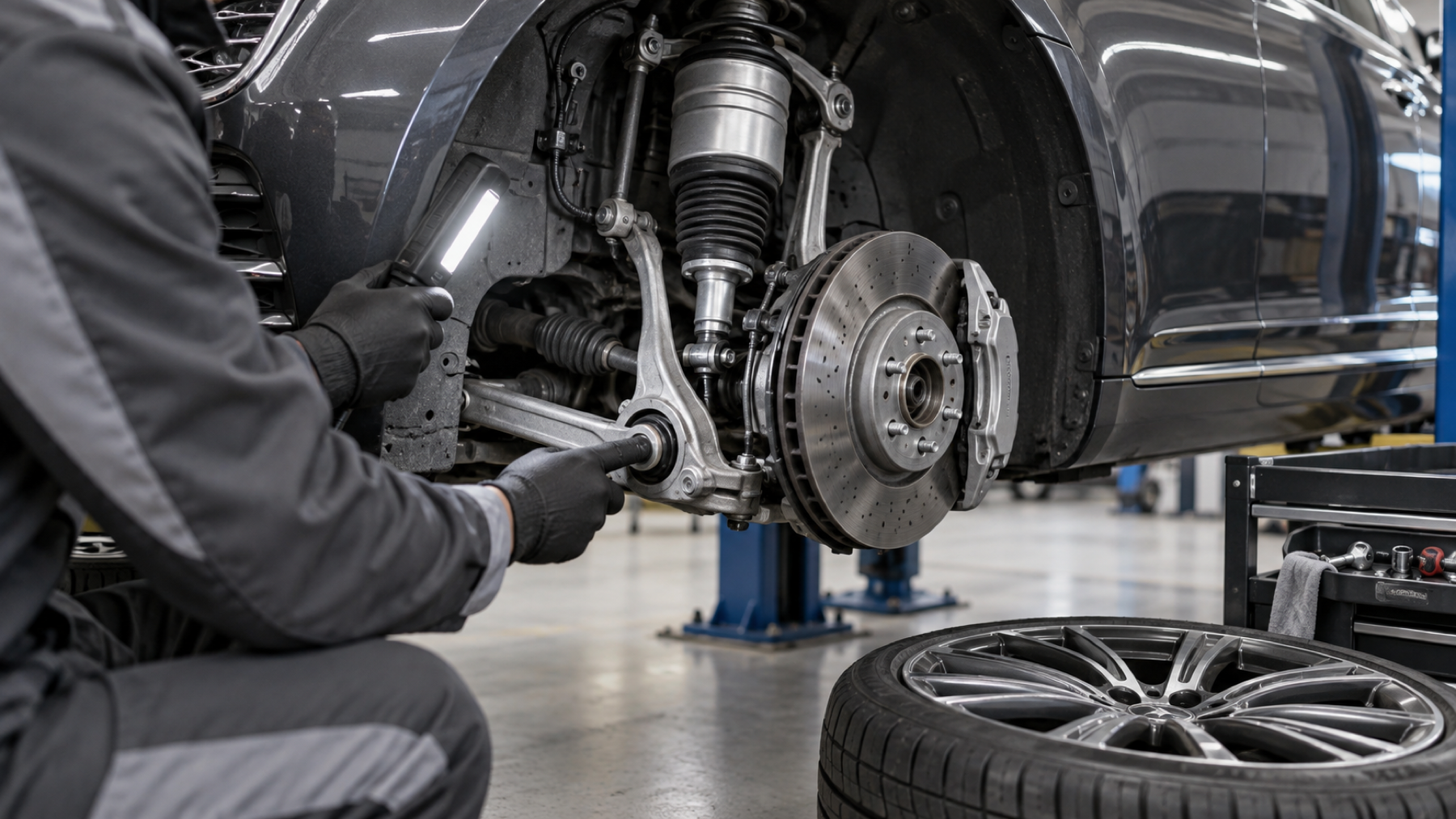
Road impacts can affect more than alignment. The inspection may need to consider the wheel and tire, steering components, control arms and links, mounting points, wheel bearings, underbody areas, and nearby body or structural damage. Hidden damage is one reason an estimate written only from exterior photos may change after disassembly and measurement.
If an insurer is involved, document the incident, photograph the vehicle, and preserve warning messages when it is safe to do so. Car Geeks Collision can help evaluate collision-related damage and explain the repair-estimate process.
Learn more about collision repair or request an estimate.
Repair or replacement: what determines the recommendation?
The answer depends on the confirmed cause, the condition of related components, the vehicle’s exact configuration, applicable repair information, and parts availability. Some concerns may be isolated; others may involve more than one component or require additional steps after installation. A responsible estimate should separate confirmed findings from items that still require testing or disassembly.
Before authorizing work, ask what was tested, what evidence supports the recommendation, whether other damage was found, what parts are proposed, and what verification will be performed afterward.
Different Rolls-Royce models use different suspension technology
Suspension design and control strategies vary by model and model year. For example, official Rolls-Royce information describes the Ghost’s Planar Suspension System and the Cullinan’s air-suspension configuration. That does not mean every model uses identical components or procedures. The VIN and vehicle-specific information should guide diagnosis and repair planning.
Owners can review official Rolls-Royce ownership information and use the NHTSA VIN recall lookup to check whether an open safety recall applies to their particular vehicle.

What information should you provide when requesting an inspection?
Year, model, and VIN.
Exact warning message or dashboard indicator.
When the symptom began and whether it changes after parking.
Recent collision, curb, pothole, towing, tire, wheel, or suspension work.
Photos of the vehicle on level ground, when safe.
Any diagnostic report or prior estimate already received.
Frequently asked questions
Why does my Rolls-Royce sit lower on one side?
Uneven ride height can result from an air-system leak, a sensor or control problem, mechanical wear, an impact, or another related condition. A level-ground measurement, scan, and physical inspection are needed before identifying the cause.
Why does the suspension drop overnight?
A loss of height after parking can suggest that the system is not maintaining pressure, but it does not identify where the loss occurs. The vehicle should be inspected for the actual source instead of assuming a particular strut or air spring has failed.
Does a suspension warning mean the vehicle is unsafe to drive?
It depends on the warning and the vehicle’s behavior. If ride height is abnormal, steering or handling has changed, a tire is damaged, or the vehicle is difficult to control, stop driving and arrange assistance. Otherwise, schedule diagnosis promptly and follow the vehicle’s displayed instructions.
Can a pothole damage a Rolls-Royce suspension?
A strong impact can affect a tire, wheel, alignment, steering or suspension component, mounting point, or nearby area. Damage is not always visible from outside, so changed handling, noise, vibration, or warning messages deserve inspection.
Can the problem be fixed without replacing the entire suspension?
Often the repair scope is limited to the confirmed cause and any directly related damage, but the answer depends on the inspection. No component should be promised—or condemned—before diagnosis.
Schedule a Rolls-Royce suspension and impact-damage evaluation
If your Rolls-Royce is leaning, dropping, making new suspension noise, displaying a warning, or driving differently after an impact, contact Car Geeks Collision in Hollywood, Florida. Provide the year, model, VIN, symptoms, and incident history so the team can determine the appropriate next step.
Request an estimate or inspection, or contact Car Geeks Collision.