
Blog
Rolls-Royce Convertible Roof Problems: Diagnosis and Repair

Rolls-Royce convertible roof stuck, leaking, noisy, or moving unevenly? Learn warning signs, safe next steps, possible causes, and what an inspection should establish.
A Rolls-Royce convertible roof that stops halfway, moves unevenly, leaks, becomes unusually noisy, or displays a warning should be inspected before it is cycled again. The roof must coordinate fabric, glass, trim, latches, moving linkages, sensors, electrical controls, and model-specific components, so the visible symptom does not automatically identify the failed part.
Car Geeks Collision in Hollywood, Florida helps owners begin with a careful vehicle inspection and an accurate description of the operating problem. This guide explains warning signs, safe next steps, possible diagnostic categories, and what information to provide when arranging an inspection.
Which Rolls-Royce Convertibles Does This Guide Address?
This guide is most directly relevant to the Rolls-Royce Dawn and may also help owners understand general inspection principles for the earlier Phantom Drophead Coupé. Roof design, controls, procedures, and components vary by model and model year, so information for one vehicle should not be assumed to apply to another.
Rolls-Royce ended Dawn production in 2023. Official historical material describes its fabric roof and intricate mechanism, known by the marque as the Silent Ballet. That complexity is one reason diagnosis should focus on the complete operating sequence rather than a single guessed component.
Common Rolls-Royce Convertible Roof Warning Signs
Warning signs include a roof that stops before completing its travel, moves more slowly than usual, appears uneven from side to side, or no longer meets the glass and surrounding trim consistently. A warning message, repeated motor sound, clicking, grinding, visible fabric tension, or interference near the rear deck also deserves attention.
Water inside the cabin, damp trim, wind noise that was not previously present, or a change in how the roof sits when closed can point to a sealing, alignment, drainage, fabric, glass, or body-related concern. The place where water appears is not always the place where it entered.
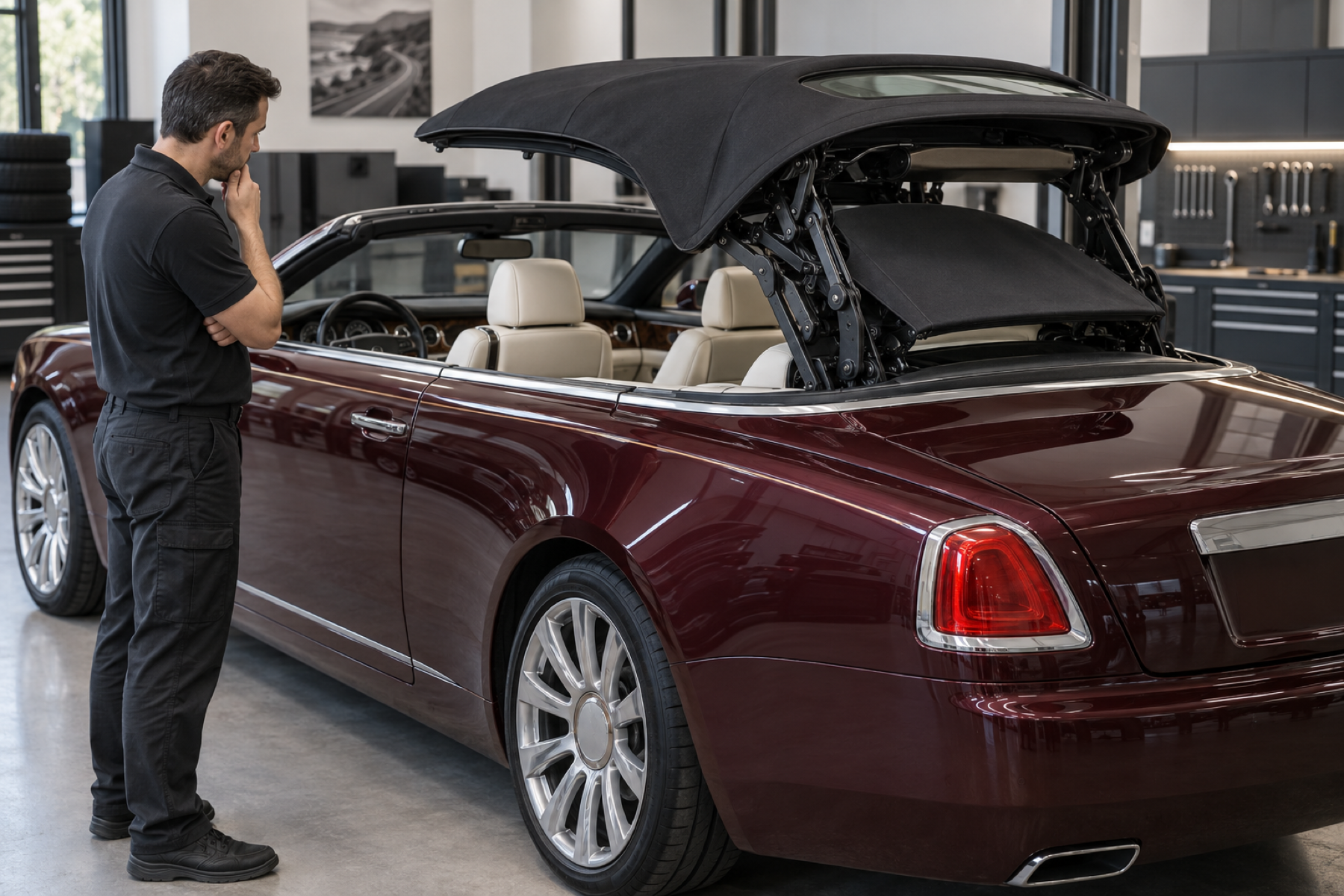
Illustrative image: Roof alignment and folding-mechanism inspection.
When Should You Stop Operating the Roof?
Stop operating the roof if it becomes uneven, catches on fabric or trim, stops partway, produces a harsh mechanical sound, or appears to place abnormal tension on surrounding components. Repeatedly pressing the switch may involve additional parts in the problem.
Do not force the roof by hand unless the correct emergency procedure for that exact model and model year has been confirmed in the vehicle documentation. If the roof cannot be closed safely, protect the vehicle from weather and request professional guidance.
Why a Rolls-Royce Convertible Roof May Stop or Move Incorrectly
The correct diagnosis depends on the specific model, model year, battery and electrical condition, stored vehicle information, recent repairs, weather, and what happened immediately before the symptom. The following are diagnostic categories, not conclusions about a particular vehicle.
Electrical power and control communication
Low system voltage, an interrupted signal, wiring damage, a control input, or communication between vehicle systems may interrupt roof operation. A dashboard message does not by itself prove that a particular motor or module needs replacement.
Sensors and operating sequence
A powered roof follows a defined sequence. If the vehicle does not confirm a required position or condition, movement may pause to protect the system. Diagnosis should establish which condition was not confirmed and why.
Mechanical alignment and interference
Moving linkages, latches, fabric tension, trim, glass position, rear-deck clearance, or body alignment may affect travel. Evidence of binding, contact, prior repair, or collision-related movement should be considered together.
Hydraulic concerns where applicable
Some convertible systems may use hydraulic components during operation. Fluid residue, reduced assisted movement, or uneven travel requires model-specific inspection; those signs should not be treated as proof that a pump, line, or actuator has failed.

Illustrative image: Electronic testing should confirm the cause before parts are selected.
Fabric, Seals, Glass and Water Intrusion
The Rolls-Royce Dawn uses a fabric roof, and its condition should be considered together with the seals, side-glass contact areas, rear window, trim interfaces, and drainage paths. A fabric concern and a water leak are not automatically the same repair.
South Florida heat, sun, humidity, heavy rain, and debris can make sealing and drainage concerns especially noticeable. A useful leak investigation traces the path of the water under controlled conditions instead of assuming the entry point from a wet seat, headliner, or carpet.
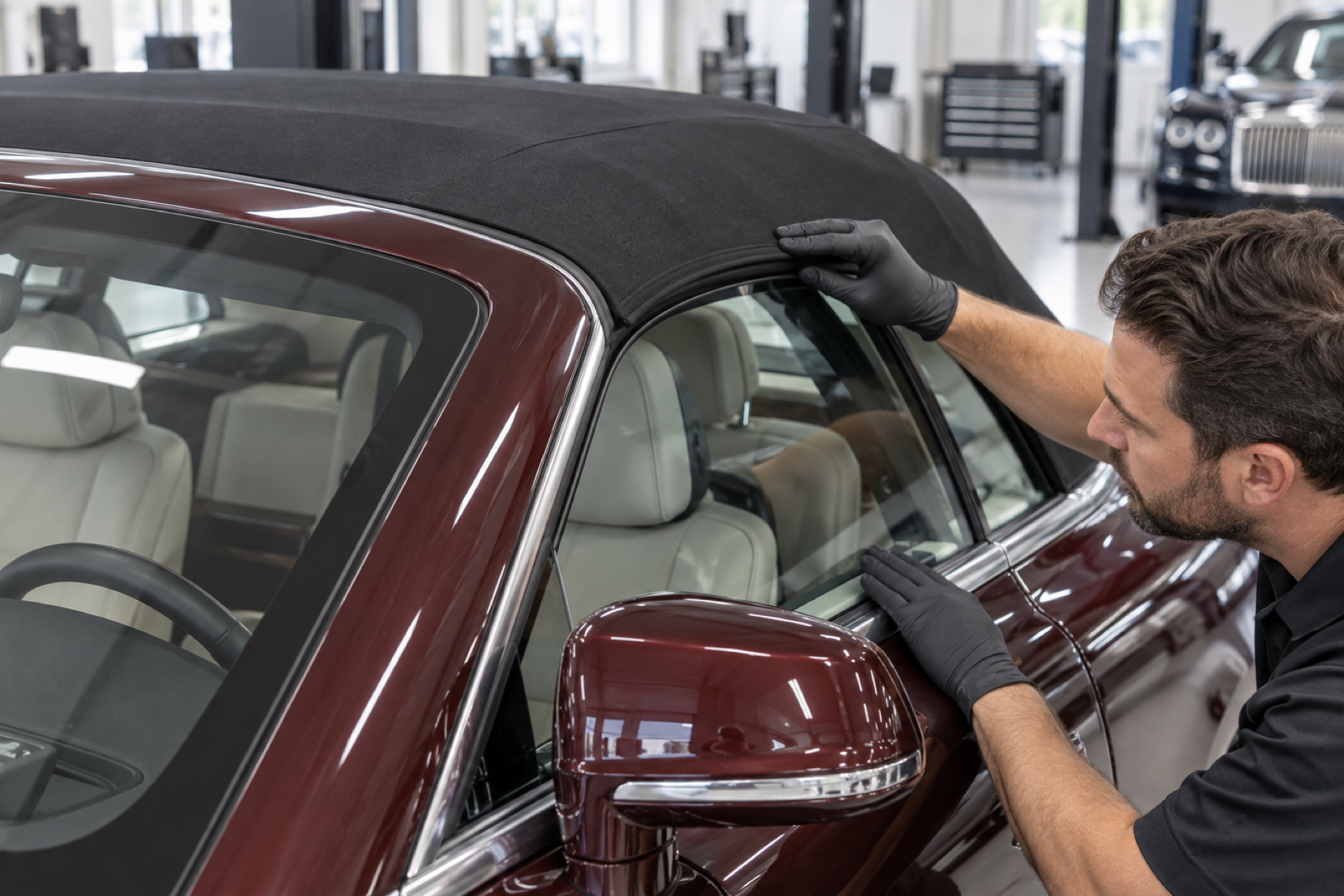
Illustrative image: Inspecting fabric, weather seals and adjacent glass-contact areas.
Can Collision or Body Damage Affect Roof Operation?
Yes. Damage or movement involving the rear body, quarter panels, deck area, roof mounting locations, doors, side glass, or nearby structure may change component relationships. Even when exterior damage looks limited, alignment may need to be evaluated.
A convertible-roof concern following a collision should be examined in the context of the complete vehicle. Body geometry, panel position, glass alignment, trim clearances, electrical damage, and previous repairs may all be relevant.
What a Professional Inspection Should Establish
A productive inspection documents whether the roof was opening or closing, where it stopped, whether the symptom is intermittent, what message appeared, the weather conditions, and whether the vehicle recently had battery, electrical, body, glass, trim, or collision work.
The process may include a visual inspection of the fabric and seals, checking alignment and clearances, reviewing vehicle messages or stored information, confirming electrical power conditions, and evaluating relevant model-specific mechanical or hydraulic components where applicable. A repair plan should follow diagnosis rather than precede it.
If an intermittent symptom can be recorded safely, photos or video may help. Do not stand near moving roof components or recreate a fault when doing so could increase the damage.
What Owners Should Tell the Repair Facility
Provide the model and model year, battery and electrical history, the exact operating direction, when the problem began, any warning message, recent collision or body work, signs of water intrusion, and any unusual sound. Explain whether anyone attempted to force, manually move, or repeatedly cycle the roof.
These details help separate an operating-condition problem from an electrical, sensor, sequence, alignment, mechanical, sealing, drainage, or collision-related concern.
Rolls-Royce Convertible Roof FAQs
Why won’t my Rolls-Royce Dawn roof open or close?
A Dawn roof may stop because of an electrical, sensor, sequence, mechanical, alignment, or model-specific hydraulic concern. Similar symptoms can have different causes, so diagnosis should come before parts replacement.
Should I keep pressing the roof switch if it stops halfway?
No. Stop if the roof becomes uneven, encounters interference, makes an unusual mechanical sound, or stops unexpectedly. Repeated operation may increase the damage.
Why is water entering around the convertible roof?
Potential inspection areas include the roof fabric, weather seals, side-glass contact points, drainage paths, rear-window area, roof alignment, and previous body work. The entry point must be traced rather than inferred only from where moisture appears.
Can collision damage affect a Rolls-Royce convertible roof?
Yes. Damage or movement around the surrounding body structure, rear deck, mounting areas, doors, side glass, or quarter panels may affect alignment and operation.
Is every roof warning a major repair?
No conclusion should be drawn from a warning or symptom alone. The appropriate repair depends on the confirmed cause, model, year, and whether more than one stage of the roof sequence is affected.
Request a Rolls-Royce Convertible Roof Inspection in Hollywood, FL
If your Rolls-Royce convertible roof is stuck, leaking, noisy, uneven, or displaying a warning, avoid repeated operation and contact Car Geeks Collision. Describe the symptoms and any recent collision, body, glass, battery, electrical, or water-intrusion history so an appropriate next step can be planned.
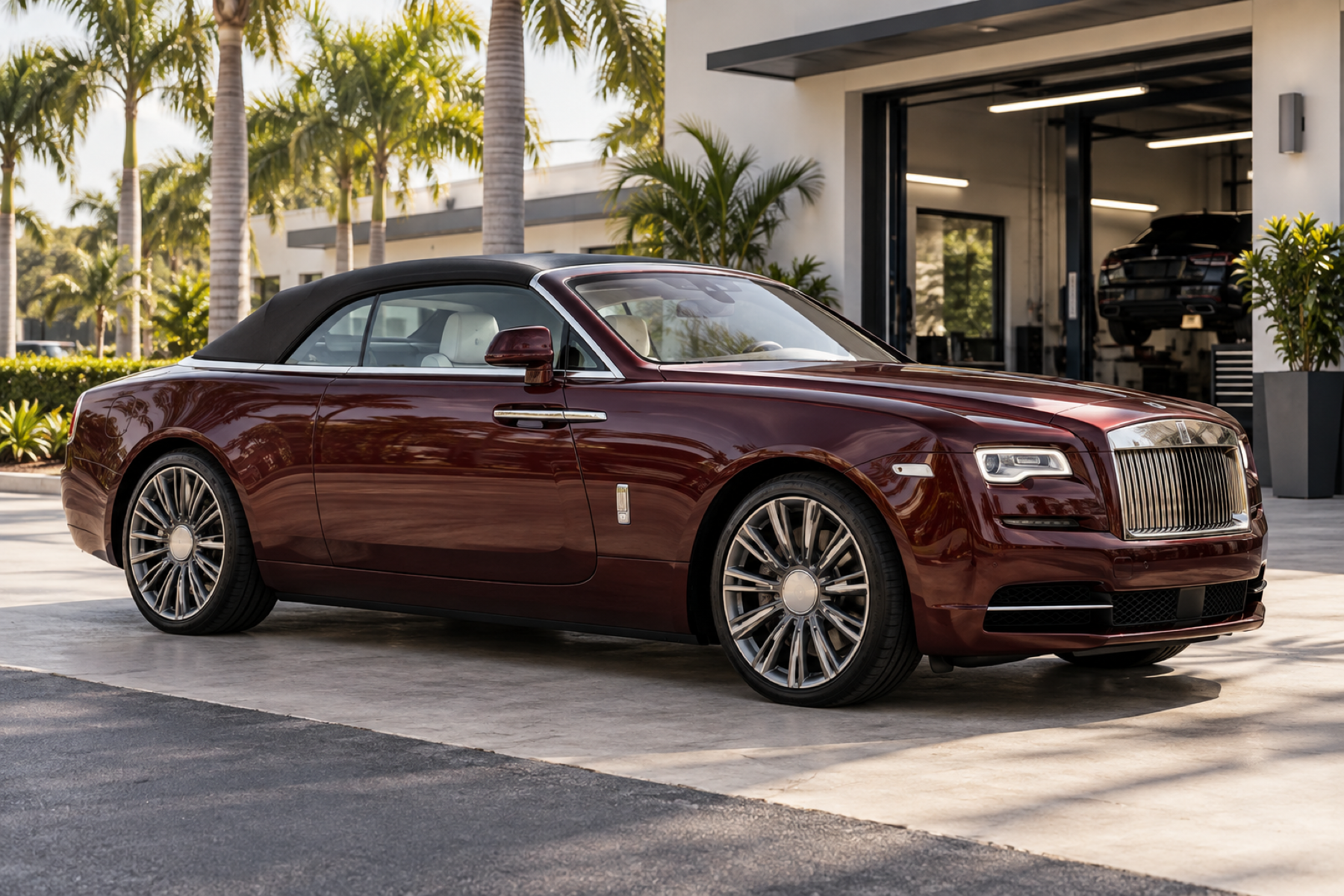
Illustrative image: A luxury convertible with its fabric roof fully closed and aligned.
Related Luxury-Vehicle Guides
The vehicles shown in the images are illustrative. Car Geeks Collision is an independent repair facility. This article does not state or imply Rolls-Royce manufacturer authorization or certification.