
Blog
Post-Crash Electrical Problems: Why Warning Lights and Battery Drain Need Diagnosis

A vehicle can look repaired yet develop warning lights, a dead battery, inoperative accessories, or intermittent faults after a collision. Modern cars contain networks of modules, sensors, grounds, wiring, and power-distribution components that can be affected even when damage appears minor. How a collision causes electrical faults Impact can pinch a harness, loosen a ground, crack a connector lock, damage a fuse box, or disturb wiring behind a bumper or trim panel. Water intrusion may...
A vehicle can look repaired yet develop warning lights, a dead battery, inoperative accessories, or intermittent faults after a collision. Modern cars contain networks of modules, sensors, grounds, wiring, and power-distribution components that can be affected even when damage appears minor.
How a collision causes electrical faults
Impact can pinch a harness, loosen a ground, crack a connector lock, damage a fuse box, or disturb wiring behind a bumper or trim panel. Water intrusion may corrode terminals. A 12-volt battery can also weaken while the vehicle sits with doors open, modules awake, or diagnostic equipment connected.
Symptoms that deserve attention
• Multiple warning lights appearing together
• No-start or intermittent starting
• Battery drain after parking
• Cameras, sensors, lamps, windows, or locks behaving incorrectly
• Burning odor, heat, or visible arcing
• Faults that return after codes are cleared
Why clearing codes is not a repair
A diagnostic trouble code identifies a system or condition; it does not automatically identify the failed part. Technicians may need wiring diagrams, voltage-drop tests, network checks, connector inspections, battery testing, and comparison with pre-scan results.
The value of pre-scan and post-scan records
A pre-scan helps show which faults were present when the vehicle arrived. A post-scan checks for remaining or newly introduced faults after repairs. Some codes require calibration, initialization, or a specific drive cycle before systems return to normal.
Special caution for EVs and hybrids
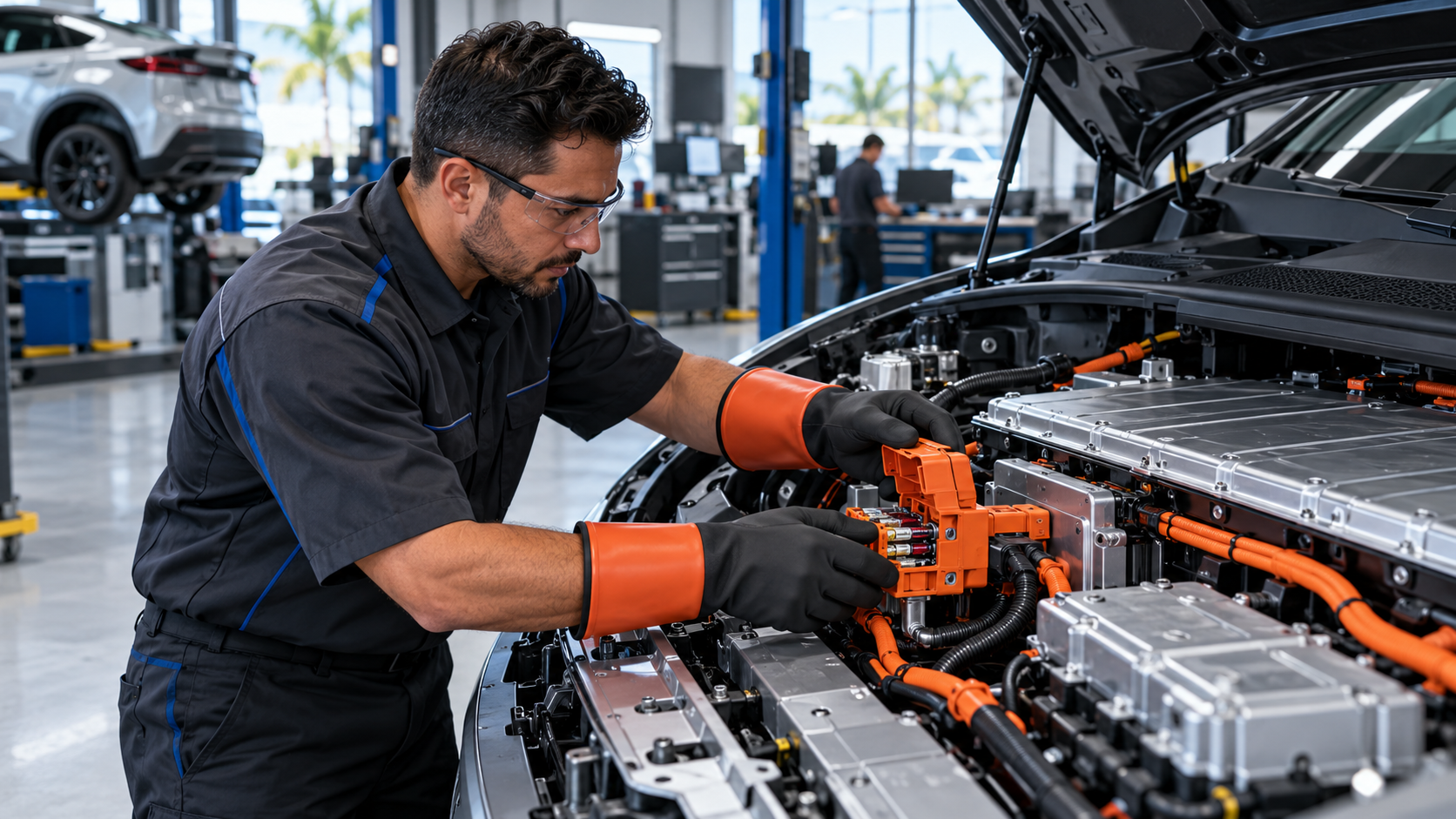
High-voltage systems require trained procedures and proper isolation. Owners should not touch orange cables or attempt to reset collision-related high-voltage faults. Even on an EV, the low-voltage battery and conventional wiring can cause no-start symptoms.
What to document
Record when the problem occurs, which warnings appear, weather conditions, and whether the battery was recently replaced or disconnected. Photos or short videos can help with intermittent problems.
Car Geeks Collision can connect collision history with electrical diagnosis, scans, and physical inspection. If warning lights or battery drain started after an accident or repair, schedule a diagnostic evaluation before replacing parts by guesswork.