
Blog
Porsche A/C Not Cooling? Causes, Diagnosis and Repair in Hollywood, FL
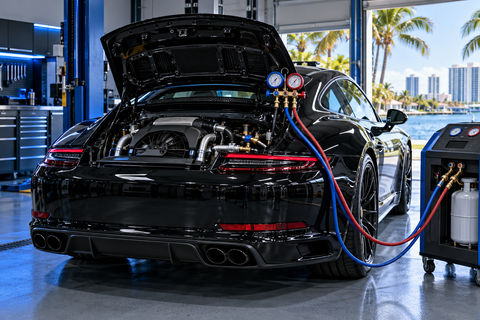
A practical guide to Porsche A/C symptoms, collision-related damage, diagnostic steps, repair decisions, and service options for South Florida drivers.
If your Porsche A/C is blowing warm air, cooling only while driving, making unusual noises, or producing weak airflow, the system needs diagnosis before parts are replaced. The cause may involve refrigerant loss, airflow, an electrical or control issue, a damaged condenser, or another component specific to the vehicle.
What to do when your Porsche A/C stops cooling
Start by noting exactly what changed. Does the air remain warm, become cool only at highway speed, lose cooling after several minutes, or cool one side of the cabin differently from the other? Also record any warning messages, noises, odors, recent collision damage, and previous A/C work.
Do not open refrigerant lines or add refrigerant without identifying the cause. A correct diagnosis should confirm system condition, find the source of the symptom, and establish the appropriate repair for the exact Porsche model and configuration.
Common Porsche A/C symptoms
Warm or slightly cool air from the vents
Cooling that works intermittently
A/C that cools while moving but becomes warm at idle
Weak airflow even when the fan is set high
Different temperatures from separate vents or climate zones
Clicking, rattling, squealing, or humming noises
A musty or unusual odor from the vents
Water where it should not collect inside the cabin
A climate-control or electrical warning
A/C performance that changed after front-end damage or repair
The symptom helps narrow the inspection, but it does not identify a failed part by itself.
Why a Porsche A/C may blow warm air
Refrigerant loss or a system leak
Low refrigerant can reduce cooling, but refrigerant does not normally solve the underlying reason the system became low. A diagnosis should look for evidence of leakage and determine whether a component, seal, connection, or line requires attention before the system is returned to service.
Condenser damage or restricted airflow
The condenser is positioned where it can be affected by road debris, contamination, or front-end impact damage. Cooling can also suffer when airflow through the condenser is restricted or when an associated fan is not operating as intended.
Compressor or control problem
The compressor and its controls are central to system operation, but a compressor should not be condemned from warm air alone. Electrical supply, commands, sensors, pressure conditions, and related components may need to be checked first.
Blower, vent, or cabin-airflow issue
If the air is cold but airflow is weak, the problem may be on the cabin side of the system. A filter, blower, duct, vent door, actuator, or control concern can reduce the amount of conditioned air reaching the occupants.
Sensor, wiring, or climate-control fault
Modern climate-control systems use sensors, modules, actuators, and wiring to regulate temperature and airflow. Fault information can guide testing, but a stored code should be confirmed with physical and electrical checks rather than treated as a complete diagnosis.
Drainage or odor concern
Odor, moisture, or water inside the cabin may involve the evaporator area, drainage path, filter, seals, or another source of water entry. These symptoms should be traced rather than covered with fragrance or a temporary treatment.
Why collision history matters
Front-end or side-impact damage can affect more than visible body panels. Depending on the impact, the condenser, lines, mounts, wiring, sensors, fans, and nearby structures may need inspection. A small visible impact can still disturb a connection or component used by the A/C system.
If cooling changed after an accident or body repair, tell the repair facility when the symptom began and provide claim or repair documents if available. This helps distinguish impact-related damage from wear, maintenance, or an unrelated fault. Learn more about collision repair and how adjacent systems are considered during a repair plan.
How Porsche A/C diagnosis should proceed
A useful diagnosis generally begins with the symptom and the vehicle’s exact configuration. Depending on the Porsche model and concern, the process may include:
Confirming vent temperature, airflow, noises, and operating conditions
Reviewing recent collision, body, electrical, or A/C work
Inspecting visible components, lines, connections, and the condenser area
Checking for evidence of leakage rather than adding refrigerant automatically
Evaluating fans, airflow, controls, sensors, and electrical operation
Scanning applicable vehicle systems when warnings or control faults are present
Following vehicle-specific service information for the identified system
Verifying cooling and system operation after authorized repairs
The goal is to identify why the A/C is not performing correctly, not simply make it feel colder for a short time.
Why the exact Porsche model matters
A 911, Cayenne, Macan, Panamera, Boxster, Cayman, or Taycan may not use the same components, controls, refrigerant, or service procedure. Model year, powertrain, installed options, and previous repairs can also change the diagnostic path.
Provide the model, year, warning messages, and vehicle identification details when scheduling service. For electric or hybrid models, the climate-control system may interact with other vehicle systems, so the correct vehicle-specific procedure matters.
Repair decisions: leak repair, component replacement, or electrical work
The correct repair depends on the confirmed cause. Some concerns may involve a seal, connection, line, filter, fan, actuator, sensor, wiring repair, software-related procedure, or replacement of a damaged component. The estimate should explain the findings, recommended work, parts involved, and how operation will be verified.
For an overview of available service, see A/C and HVAC repair. Porsche owners can also review Car Geeks Collision’s approach to luxury and exotic vehicle repair.
Porsche A/C diagnosis and repair in Hollywood, Florida
Car Geeks Collision is an independent collision and auto repair center in Hollywood, Florida. Porsche owners from Hollywood, Fort Lauderdale, Aventura, and nearby South Florida communities can contact the shop to describe the symptoms and determine the appropriate inspection or repair next step.
When contacting the shop, share the Porsche model and year, whether the A/C blows warm or has weak airflow, when the problem began, any warning messages, and whether the vehicle recently had collision or body damage.
Frequently asked questions
Why is my Porsche A/C blowing warm air?
Warm air may involve refrigerant loss, condenser airflow, a compressor or control issue, a sensor or electrical fault, or another model-specific condition. Testing is needed because the symptom alone does not identify the failed component.
Why does the A/C get warm when my Porsche is idling?
Cooling that changes with vehicle speed can point toward an airflow, fan, pressure, or system-performance concern. The system should be tested at the conditions where the symptom occurs.
Can a collision damage the Porsche A/C system?
Yes. An impact can affect the condenser, lines, mounts, wiring, sensors, fans, or nearby structures, particularly around the front of the vehicle. Damage is not always obvious from the exterior.
Should I add refrigerant if the A/C is not cold?
Not before the cause is identified. Adding refrigerant without confirming system condition can leave a leak or another fault unresolved and may not restore correct operation.
Why is airflow weak even when the fan is on high?
Weak airflow may involve a cabin filter, blower, duct, vent door, actuator, or control issue. If the air is cold but little reaches the cabin, diagnosis should focus on airflow as well as refrigeration.
What information should I provide when requesting service?
Provide the Porsche model and year, a description of the symptom, when it began, whether it changes at idle or while driving, any warning messages, and details about recent collision, body, electrical, or A/C work.
Request Porsche A/C service
If your Porsche A/C is blowing warm air, cooling intermittently, making unusual noises, or producing weak airflow, contact Car Geeks Collision in Hollywood, FL. Describe the symptoms and vehicle details so the team can help determine the appropriate diagnostic and repair next step.