
Blog
Passenger Occupant Classification System After a Collision: Why Seat Sensors Matter

Many vehicles use a passenger occupant classification system to help determine how the front passenger airbag should respond. Sensors in or around the seat evaluate occupancy and, on some vehicles, weight or seating conditions. Collision damage, seat removal, water intrusion, or incorrect repairs can disturb this system. What the system may include Depending on the model, components can include pressure sensors, seat-weight sensors, wiring, seat-track position sensors, buckle switches, and a...
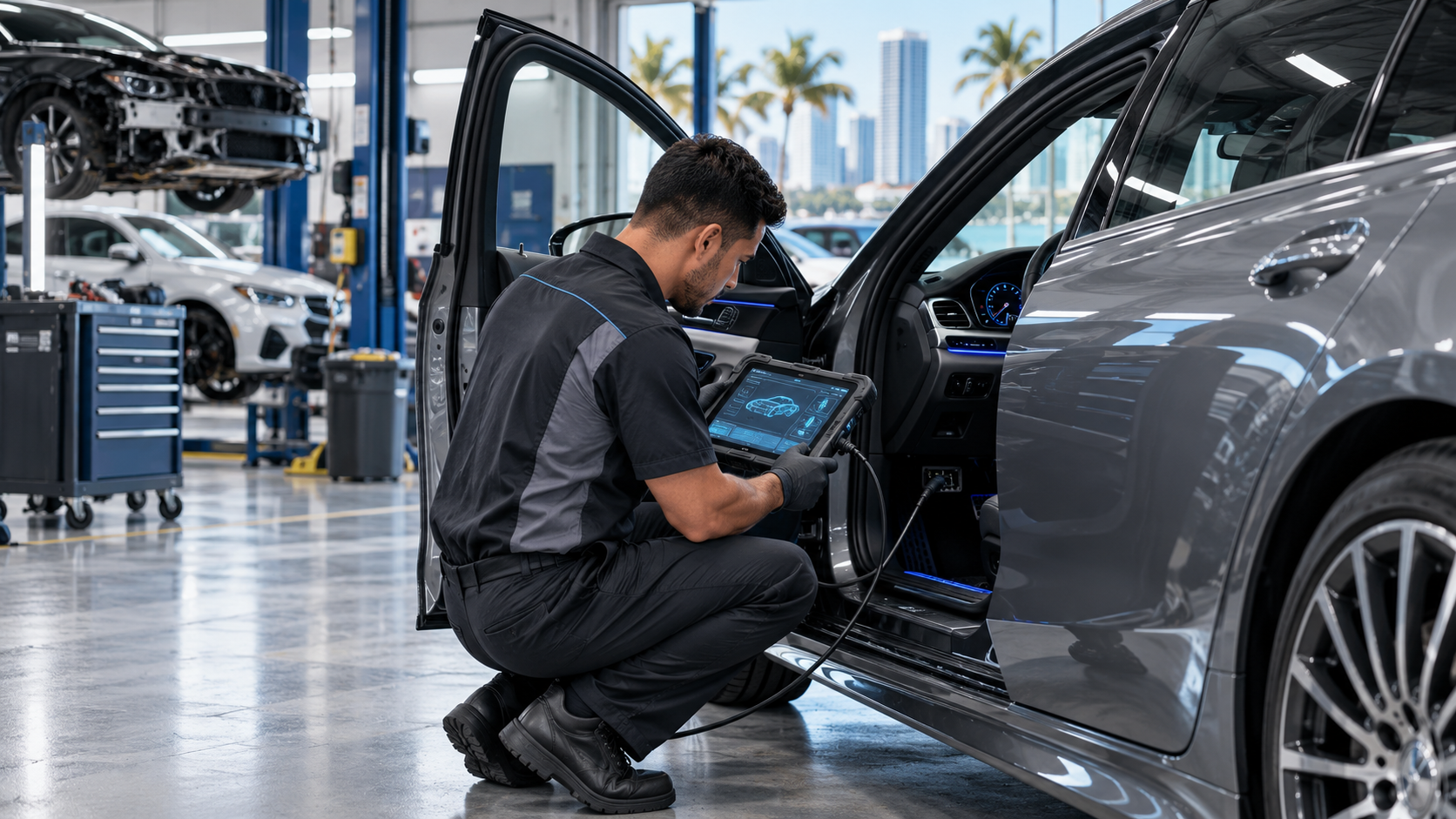
Many vehicles use a passenger occupant classification system to help determine how the front passenger airbag should respond. Sensors in or around the seat evaluate occupancy and, on some vehicles, weight or seating conditions. Collision damage, seat removal, water intrusion, or incorrect repairs can disturb this system.
What the system may include
Depending on the model, components can include pressure sensors, seat-weight sensors, wiring, seat-track position sensors, buckle switches, and a dedicated control module. These work with the supplemental restraint system rather than operating as a simple on-off switch.
Warning signs
• The airbag or SRS warning light stays on
• The passenger-airbag indicator behaves unexpectedly
• A warning appears after seat removal or interior repair
• The seat was bent, wet, or heavily loaded during the crash
• Connectors or wiring beneath the seat were disturbed
Why guessing is risky
Replacing a sensor based only on a fault code can miss wiring, connector, seat-frame, calibration, or module problems. Clearing the code does not prove that occupant detection is functioning correctly.
Diagnosis and calibration
Technicians may need a pre-scan, visual inspection, wiring checks, seat and track inspection, post-scan, and a manufacturer-specified zero-point or occupant-classification calibration. Setup conditions can include correct seat position, an empty seat, level flooring, and specified equipment.
After interior or collision work
Any operation involving the seat, carpet, console, floor, restraint wiring, or water damage should account for the occupant system. Repairs should be documented, and warning lights should never be covered or ignored.
Car Geeks Collision can inspect collision-related seat and restraint concerns and coordinate the required diagnostic or calibration steps. Schedule an evaluation if passenger-airbag behavior changed after a crash or repair.