
Blog
Protect Your Rights and ADAS During Insurance Collision Repair
Learn what to do in the first 24 hours, how estimates and supplements work, and how to protect ADAS, OEM parts choices, and your legal rights with insurer...
You have the legal right to choose your own repair shop, and your insurer is obligated to pay for reasonable repairs regardless of which shop you pick. A direct repair program shop is a convenience option, not a requirement. Your first move: photograph the damage, file your claim, and get at least one written estimate before you sign anything.
TL;DR:
Insurers may aim to expedite claims through DRP shops, but these can pressure toward lower-cost parts and faster repairs, possibly compromising quality.
Hidden damage often surfaces after teardown, requiring documented supplements and potentially involving dispute resolution methods like appraisal and independent appraisers.
Proper ADAS calibration after a collision is critical to vehicle safety; request documented pre- and post-repair scans, especially for EVs and luxury cars requiring manufacturer-specific procedures.
Consumers have the right to select their repair shop and request OEM parts; writing preferences in advance can prevent unwarranted upgrades to aftermarket or recycled components.
Filing a claim can impact premiums mainly if found at fault or if multiple claims are made; insurers rate based on claims history, not shop choice, and legal avenues exist for unresolved disputes.
Table of Contents
Insurance Collision Repair: What to Do in the First 24 Hours
OEM vs. Aftermarket vs. Recycled Parts: What Are Your Rights?
Does Collision Repair Affect Your Future Insurance Premiums?
If You Need a Specialist: How Car Geeks Collision Handles Insurance Repairs
Insurance Collision Repair: What to Do in the First 24 Hours
The steps you take right after an accident shape how smoothly your claim moves. Insurers lean on early details, so gaps in your documentation become gaps in your payout.
Photograph all damage from multiple angles, note your odometer reading, and write down what happened while it’s fresh.
Exchange information with any other drivers and collect witness contact details if possible.
Call your insurer promptly to open the claim, but don’t commit to a specific repair shop on that first call.
Get at least one independent written estimate and keep every email, text, and call log tied to the claim.
The FTC’s consumer guidance recommends written estimates and thorough recordkeeping precisely because verbal promises tend to evaporate when a claim gets contested later.
How Do Insurance Estimates and Payments Work?
An estimate breaks down into labor hours, replacement parts, paint and materials, and sublet work like glass or upholstery that the shop farms out to a specialist. Once the technician opens the vehicle up, hidden damage often surfaces, and the shop submits a supplement, an updated estimate reflecting what teardown actually revealed.
Adjuster estimates and shop estimates frequently disagree, usually because the adjuster’s software uses regional average labor rates or generic parts pricing that doesn’t match what your specific vehicle needs. When that happens, ask the shop to document the discrepancy with photos and OEM repair procedures, then send that documentation to the adjuster in writing rather than over the phone.
Your deductible is the amount you pay out of pocket. The insurer covers the rest directly to the shop once repairs are authorized, or reimburses you if you already paid. NAIC guidance on auto insurance confirms this basic payment structure holds across most carriers, though the exact authorization workflow varies by insurer.
DRP or Independent Shop: Which Fits Your Repair?
Insurers maintain direct repair program (DRP) networks: pre-vetted shops that agree to streamlined billing and pricing in exchange for referral volume. That arrangement can speed up a claim, but it can also mean pricing pressure that pushes toward cheaper parts or a faster turnaround than a complex repair deserves.
DRP shops: Faster claims processing, insurer-backed warranties, less paperwork for you.
DRP tradeoffs: Possible pressure toward lower-cost parts and less room to negotiate supplements.
Independent shops: More willing to advocate for OEM procedures and negotiate hidden-damage supplements on your behalf.
Independent tradeoffs: Longer dispute cycles with the insurer, more back-and-forth on paperwork.
Membership in a DRP isn’t automatic proof of quality. Check a shop’s independent reviews, certifications, and warranty terms before treating convenience as the deciding factor. A straightforward bumper repair on a mainstream sedan rarely needs the extra scrutiny; a Tesla, a Porsche, or a Range Rover with structural damage almost always does.
OEM vs. Aftermarket vs. Recycled Parts: What Are Your Rights?
OEM parts come from the vehicle manufacturer and match factory fit and finish exactly, which matters most for safety systems, panel gaps, and resale value. Aftermarket parts are made by third-party manufacturers, cost less, and vary in fit quality. Recycled (used OEM) parts come from salvaged vehicles and sit in between on price and reliability.
Most states require shops to disclose which part type they’re installing, and that disclosure should show up in writing on your estimate, not just in a verbal conversation. Insurance guidance from the Insurance Information Institute notes that consumers can request OEM parts even when the policy defaults to aftermarket, though you may need to pay the price difference yourself. If OEM matters to you, especially for a leased vehicle or a car you plan to sell, put that preference in writing before repairs begin.
What Happens When Hidden Damage Shows Up After Teardown?
Collision damage often hides behind panels, under bumpers, and inside crumple zones that nobody can fully assess from a walk-around inspection. Once the shop tears the vehicle down, they document the additional damage with photos and submit a supplement to the insurer for approval before proceeding.
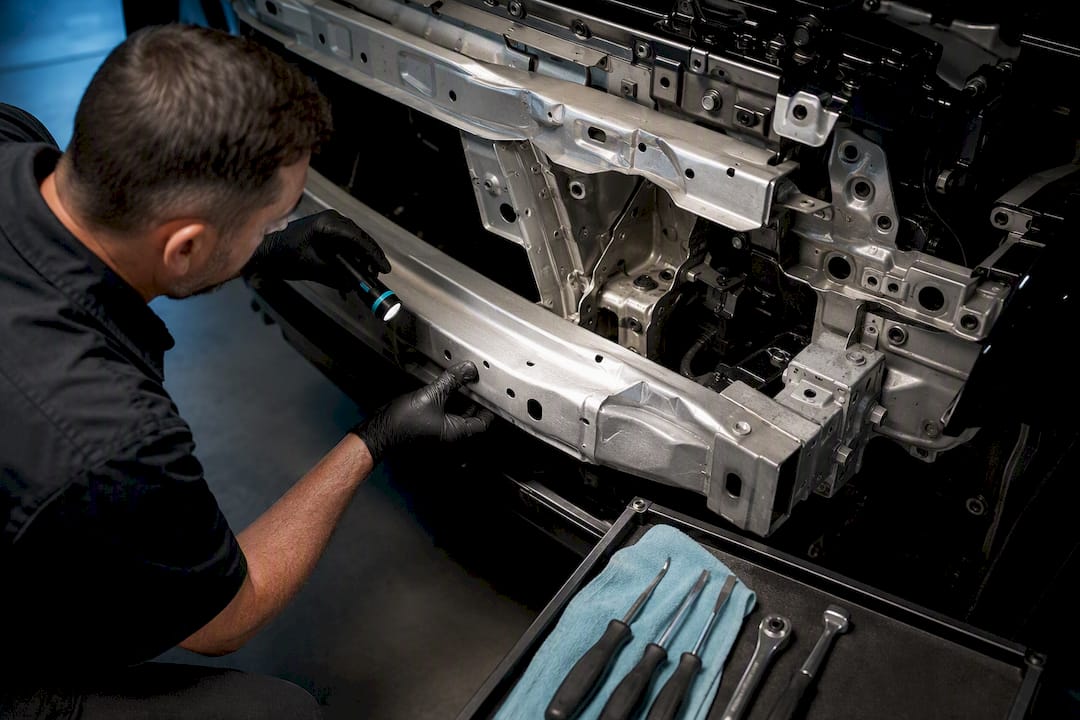
Shops that perform teardown before finalizing an estimate tend to see fewer disputes later, because the photographic evidence backs up the request instead of relying on a technician’s word alone.
If the insurer disputes the supplement, most policies include an appraisal clause: each side hires an independent appraiser, and if those two disagree, they select a neutral umpire to settle the difference. When that route stalls, put your request in writing, then file a complaint with your state Department of Insurance if the insurer isn’t responding in good faith. Legal counsel becomes worth considering only after those steps fail.
Why ADAS Calibration Matters After a Collision
Modern vehicles rely on cameras, radar, and sensors to run lane-keeping, automatic braking, and adaptive cruise control. A collision, even a minor one, can knock these systems out of alignment, and skipping the recalibration step leaves safety systems misaligned without any visible sign of the problem.
Ask for a documented pre-repair scan and a post-repair calibration certificate that names the equipment used and confirms the result. For EVs and luxury vehicles, the calibration often requires manufacturer-specified tools rather than a generic setup, so confirm the shop can meet that standard before repairs start. Car Geeks Collision documents ADAS calibration and sensor alignment work as part of the standard repair file for exactly this reason.
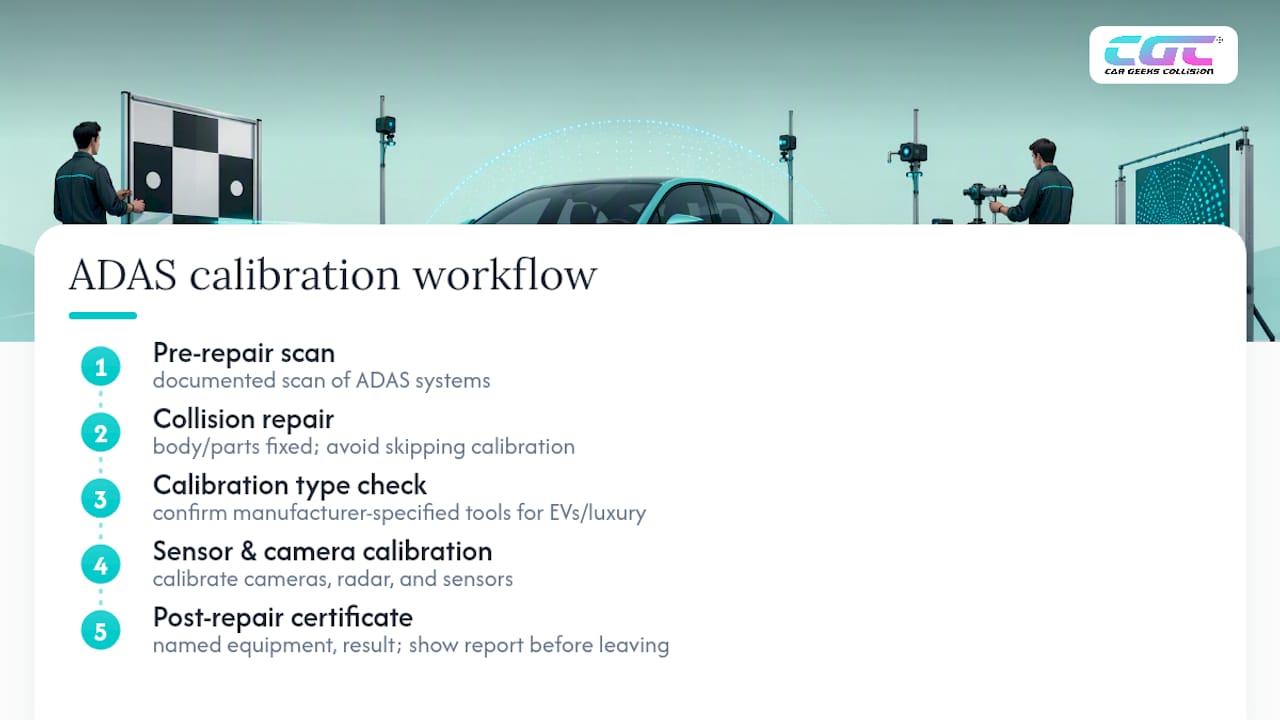
Pro Tip: Ask the shop to show you the calibration report before you leave the lot. A shop that can’t produce one probably didn’t run the calibration at all.
How to Choose a Reputable Collision Repair Shop
Picking the right shop matters more than picking the fastest one. A few direct questions separate a shop built for modern vehicles from one that isn’t.
Ask for a written workmanship warranty and read what it actually covers.
Ask whether they tear down before finalizing the estimate, and how they handle supplements.
Confirm they follow OEM repair procedures rather than generic shortcuts.
Ask who performs ADAS calibration and whether they document it.
Ask about loaner or rental vehicle availability while your car is in the shop.
Verify claims of I-CAR or ASE training and ask to see documented calibration records rather than taking a verbal promise at face value. A shop that instantly matches a lowball estimate without inspecting your vehicle first, or refuses to put parts choices and procedures in writing, is signaling that corners get cut somewhere down the line.
Pro Tip: A shop confident in its work will happily show you past repair documentation. One that gets defensive about paperwork is telling you something.
What to Expect During the Repair Process
Repair timelines swing on three factors: parts availability, how much structural work is involved, and whether ADAS calibration is required. A simple bumper repair might take a few days; a frame repair on an EV with battery involvement can stretch to several weeks while parts ship and calibration gets scheduled.
Confirm rental or loaner arrangements before repairs start, including who covers the cost and for how long. When you pick up the vehicle, take a real test drive, check panel gaps and paint match under daylight, and confirm the ADAS features behave normally on the road. Request the full repair file, including scan reports and the written warranty, before you leave.
Does Collision Repair Affect Your Future Insurance Premiums?
Filing a claim can raise your premium, but the size of that increase depends heavily on fault determination, your claims history, and your state’s rating rules. A claim where you’re found not at fault typically has a smaller impact than one where you’re deemed responsible, and some insurers offer accident forgiveness programs that shield your first at-fault claim from a rate hike entirely.
The repair itself, meaning the quality of the work and the parts used, doesn’t directly move your premium. What does matter is the claim record tied to the incident and whether the vehicle’s value or safety rating changed. A vehicle repaired with proper OEM procedures and documented ADAS calibration retains more of its resale value than one patched together with mismatched parts, which becomes relevant if you ever file a diminished value claim against the at-fault driver’s insurer.
Multiple claims within a short window tend to trigger steeper increases than a single isolated incident, since insurers weight recent claims frequency heavily in their pricing models. If you’re weighing whether to file at all for minor damage, run the math: compare your deductible and the expected premium increase against the out-of-pocket repair cost. For a small cosmetic repair, paying out of pocket sometimes costs less over three years than the compounded premium increase from filing.
One point that surprises a lot of drivers: choosing an independent shop over a DRP shop has no bearing on your premium. Insurers rate based on your driving record and claims history, not on which repair facility you selected. Your legal right to choose your shop, protected in most states against insurer steering practices, doesn’t cost you anything on the pricing side.
Your Rights When a Claim Dispute Goes Beyond Appraisal
Appraisal clauses handle disagreements over repair cost, but plenty of disputes fall outside that scope entirely. Delayed claims processing, denied coverage for a covered peril, or an insurer dragging out payment authorization for weeks are all bad-faith patterns that appraisal doesn’t touch.
Start by putting every request in writing and setting a clear deadline for a response. If the insurer stays silent or stonewalls, your state’s Department of Insurance accepts consumer complaints and investigates patterns of delayed or denied claims. The NAIC’s consumer resources list contact information for every state regulator, and filing a complaint costs nothing.
Most states also give policyholders the right to request a copy of their claim file, including adjuster notes and the reasoning behind a denial or reduced payout. Reviewing that file often reveals whether the insurer applied the wrong depreciation schedule, missed documented damage, or misapplied a policy exclusion.
When a dispute involves a denied claim rather than a pricing disagreement, mediation through your state insurance department sometimes resolves things faster than a lawsuit. Small claims court remains an option for disputes under your state’s dollar threshold, and it doesn’t require an attorney. For larger disputes involving total loss valuations or diminished value, especially on a higher-value vehicle, consulting an attorney who handles insurance bad-faith cases becomes worth the consultation fee. Document everything along the way. Claim files, denial letters, and repair estimates all become evidence if the dispute escalates past your insurer’s internal process.
A Specialist Shop’s Role in Insurance Repairs
A shop that handles insurance claims daily brings something a generalist can’t: fluency in supplement negotiation, teardown documentation, and OEM procedure compliance for complex vehicles. Car Geeks Collision coordinates directly with insurers, arranges towing, provides loaner vehicles when available, and backs every repair with a lifetime workmanship warranty.
That matters most for EV and luxury vehicles, where ADAS calibration and structural repair demand manufacturer-specific procedures rather than generic shortcuts. Documenting that work properly protects both your safety and your car’s resale value down the road.
If You Need a Specialist: How Car Geeks Collision Handles Insurance Repairs
Most drivers discover the hard way that not every shop can properly repair a Tesla, a Porsche, or a Range Rover after a serious collision, especially once ADAS calibration and structural work enter the picture. There are shops that specialize in coordinating insurance claims directly, documenting every ADAS scan and calibration, and following OEM repair procedures on EVs, luxury vehicles, and exotics rather than generic shortcuts.
When you contact Car Geeks Collision, bring your photos of the damage, your claim number, your insurer’s contact information, and any written estimates you’ve already collected. The team will walk you through insurance claim coordination, explain part options in writing, and arrange a loaner vehicle if one’s available while your car is in the shop. Getting a second opinion never hurts. Compare estimates, ask about OEM procedure use, and confirm calibration documentation before committing to any shop.
Ready to get your vehicle assessed? Visit the auto body repair services page to see what’s covered, or check out EV and Tesla collision repair if you’re driving an electric vehicle that needs specialized handling.
— Car Geeks Collision
Sources
For deeper guidance beyond this article, the FTC’s auto repair basics covers your baseline consumer protections. The NAIC’s auto insurance resources list every state insurance regulator’s contact information. For third-party calibration standards, Auto Glass Kings’ ADAS calibration guide explains common scenarios in plain terms, and this breakdown of the accident repair process walks through the workflow from a car owner’s perspective.
Is Insurance Steering Illegal? Your Rights Explained - LegalClarity
FAQs about direct repair programs and generic auto parts | III
FAQ
What Is Considered Collision Repair?
Collision repair covers structural and cosmetic damage from an accident, including frame straightening, panel replacement, paint and refinishing, and ADAS recalibration when sensors get knocked out of alignment.
Is It Better to Pay Out of Pocket or File an Insurance Claim?
For minor damage close to your deductible amount, paying out of pocket often costs less over time once you factor in a potential premium increase; for major damage, filing the claim almost always makes financial sense.
Is Collision Coverage Worth Paying For?
Collision coverage is worth it if you couldn’t comfortably replace your vehicle out of pocket after a total loss, and it’s typically required anyway if you’re financing or leasing the car.
What Does Collision Coverage Not Cover?
Collision coverage doesn’t cover damage to another person’s vehicle or property, medical expenses, or damage from non-collision events like theft, fire, or weather, which fall under comprehensive coverage instead.
Can My Insurer Force Me to Use a Specific Repair Shop?
No. Most states protect your right to choose your own repair shop, and an insurer that pressures you into a specific facility may be engaging in illegal steering that you can report to your state’s insurance regulator.
Recommended