
Blog
Headlight Aiming After Front-End Repair: Why Alignment and Calibration Matter

After a front-end collision, a headlight can illuminate and still be aimed incorrectly. A small change in a mounting tab, radiator support, fender position, or suspension height can move the beam enough to reduce nighttime visibility or glare at other drivers. What changes headlight aim? Headlamps are positioned by several mounting points that depend on surrounding panels and structure. Damage to a bracket or support can tilt the assembly. Replacing a lamp, bumper, hood, fender, or suspension...
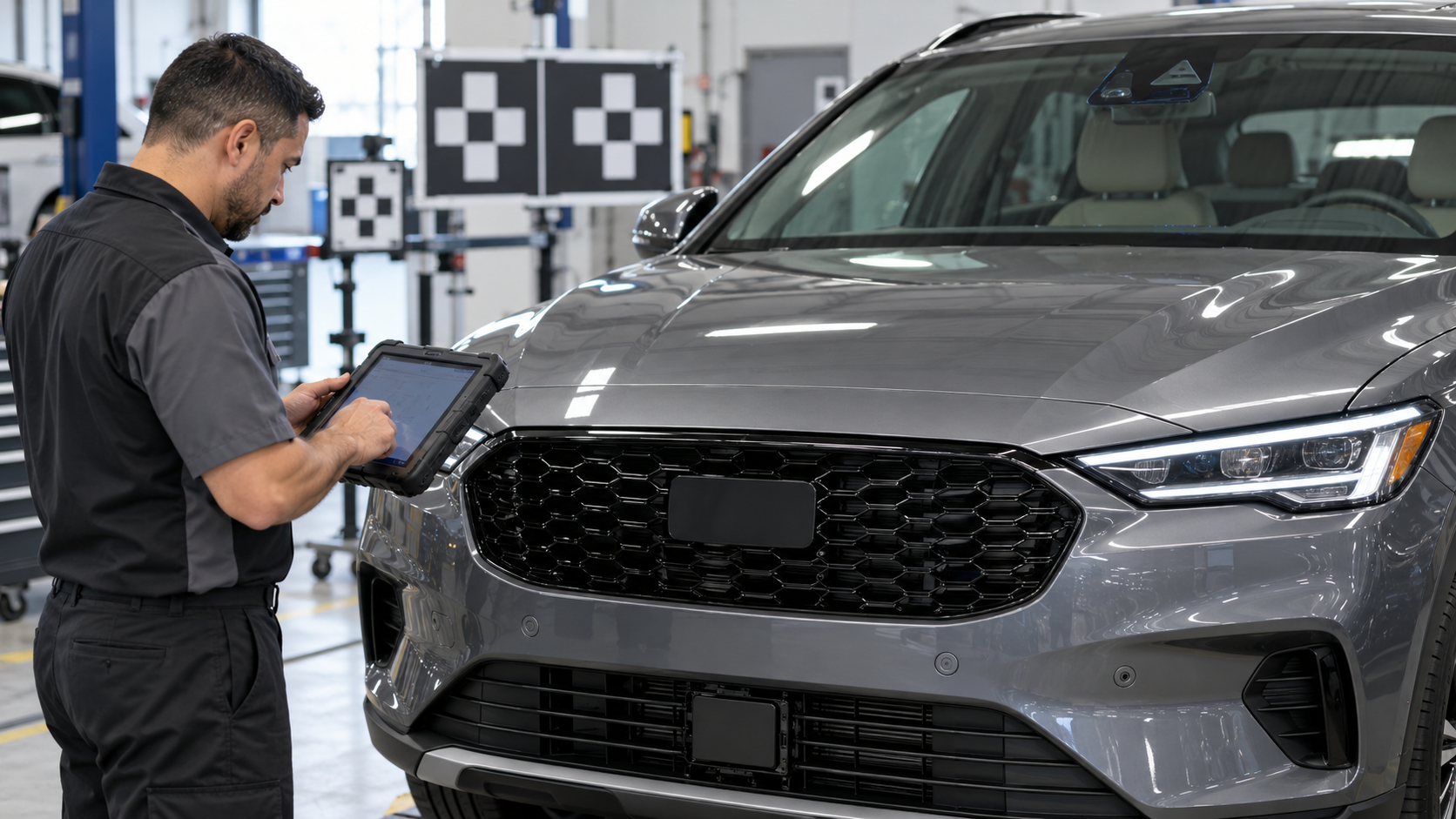
After a front-end collision, a headlight can illuminate and still be aimed incorrectly. A small change in a mounting tab, radiator support, fender position, or suspension height can move the beam enough to reduce nighttime visibility or glare at other drivers.
What changes headlight aim?
Headlamps are positioned by several mounting points that depend on surrounding panels and structure. Damage to a bracket or support can tilt the assembly. Replacing a lamp, bumper, hood, fender, or suspension component can also change vehicle stance and panel alignment.
Signs the aim may be wrong
• One beam appears higher or lower than the other
• The cutoff line is uneven on a wall
• Road signs are overly bright while the pavement looks dark
• Oncoming drivers flash their lights
• A headlamp warning appears
• Adaptive lights no longer turn or level normally
Mechanical aim versus electronic calibration
Traditional lamps require mechanical aiming on a level surface using proper equipment and vehicle setup. Many modern vehicles add automatic leveling, adaptive front lighting, matrix functions, or control modules. These systems may need a scan, initialization, or calibration after parts are removed or vehicle height changes.
Why visual guessing is not enough
Parking in front of a garage door can reveal an obvious problem, but it cannot confirm the manufacturer’s specification. Tire pressure, fuel load, floor slope, suspension condition, and distance from the aiming screen all matter. A correct check uses the required setup and measurements.
Related systems should be inspected
Front-end work may also affect cameras, radar sensors, parking sensors, and wiring. Headlight diagnosis should be coordinated with structural measurements, wheel alignment, diagnostic scans, and any required driver-assistance calibration.
What owners should ask
Ask whether lamp mounts were inspected, whether the beam aim was measured, and whether the vehicle requires electronic initialization or calibration. The final invoice should clearly document the operations performed.
Car Geeks Collision can evaluate headlamp mounting, panel alignment, warning lights, and post-repair aiming needs. If night visibility changed after a collision, schedule an inspection before assuming a new bulb will solve it.