
Blog
Ferrari Suspension Problems: Warning Signs, Diagnosis and Repair in South Florida

Ferrari pulling, making suspension noise, wearing tires unevenly, or driving differently after an impact? Learn warning signs and diagnostic steps.
A Ferrari that pulls, makes a new clunk or rattle, wears a tire unevenly, feels unstable, or drives differently after an impact needs a complete inspection before anyone recommends an alignment or suspension repair. Similar symptoms can come from a tire, wheel, steering component, suspension part, sensor, mounting point, alignment change, or collision damage.
The correct starting point is to reproduce the complaint, inspect the vehicle, and identify the supported cause. Replacing parts or adjusting alignment before checking for damage can leave the original problem unresolved.
Ferrari suspension warning signs
Arrange an inspection if you notice:
The vehicle pulls or drifts on a level road
The steering wheel is no longer centered
A suspension, chassis, damping, or steering warning appears
Knocking, clunking, squeaking, rattling, or grinding occurs
The ride feels unusually harsh, bouncy, loose, or unstable
One corner appears lower than the others
A tire develops rapid or uneven wear
A wheel appears displaced in the opening
The symptom began after a pothole, curb strike, road-debris impact, or collision
Handling changed after wheel, tire, suspension, alignment, or body work
A warning message or noise identifies a condition that needs investigation; it does not prove which part has failed.
When should you stop driving?
Do not keep driving solely because the vehicle can still move. Arrange vehicle-appropriate towing or roadside assistance when:
A tire contacts the body or another component
A wheel is visibly displaced or tilted
Steering control changes suddenly
The vehicle feels severely unstable
A tire or wheel is visibly damaged
A warning instructs you to stop
A suspension component appears broken or detached
Fluid is visibly leaking from a damper near an affected corner
If the vehicle remains controllable but a warning, pull, or noise is present, avoid high speeds and describe the exact condition to a qualified repair facility before normal use.
What can cause Ferrari suspension symptoms?
Ferrari models and suspension designs vary by model year, equipment, and vehicle configuration. The following are areas an inspection may consider, not a diagnosis for every car.
Tires and wheels
Low-profile tires and performance wheels can transmit impact forces into nearby components. Tire damage, a bent wheel, incorrect pressure, balance concerns, uneven wear, or a mismatched tire can create vibration, pulling, noise, or handling changes.
Dampers, springs, and mounts
A damper, spring, upper mount, related hardware, or an electronically controlled component—where equipped—may contribute to ride, noise, or warning symptoms. The vehicle's exact design and fault evidence determine what should be tested.
Control arms, bushings, links, and joints
Mechanical suspension parts guide wheel movement and maintain geometry. Wear, looseness, deformation, or impact damage can affect alignment, steering feel, noise, and tire wear.
Steering components and wheel bearings
Tie rods, steering links, knuckles, hubs, and bearings can produce symptoms that overlap with suspension problems. A complete inspection should consider steering and wheel support rather than focusing on one system label.
Sensors, wiring, and electronic controls
Some vehicles use sensors and electronic controls to monitor or adjust chassis behavior. A diagnostic scan can identify recorded conditions, but the fault information must be compared with wiring, voltage, sensor data, mechanical inspection, and the applicable vehicle procedure.
Mounting points and nearby structure
A suspension component can be intact while its mounting point, subframe position, wheelhouse, or nearby structure has moved. This is especially important after a collision, curb strike, or severe road impact.
Why an alignment may not be the complete repair
Alignment measurements describe wheel angles and steering position. They do not, by themselves, prove why a measurement is out of specification.
If a wheel, control arm, steering component, subframe, mounting point, or structural area is bent or displaced, adjusting alignment without identifying that condition can mask symptoms without restoring the correct geometry.
A useful alignment decision should follow:
Tire and wheel inspection
Steering and suspension inspection
Evaluation of mounting points and visible impact evidence
Measurement or additional investigation when damage is suspected
Correction of damaged components or structure
Alignment using the applicable vehicle information
Verification of steering position, handling, warnings, and tire clearance
Can a diagnostic scan identify the failed part?
Not necessarily. A fault code reports what the vehicle detected. It may identify a system, signal, voltage condition, communication issue, or performance range, but it does not always prove the named component is defective.
Scan information is most useful when combined with the owner's description, physical inspection, measurements, live data, electrical testing, and the exact vehicle configuration.
Ferrari suspension problems after a collision or impact
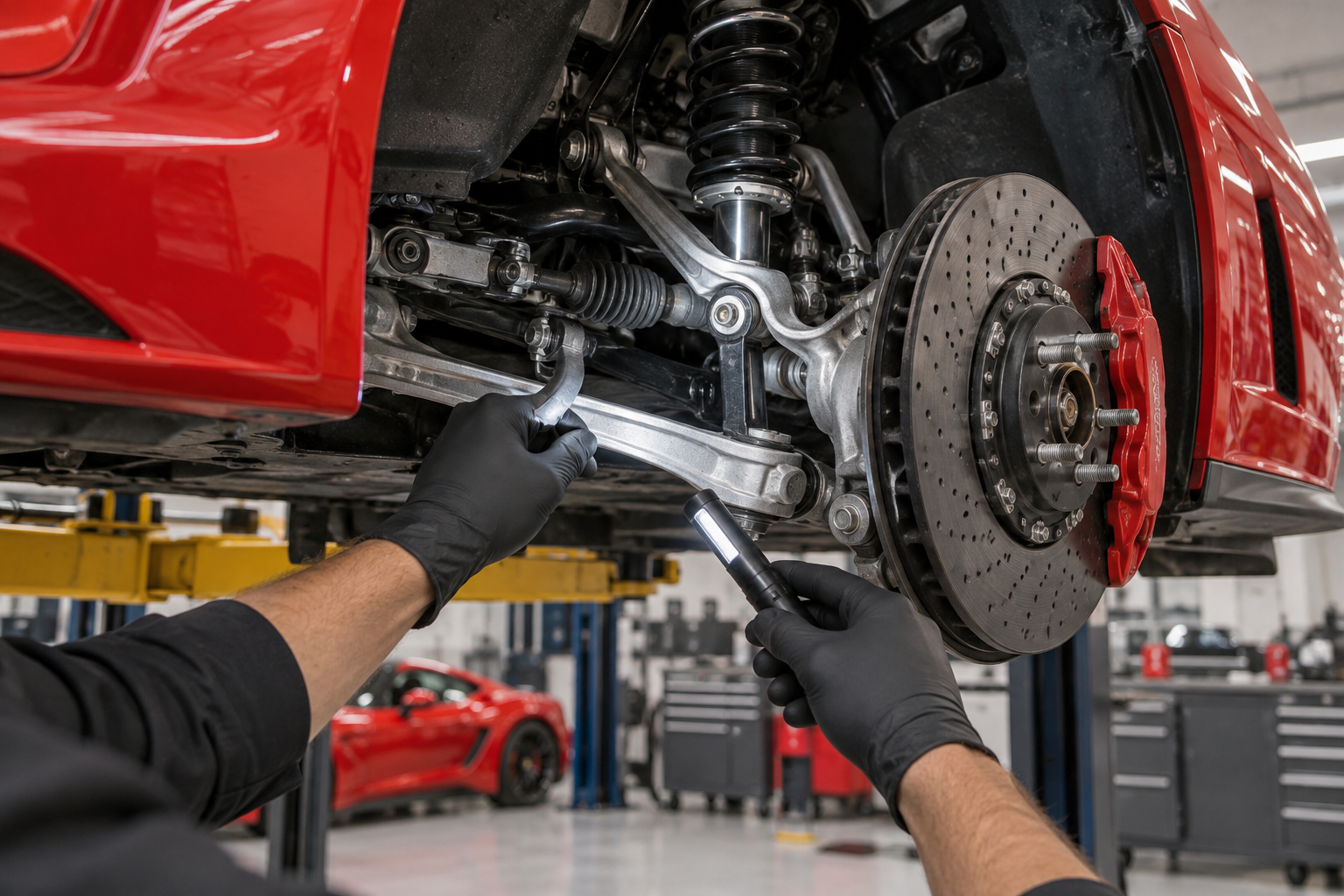
A curb strike, pothole, road-debris impact, or collision can affect more than the visible wheel. Depending on the direction and force, the inspection may need to consider:
Tire, wheel, hub, and bearing
Control arms, links, bushings, and joints
Steering linkage and knuckle
Damper, spring, mount, and related hardware
Subframe and suspension mounting points
Wheelhouse, underbody, and nearby structural areas
Sensors, wiring, connectors, brackets, and shields
Wheel alignment and steering-center changes
Clearance between the tire, wheel, body, and suspension
Exterior photographs alone may not reveal all related damage. An initial estimate can change after the vehicle is lifted, measured, scanned, or disassembled with authorization.
What a professional inspection should establish
A structured suspension and steering inspection may include:
Confirming the model, year, warning, and driving complaint
Checking tire pressure, condition, wear, size, and visible damage
Inspecting the wheels and comparing their positions
Examining accessible steering and suspension components
Checking for looseness, deformation, contact, leakage, or displaced hardware
Scanning applicable systems when a warning or electronic symptom is present
Evaluating ride height and vehicle stance on a suitable level surface
Reviewing alignment measurements when appropriate
Inspecting mounting points and nearby body or structural areas after an impact
Explaining the supported findings and proposed repair before authorization
Verifying steering, warnings, clearances, alignment, and handling after the approved repair
The exact process depends on the vehicle and symptom. No single test replaces the complete inspection.
Repair or component replacement?
The correct repair follows the confirmed condition. Depending on the findings, the plan might involve a tire or wheel correction, mechanical suspension repair, steering repair, wiring or sensor work, alignment, mounting-point repair, structural work, or a combination.
Ask the repair facility to explain:
Which condition was verified
What test or measurement supports the recommendation
Which components require repair or replacement
Whether the repair affects alignment or nearby systems
Whether additional damage may be found after access or disassembly
What will be verified before delivery
Expected timing and charges before work begins
Insurance documentation after an impact
Insurance coverage depends on the event, policy, and carrier decision. If the suspension concern followed a collision, curb impact, roadway object, or other incident, document:
The date, location, and description of the event
Photos of the vehicle, wheel, tire, and impact area
Dashboard warnings
Changes in steering, noise, ride, or vehicle stance
Towing and roadside-assistance records
Prior wheel, tire, suspension, alignment, or body repairs
The insurer's claim number and initial estimate
Avoid clearing warning messages or authorizing unrelated work before the condition is documented when an insurance claim may be involved.
Ferrari suspension inspection in South Florida
Car Geeks Collision is an independent collision and auto repair facility in Hollywood, Florida. The shop serves luxury and exotic vehicle owners and can review suspension, steering, alignment, wheel, tire, and collision-related concerns to determine the appropriate inspection and repair path.
Because Ferrari vehicles differ by model, year, and equipment, confirm the exact vehicle and requested service when scheduling. The inspection should establish what is supported by evidence before parts or adjustments are authorized.
Drivers from Hollywood, Fort Lauderdale, Aventura, and nearby South Florida communities can contact Car Geeks Collision to discuss a warning, handling change, road impact, or collision-related suspension concern.
Frequently asked questions
Is it safe to drive with a Ferrari suspension warning?
The warning alone does not establish severity. If the vehicle is unstable, a wheel is displaced, a tire contacts the body, steering changes suddenly, or the warning instructs you to stop, do not continue driving. Arrange appropriate transport and inspection.
Can a pothole damage Ferrari suspension?
Yes. Depending on speed, impact angle, tire profile, and road condition, a pothole may affect the tire, wheel, alignment, steering, suspension components, mounting points, or nearby structure.
Will an alignment fix a Ferrari that pulls?
Only if alignment is the actual issue and no damaged or displaced component is causing it. Tire, wheel, steering, suspension, mounting-point, and structural conditions should be considered first.
Why is my Ferrari making a clunk over bumps?
Possible areas include a joint, bushing, link, damper, mount, steering component, loose part, or impact damage. The sound should be reproduced and physically located before a repair is recommended.
Can a scan identify the exact failed suspension part?
Not always. A scan provides fault information and system data, but mechanical inspection, measurements, wiring checks, and vehicle-specific procedures may still be required.
Does suspension repair require alignment?
It depends on the components disturbed, the damage, and the applicable repair procedure. Alignment should be evaluated as part of the repair plan rather than automatically assumed or omitted.
How long does Ferrari suspension repair take?
Timing depends on diagnosis, model, damage extent, access requirements, parts availability, alignment needs, and whether structural or collision-related work is involved. A reliable timeline normally follows inspection.
Request an inspection
If your Ferrari is pulling, making suspension noise, wearing tires unevenly, displaying a warning, or driving differently after a pothole, curb strike, or collision, contact Car Geeks Collision in Hollywood, FL. Share the model, year, symptoms, warning message, impact history, and any photos so the team can determine the appropriate next step.