
Blog
Ferrari Convertible Roof Problems: Diagnosis and Repair in South Florida

A Ferrari convertible roof that stops halfway, moves unevenly, leaks, or displays a warning needs careful diagnosis—not repeated button presses. The safest next step is to stop operating the roof, protect the cabin from weather, and arrange an inspection. Common Ferrari convertible roof warning signs A roof problem may appear suddenly or develop gradually. Watch for: The roof will not open or close The roof stops partway through its cycle One side moves before the other The mechanism moves...
A Ferrari convertible roof that stops halfway, moves unevenly, leaks, or displays a warning needs careful diagnosis—not repeated button presses. The safest next step is to stop operating the roof, protect the cabin from weather, and arrange an inspection.
Common Ferrari convertible roof warning signs
A roof problem may appear suddenly or develop gradually. Watch for:
The roof will not open or close
The roof stops partway through its cycle
One side moves before the other
The mechanism moves slowly, hesitates, or reverses
Grinding, clicking, popping, or straining noises
A roof or trunk warning on the instrument panel
Windows do not lower or raise as expected during operation
Latches do not release or secure correctly
Water enters around seals, glass, or roof joints
Hydraulic fluid or another unfamiliar liquid appears near the mechanism
If the roof is binding, sitting crooked, or making a new mechanical noise, do not keep cycling it. Repeated operation can place additional stress on hinges, linkages, latches, trim, wiring, or hydraulic components.
Why a Ferrari convertible roof may stop working
Convertible roof systems coordinate multiple mechanical and electronic components. A symptom that appears simple can have more than one possible cause.
Low battery voltage or an electrical fault
Roof systems require stable voltage. A weak battery, charging problem, fuse, wiring fault, switch problem, or control-module issue may interrupt operation. Battery condition should be checked before assuming that a major roof component has failed.
Position sensors, switches, or latches
The system must confirm the position of the roof, windows, trunk or deck lid, and latches before allowing the next step. A misaligned latch or inaccurate sensor signal can stop the sequence even when the roof itself looks normal.
Hydraulic pressure or fluid loss
Some convertible mechanisms use hydraulic components to move and secure the roof. Low pressure, a leaking line, a weak pump, or a failing cylinder can cause slow, uneven, or incomplete movement. Fluid found near the mechanism should be documented and inspected rather than topped off without locating the source.
Mechanical binding or alignment
Hinges, linkages, cables, brackets, guides, and panels must move through a precise path. Wear, a loose component, prior repair, or impact damage can create resistance or change alignment.
Water intrusion and drainage concerns
A wet headliner, damp carpet, musty odor, or water near electronics may point to a seal, drainage, glass-adjustment, or alignment issue. Finding where the water entered is more useful than replacing a visible seal without testing the complete path.
What to do when the roof is stuck
First, stop pressing the roof control if the mechanism is straining, moving unevenly, or contacting surrounding panels. Park on level ground, switch the vehicle off, and keep the interior protected from rain.
Do not force the roof by hand unless the owner's manual provides a model-specific emergency procedure and you understand it. Convertible systems can store pressure and tension, and moving one component out of sequence may complicate the repair.
Before arranging service, record:
The Ferrari model and model year
Whether the roof is open, closed, or partially positioned
The exact dashboard warning
What happened immediately before the problem
Any recent battery work, collision, water exposure, or prior roof repair
Photos or a short video showing the position, sound, leak, or uneven movement
This information gives the repair facility a better starting point and may help document an insurance claim when the problem followed an impact or another covered event.
How a professional diagnosis should proceed
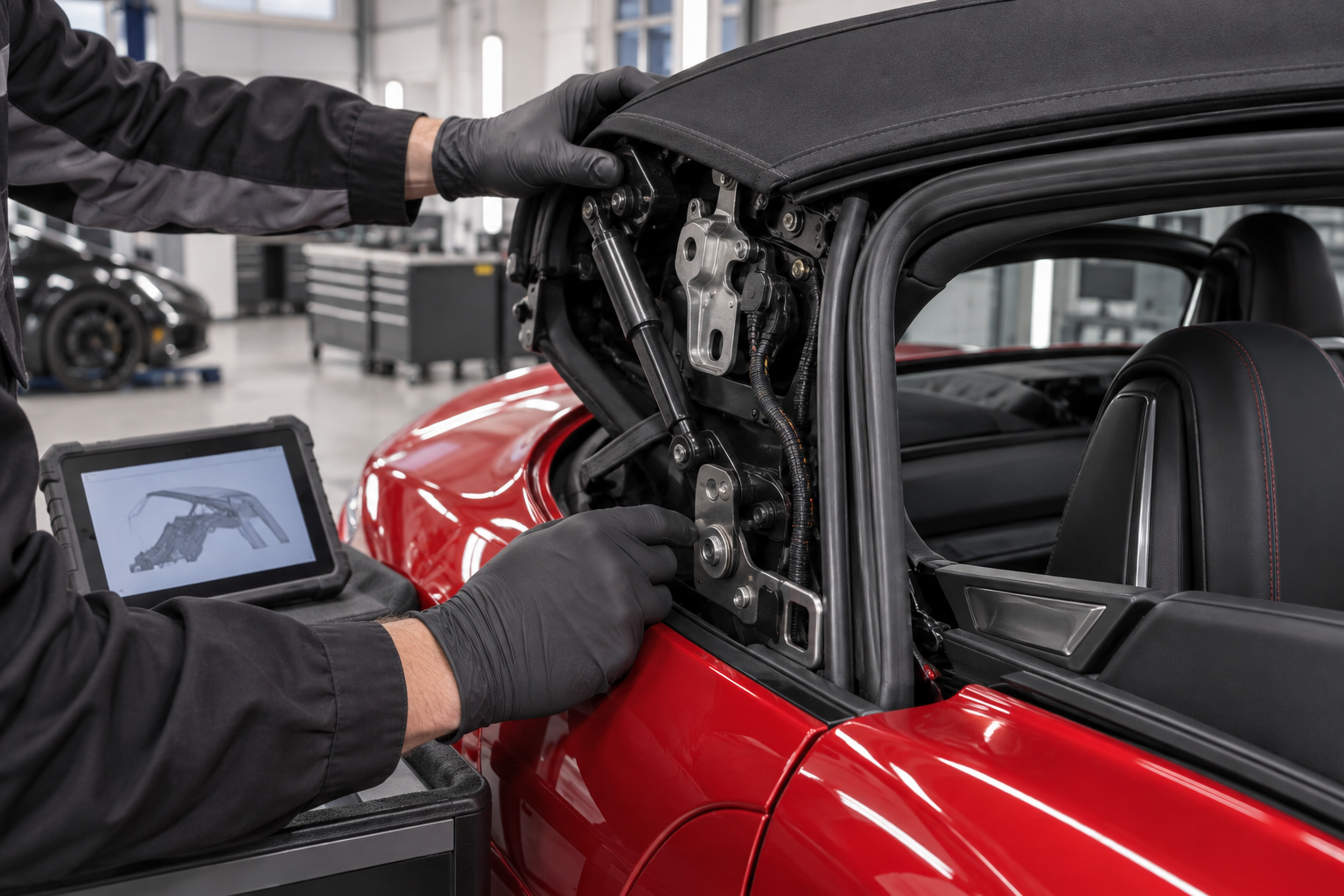
A useful inspection should identify the failed condition before parts are authorized. Depending on the symptom and model, the process may include:
Confirming the customer's description and checking the roof's current position
Inspecting for visible impact damage, interference, leaks, or misalignment
Checking battery condition and system voltage
Scanning applicable vehicle modules for fault information
Testing relevant switches, position sensors, latches, and wiring
Inspecting mechanical or hydraulic components where applicable
Comparing both sides of the mechanism for synchronized movement
Water-testing suspected leak areas when appropriate
Verifying operation after an authorized repair
The goal is not simply to make the roof move once. The system should complete its sequence without binding, warning messages, abnormal noise, or contact with surrounding body panels.
When collision damage affects the convertible roof
A roof malfunction after an accident deserves a broader inspection. Damage does not need to be directly above the cabin to affect operation. An impact may change the alignment of a quarter panel, rear body structure, deck lid, roof storage area, latch point, wiring harness, sensor, or mounting bracket.
Visible paint or panel damage is only part of the repair plan. The shop should also determine whether body geometry or adjacent components are preventing the roof from following its intended path. Operating the roof before that assessment can worsen panel contact or mechanical damage.
If an insurance claim is involved, photograph the vehicle and roof position before additional operation. Keep the claim number, adjuster's information, estimate, and any prior repair documents together. Coverage is determined by the policy and insurer; an inspection helps establish whether the condition appears related to the reported loss.
Repair or replacement?
The correct decision depends on the diagnosis. A fault may be resolved through adjustment, wiring repair, sensor or latch service, leak correction, component repair, or replacement. Replacing parts before confirming the cause can add cost without resolving the original problem.
Ferrari models do not all use the same roof design, components, or service procedure. Model year, body style, fault information, access requirements, and any collision damage all matter. Ask for a written explanation of the diagnosed problem, recommended work, and parts involved before authorizing repairs.
Ferrari convertible roof inspection in South Florida
Car Geeks Collision is an independent collision and auto body repair center in Hollywood, Florida. For a Ferrari roof concern following a collision—or when surrounding body panels, latches, alignment, paint, or water intrusion may be involved—the first step is a careful inspection and repair plan.
Drivers from Hollywood, Fort Lauderdale, Aventura, and nearby South Florida communities can contact Car Geeks Collision to discuss the vehicle's symptoms and determine the appropriate next step. If another specialty is required for a particular roof-system component, that should be established through diagnosis rather than guesswork.
Frequently asked questions
Can I drive with a Ferrari convertible roof partially open?
A partially positioned roof may be unstable, exposed to wind load, or vulnerable to water intrusion. Avoid driving unless a qualified professional confirms that the roof has been safely secured.
Can a weak battery stop the roof from operating?
Yes. Low or unstable voltage can interrupt an electronically controlled roof sequence. Battery and charging-system condition should be checked as part of diagnosis.
Should I keep pressing the roof button if it stops halfway?
No. Repeated cycling may increase stress on the mechanism or cause contact with body panels. Record the warning and roof position, then arrange an inspection.
Why does one side of the roof move differently?
Uneven movement can be related to alignment, mechanical resistance, hydraulic operation, or a component that is not moving in sequence. Stop operation until the cause is identified.
Will insurance cover Ferrari convertible roof damage?
It depends on the cause, policy, and insurer's coverage decision. Damage connected to a collision or other covered event may be handled differently from wear, maintenance, or mechanical failure. Document the condition and review it with the insurer and repair facility.
How long does Ferrari convertible roof repair take?
Timing depends on the diagnosis, model, parts availability, damage extent, and whether body, electrical, mechanical, hydraulic, trim, or water-leak work is involved. A reliable timeline normally follows inspection rather than preceding it.
Request an inspection
If your Ferrari convertible roof is stuck, leaking, noisy, moving unevenly, or showing a warning after an impact, contact Car Geeks Collision in Hollywood, FL. Share the model, year, roof position, warning message, and any photos or video so the team can help determine the appropriate inspection and next step.