
Blog
Ferrari A/C Not Cooling? Diagnosis and Repair in Hollywood, FL
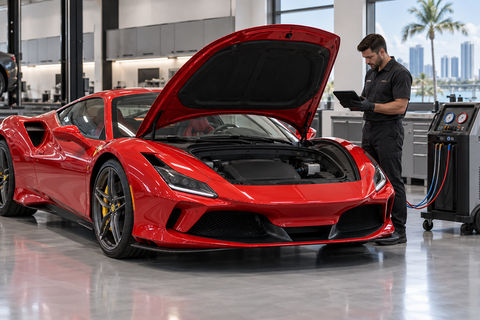
Ferrari A/C blowing warm, cooling unevenly, or making noise? Learn possible causes, diagnostic steps, and when to request an inspection in Hollywood, FL.
A Ferrari air-conditioning system that blows warm air, cools intermittently, produces weak airflow, or makes a new noise needs diagnosis before anyone recommends a repair. The symptom may involve airflow, refrigerant pressure, an electrical control, a sensor, a fan, a compressor-related concern, or collision damage.
A quick refrigerant top-off may temporarily change the vent temperature, but it does not explain why refrigerant was low or confirm that the rest of the climate-control system is operating correctly. Testing the complete complaint is the better first step.
Signs your Ferrari A/C needs attention
Request an inspection when you notice:
Air that remains warm after the vehicle has been running
Cooling that improves only while driving
Different temperatures from different vents or zones
Airflow that is weaker than normal
Cooling that starts and stops
A new clicking, grinding, rattling, or whining noise
A damp or unusual odor from the vents
Water appearing where it normally should not
A climate-control or electrical warning
A problem that began after an accident, body repair, or battery service
If there is smoke, a burning smell, severe grinding, or an electrical warning, stop using the system and arrange an inspection.
Why might a Ferrari blow warm air?
Similar symptoms can come from different systems. The vehicle's model, model year, operating conditions, recent service history, and any impact damage all matter.
Refrigerant leakage
A seal, hose, fitting, condenser, evaporator, or another part of the refrigerant circuit may leak. Low refrigerant can reduce cooling, but the supported repair depends on finding the leak and understanding why it occurred.
Condenser or cooling-fan concern
The condenser releases heat at the front of the vehicle. Restricted airflow, a damaged heat exchanger, an inoperative fan, a displaced seal, or debris can reduce performance—especially at low speeds or while idling.
Compressor or compressor-control problem
A compressor-related symptom does not automatically mean the complete compressor needs replacement. Depending on system design, the concern may involve power supply, command signals, pressure information, a control component, wiring, or the compressor itself.
Sensor, wiring, or control fault
Modern climate-control systems rely on temperature and pressure information, electrical connections, control modules, and commanded operation. A scan and electrical checks may be necessary when cooling is intermittent or a warning appears.
Airflow restriction
A restricted cabin filter, blower concern, duct issue, or actuator problem may reduce airflow even when the refrigerant circuit is capable of producing cold air.
Moisture, drainage, or odor
An odor or water concern can involve condensation drainage, retained moisture, a filter, or contamination in the airflow path. The source should be identified before deodorizing products are used to mask it.
Why a refrigerant recharge is not always the fix
An A/C system is not normally repaired by repeatedly adding refrigerant. If the charge is low, the next question is why. Adding refrigerant without checking for leakage, pressure behavior, airflow, fan operation, and electrical control may delay the real diagnosis.
The refrigerant type and service procedure depend on the exact vehicle. A shop should identify the vehicle specification, recover and measure refrigerant with appropriate equipment when required, and avoid mixing products or using stop-leak materials that can complicate later service.
What professional diagnosis should include
The exact procedure depends on the Ferrari model and symptoms, but a structured inspection may include:
Confirming the complaint and the conditions under which it occurs
Recording vent temperature and airflow behavior
Checking battery condition and relevant electrical supply
Scanning applicable modules for fault information
Inspecting accessible hoses, fittings, wiring, connectors, and components
Evaluating blower operation, fan operation, and airflow paths
Measuring system behavior with appropriate service equipment
Performing an approved leak test when the evidence supports it
Checking sensor inputs and commanded component operation
Explaining the findings and repair options before work is authorized
The goal is to identify the failed condition—not simply replace the most expensive component associated with the symptom.
Ferrari A/C problems after a collision
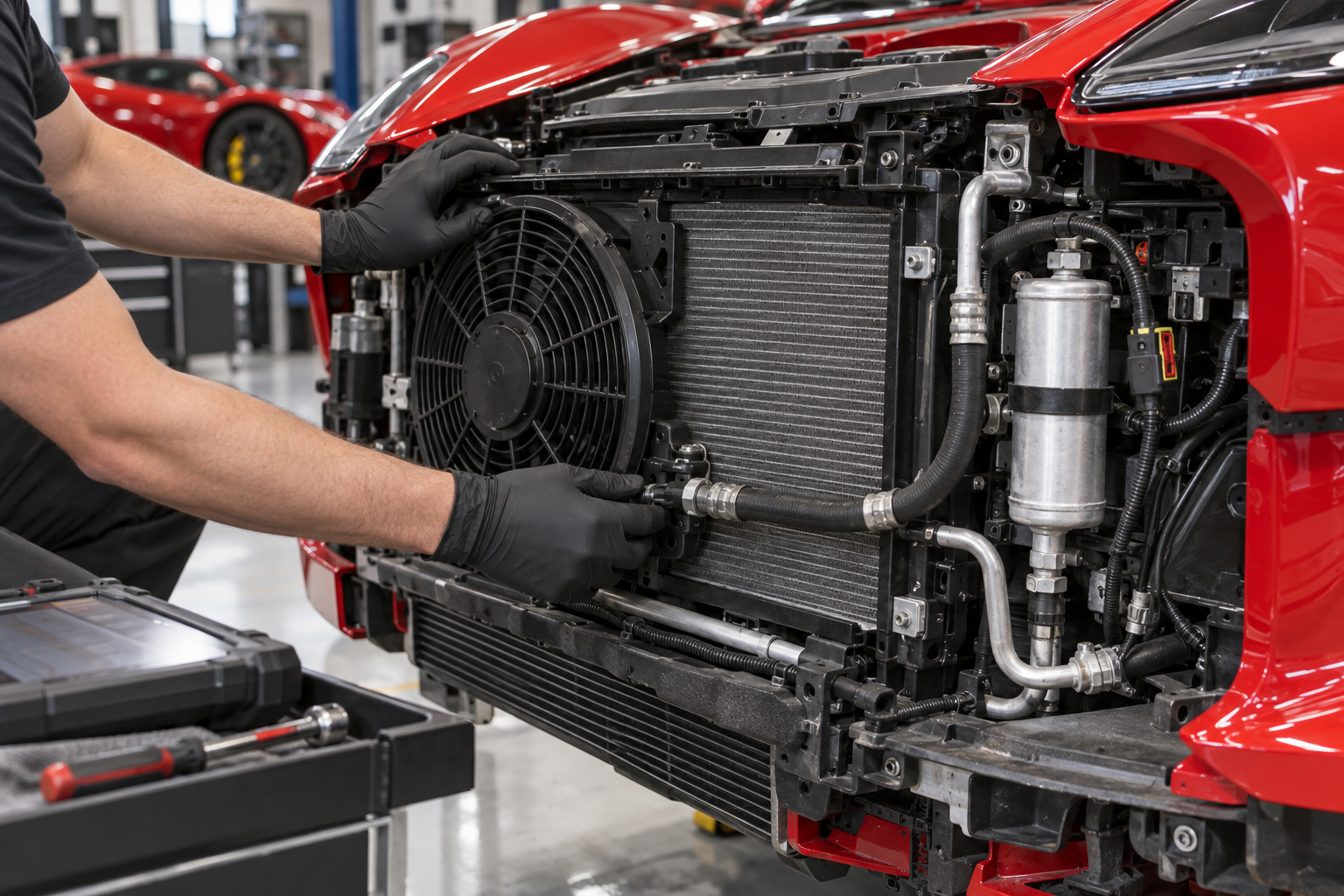
A collision does not automatically damage the air-conditioning system. However, front-end or underbody damage can affect components shared by the A/C and vehicle-cooling airflow path.
Areas that may require inspection include:
The condenser and nearby heat exchangers
Cooling fans and shrouds
Refrigerant lines, fittings, and seals
Electrical wiring, connectors, and sensors
Brackets and mounting points
Air guides, ducts, and underbody shields
Components moved during disassembly or repair
If the A/C problem began after an accident, tell the repair facility when the symptom started and which area was damaged. Photographs, the collision estimate, prior repair records, and the insurer's claim information may help connect the HVAC inspection with the repair plan.
Repair or replacement?
The right decision follows diagnosis. Some concerns may be resolved through an electrical repair, airflow correction, leak repair, adjustment, seal replacement, sensor service, or another targeted action. Other findings may support replacing a failed component.
Ask for a written explanation that identifies:
The verified fault or supported diagnosis
The tests used to reach that conclusion
The recommended repair and parts involved
Whether additional access or disassembly may reveal related damage
What should be rechecked after the repair
The expected cost and timing before authorization
Parts availability and access requirements can affect timing. A reliable estimate should be based on the exact vehicle and confirmed repair plan.
What to tell the shop before your inspection
Share the details that help reproduce the complaint:
Ferrari model and model year
Which vents or seating zones are affected
Whether the problem is constant or intermittent
Whether cooling changes at idle or while driving
Outside temperature and driving conditions when it occurs
Any warning messages, noises, odors, or moisture
Recent refrigerant, battery, electrical, collision, or body-repair work
Photos of dashboard warnings or impact damage
A short video that captures a noise or intermittent symptom can also be useful.
Ferrari A/C inspection in Hollywood, Florida
Car Geeks Collision is an independent collision and auto repair facility in Hollywood, Florida. The shop serves luxury and exotic vehicle owners and can review an A/C concern, especially when collision damage, surrounding body components, cooling airflow, wiring, or insurance documentation may be involved.
Because Ferrari models and climate-control systems vary, confirm the vehicle and requested service when scheduling. The inspection should establish the supported cause and the appropriate repair path before parts are authorized.
Drivers from Hollywood, Fort Lauderdale, Aventura, and nearby South Florida communities can contact Car Geeks Collision to discuss the symptoms and arrange the appropriate next step.
Frequently asked questions
Why does my Ferrari A/C get cold only while driving?
Cooling that changes with vehicle speed may involve airflow, fan operation, pressure behavior, or another condition. The symptom should be tested at idle and under the conditions in which it occurs.
Can I keep driving if the A/C is blowing warm?
Warm air alone may not prevent driving, but smoke, a burning smell, severe noise, an electrical warning, or signs of overheating require prompt attention. Stop using the system if continued operation could worsen the condition.
Should I add refrigerant myself?
Refrigerant service requires the correct specification, charge amount, equipment, and handling procedure. Adding refrigerant without confirming the cause can overcharge the system, hide a leak, or complicate diagnosis.
Can a collision damage the Ferrari A/C?
Yes, depending on the impact location and affected components. The condenser, fans, lines, mounts, wiring, connectors, sensors, and airflow path may be involved. An inspection is needed to connect the symptom to the loss.
Does a noisy compressor always need replacement?
No. A noise should be located and diagnosed before replacement is recommended. Fans, pulleys, nearby components, mounting, electrical command, or the compressor itself may produce similar symptoms.
How long does Ferrari A/C diagnosis or repair take?
Timing depends on the model, symptoms, access requirements, diagnostic findings, parts availability, and whether collision-related work is involved. A reliable timeline normally follows inspection.
Request an inspection
If your Ferrari A/C is blowing warm, cooling unevenly, producing weak airflow, making noise, or stopped working after a collision, contact Car Geeks Collision in Hollywood, FL. Share the model, year, symptoms, recent service history, and any warning messages or impact details so the team can determine the appropriate inspection and next step.