
Blog
Corrosion Protection After Collision Repair: Seam Sealer, Cavity Wax, and Coatings

A collision repair is not complete when the panel looks straight and the paint matches. Hidden surfaces also need protection from moisture, road salt, humidity, and condensation. This is especially important in South Florida, where heat, rain, and coastal air can accelerate corrosion. How factory protection is disturbed Cutting, welding, drilling, grinding, and straightening can remove or damage factory coatings. Replacing a panel may open seams and enclosed cavities that were protected...
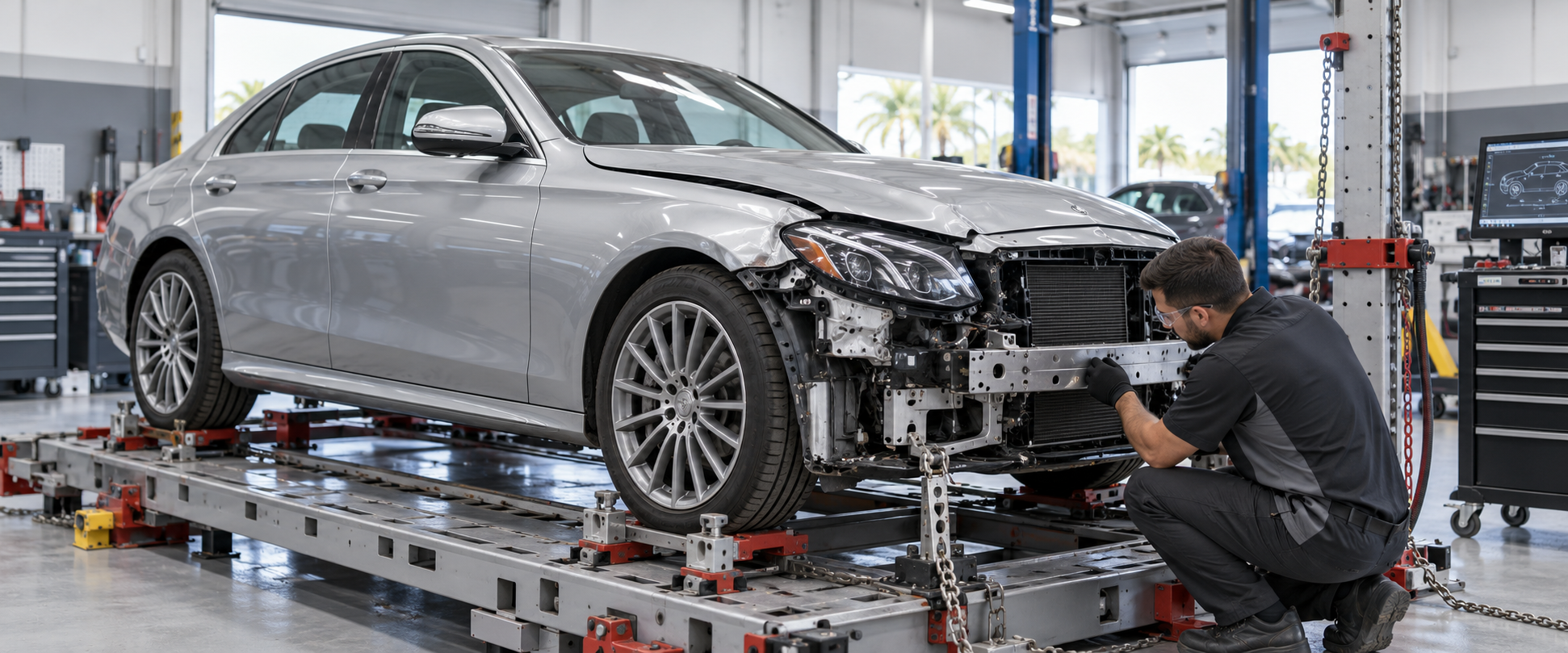
A collision repair is not complete when the panel looks straight and the paint matches. Hidden surfaces also need protection from moisture, road salt, humidity, and condensation. This is especially important in South Florida, where heat, rain, and coastal air can accelerate corrosion.
How factory protection is disturbed
Cutting, welding, drilling, grinding, and straightening can remove or damage factory coatings. Replacing a panel may open seams and enclosed cavities that were protected during manufacturing. If those layers are not restored, corrosion can begin where the owner cannot see it.
Key corrosion-protection materials
• Epoxy or approved primers protect bare metal before refinishing
• Seam sealer closes panel joints against water intrusion
• Cavity wax reaches enclosed areas such as rails, pillars, and door interiors
• Chip-resistant coatings protect vulnerable lower panels
• Approved adhesives and fasteners help prevent moisture paths and galvanic reactions
Why one product cannot do every job
Seam sealer is designed for joints, while cavity wax is formulated to creep into hidden spaces. Undercoating is not a substitute for primer, and visible paint does not protect the back side of a welded flange. Each material must be used in the correct location and sequence.
Following vehicle-specific procedures
Automakers may specify where protection must be restored, which product types are compatible, and when access holes or plugs are permitted. Mixed-material vehicles also require care where aluminum and steel meet because improper contact can accelerate galvanic corrosion.
Application quality matters
Surfaces must be clean and prepared before coatings are applied. Drain paths should remain open, seam sealer should reproduce the intended coverage, and cavity wax needs the correct applicator wand to reach enclosed sections. Overspray on sensors, connectors, brakes, or exhaust components must be avoided.
What owners can ask
Ask whether corrosion protection is included in the repair plan, which hidden areas were accessed, and whether photos were taken before trim and liners went back on. Good documentation is valuable because these steps are difficult to inspect after assembly.
Car Geeks Collision can evaluate repaired seams, replaced panels, and hidden cavities for the protection required by the repair procedure. Contact the shop if you are planning structural body work or notice bubbling paint, rust staining, or moisture near a previously repaired area.