
Blog
Bentley Suspension Problems: Warning Signs, Diagnosis and Repair

Bentley leaning, riding harshly, making suspension noises, or showing a warning? Learn possible causes and when to request an inspection in Hollywood, FL.
A Bentley that leans to one side, sits lower after parking, rides harshly, bounces excessively, makes new suspension noises, pulls while driving, or displays a suspension warning needs inspection before anyone recommends a repair.
The cause may be pneumatic, mechanical, electrical, alignment-related, or connected to collision damage. Similar symptoms can come from an air spring, damper, compressor, valve, line, sensor, control arm, bushing, wheel, tire, mounting point, or control-system concern.
Car Geeks Collision evaluates luxury-vehicle suspension and steering concerns from its independent facility in Hollywood, Florida. The repair decision should follow vehicle identification, physical inspection, diagnostic evidence, and the procedures applicable to that specific Bentley.
Common Signs of a Bentley Suspension Problem
Suspension concerns can affect ride comfort, tire wear, steering response, vehicle height, and stability. Useful warning signs include:
One corner or one side of the vehicle sits visibly lower.
The vehicle lowers after being parked and rises again after startup.
A suspension or ride-height warning appears.
The ride feels unusually harsh, floaty, or bouncy.
The vehicle takes longer than expected to reach its normal height.
A compressor or pump seems to run frequently or for an unusually long time.
Knocking, clunking, squeaking, or rattling is heard over bumps.
The steering pulls or no longer feels centered.
Tires show abnormal or uneven wear.
The symptom started after a pothole strike, curb impact, collision, or repair.
A change in ride height does not identify the failed component by itself. The same visible symptom can result from a leak, sensor information, control commands, damaged linkage, or another issue.
When Should You Stop Driving?
Do not continue driving solely because the vehicle can still move. Arrange an inspection or vehicle-appropriate towing when the body or tire contacts another component, the vehicle is severely tilted, steering control changes suddenly, a wheel is visibly displaced, a warning instructs you to stop, or the vehicle feels unstable.
If the vehicle remains level and controllable but a warning or noise is present, avoid assuming it is safe for normal use. Describe the symptom to a repair facility and follow the guidance provided for that specific condition.
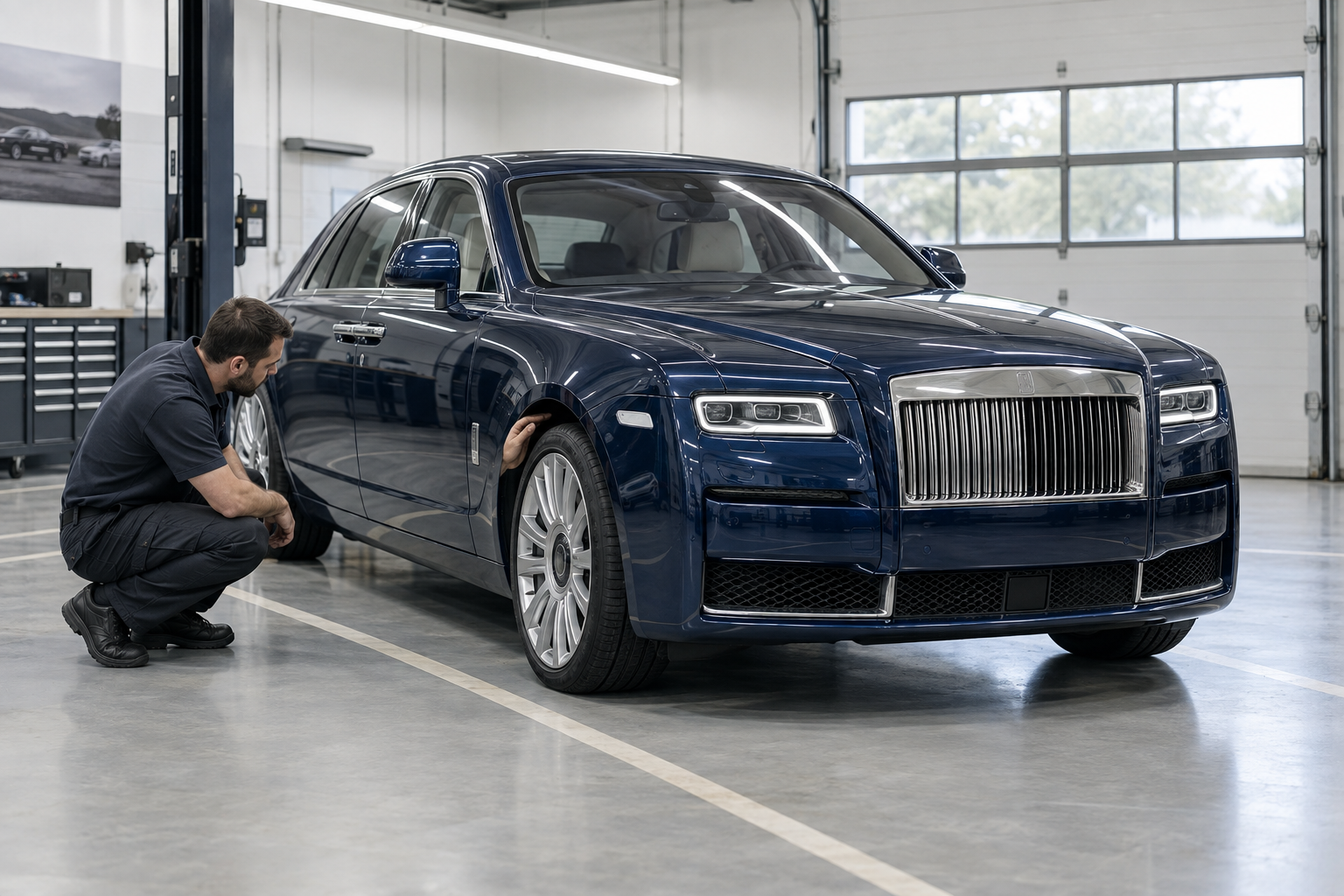
Illustrative image: comparing wheel-arch gaps on a level surface may document a symptom, but it does not identify the cause.
Why a Bentley May Lean or Sit Low
Bentley suspension designs vary by model, model year, and equipment. Where an air-suspension system is fitted, several different faults may create a low-corner or slow-raising symptom.
Air Spring, Line, or Connection Leak
A leak can allow one corner, one axle, or the entire vehicle to lose height. The rate of height loss, operating conditions, and results of leak testing are more useful than guessing from appearance alone.
Compressor, Reservoir, or Valve Concern
A compressor may run frequently because the system is trying to compensate for another fault. Compressor operation should therefore be evaluated with pressure supply, valves, lines, electrical commands, and possible leaks before replacement is recommended.
Ride-Height Sensor or Electrical Fault
Height information may depend on sensors, linkages, wiring, connectors, control modules, and calibration values. A damaged linkage or incorrect signal can produce a warning or incorrect vehicle height even when an air spring is not leaking.
Damper, Control Arm, Bushing, or Joint Wear
Not every suspension problem is pneumatic. Mechanical components can produce looseness, noise, harshness, poor control, or abnormal tire wear. Inspection should separate mechanical wear from electronic or air-system symptoms.
Bentley Suspension Designs Are Vehicle-Specific
There is no single air-suspension configuration, ride-height specification, or diagnostic procedure for every Bentley. Official Bentley literature describes different suspension arrangements across models and generations.
For example, current Flying Spur literature describes a two-chamber, two-valve air suspension with Continuous Damping Control, while other Bentley product literature describes three-chamber air-spring systems. That is why the exact model, year, equipment, and applicable service information matter.
See Bentley's official Flying Spur product information for an example of manufacturer-published suspension information. A brochure explains system features; it does not replace repair procedures or physical diagnosis.
What a Professional Bentley Suspension Diagnostic May Involve
The correct workflow depends on the complaint and vehicle configuration. A methodical inspection may include:
Confirm the symptom and document when it occurs.
Identify the model, model year, suspension equipment, warning messages, and relevant service history.
Place the vehicle on a suitable level surface and compare ride height using applicable procedures.
Inspect tires, wheels, control arms, bushings, joints, dampers, air springs, lines, wiring, sensors, and linkages as applicable.
Review diagnostic information and interpret codes alongside physical tests.
Check for pneumatic leakage or compressor-supply concerns when the vehicle uses an air-suspension system.
Evaluate alignment or structural mounting points when steering, tire wear, or collision history makes that relevant.
Verify the repaired system and confirm that warnings, ride height, and handling symptoms have been addressed.

Illustrative image: scan information and height measurements must be interpreted together with physical inspection.
Bentley leaning or showing a suspension warning? Request a suspension inspection from Car Geeks Collision in Hollywood before authorizing a component replacement.
Suspension Problems After a Collision or Impact
A pothole, curb strike, road-debris impact, or collision can affect more than a wheel or cosmetic panel. Depending on the direction and severity of the force, the inspection may need to consider:
Control arms, links, bushings, ball joints, and steering knuckles.
Air springs, dampers, height sensors, and sensor linkages.
Wheels, tires, hubs, and bearings.
Subframes and suspension mounting points.
Strut towers and nearby structural areas.
Wiring, connectors, lines, shields, and brackets.
Wheel alignment and steering-center changes.
A vehicle can have suspension or mounting-point damage even when exterior damage looks limited. Learn more about frame and structural inspection, collision repair, and insurance claim assistance.
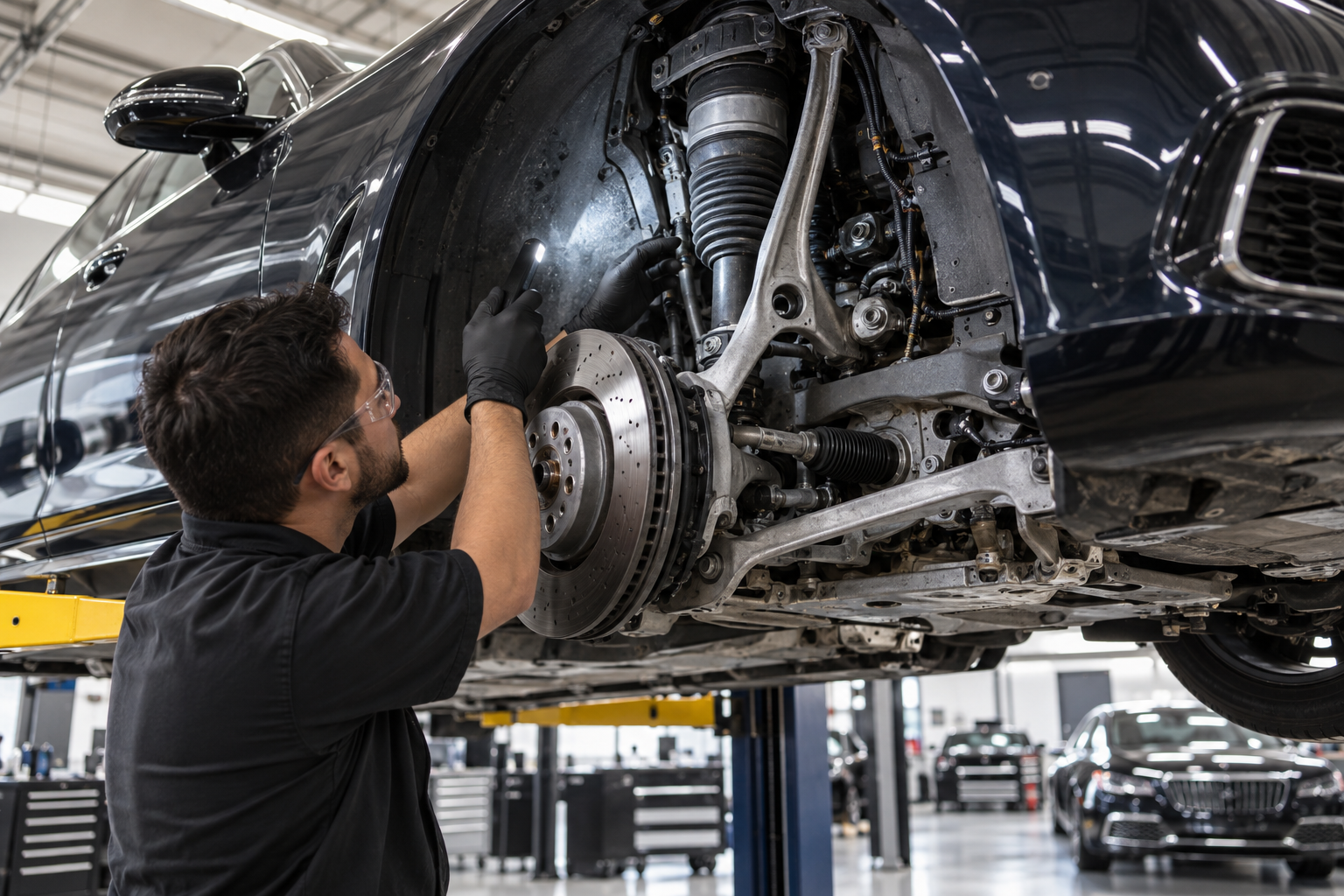
Illustrative image: post-impact inspection may include the wheel assembly, control arms, air-suspension components, subframe, wiring, and mounting points.
Alignment, Tire Wear, and ADAS Considerations
A suspension repair decision may affect more than ride comfort. Changed ride height, displaced mounting points, bent components, wheel damage, or altered alignment can contribute to steering pull and uneven tire wear.
Alignment and driver-assistance implications should be evaluated case by case based on the vehicle, the damage, the components disturbed, and the applicable procedures. An alignment reading should not be used to hide a bent or displaced component.
South Florida Conditions and Bentley Suspension
South Florida driving can expose suspension components and low-profile tires to potholes, construction zones, standing water, road debris, heat, and frequent urban impacts. Those conditions do not prove a component has failed, but they make changes in height, noise, steering, and tire wear worth documenting.
Car Geeks Collision serves luxury-vehicle owners from Hollywood and nearby South Florida communities. Review premium vehicle maintenance and luxury and exotic vehicle repair for related service information.

Illustrative image: a clearly illustrative South Florida setting; this is not presented as an actual customer repair or result.
What to Tell the Shop Before the Inspection
Bentley model and model year.
Which corner or side appears low.
Whether the height changes after parking or startup.
Any suspension, chassis, steering, or ride-height warning.
When the noise, harshness, or instability occurs.
Recent pothole, curb, road-debris, or collision impact.
Previous suspension, wheel, tire, alignment, or body repairs.
Photos showing the vehicle on a level surface, if safely available.
Frequently Asked Questions
Why is my Bentley leaning to one side?
Possible causes include an air leak, sensor or linkage problem, valve or compressor concern, mechanical suspension damage, tire or wheel problems, or a displaced mounting point. Inspection is necessary because the visible lean does not identify the cause.
Why does my Bentley lower after it is parked?
Height loss after parking may be consistent with pneumatic leakage or another control-system concern on an air-suspension-equipped vehicle. The affected corner, time required to lower, warning history, and test results help guide diagnosis.
Does a suspension warning mean the air strut must be replaced?
No. A warning identifies a detected condition, not automatically the failed part. The cause may involve a sensor, linkage, wiring, compressor supply, valve, leak, damper, control issue, or another component.
Can a pothole damage Bentley suspension?
A severe impact can affect a tire, wheel, control arm, joint, damper, sensor, alignment, subframe, or mounting point. The absence of dramatic exterior damage does not rule out suspension damage.
Can collision damage cause uneven tire wear?
Yes. Bent or displaced suspension components, damaged wheels, altered alignment, or structural mounting-point movement can contribute to abnormal tire wear. Tire replacement alone may not correct the cause.
Where can I request a Bentley suspension inspection near Hollywood, Florida?
Contact Car Geeks Collision with the model, model year, symptoms, warning messages, ride-height changes, and relevant impact or repair history. You can request an inspection online.
Request a Bentley Suspension Inspection in Hollywood
If your Bentley is leaning, riding harshly, making new noises, wearing tires unevenly, or displaying a suspension warning, start with diagnosis rather than an assumed component replacement.
Request an inspection or estimate or review Car Geeks Collision's premium maintenance and suspension services. Repair recommendations should follow vehicle identification, inspection, testing, and the procedures applicable to that vehicle.