
Blog
Audi Suspension Problems: Warning Signs, Diagnosis and Repair in South Florida
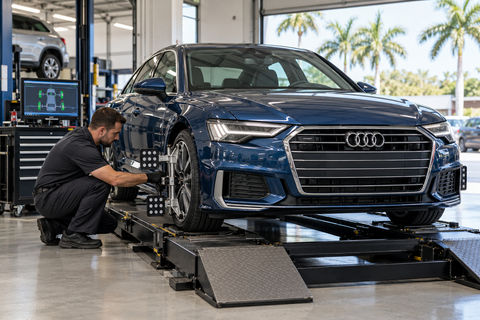
Learn what Audi suspension warning signs can mean, why alignment alone may not solve impact damage, and when to request professional diagnosis in Hollywood, FL.
An Audi should track predictably, absorb bumps without harsh impacts, and maintain stable control during braking and cornering. If your Audi begins pulling, clunking, vibrating, sitting unevenly, or feeling unstable after a pothole, curb strike, or collision, reduce speed and arrange an inspection. Continuing to drive with a damaged suspension or wheel can increase tire wear and affect vehicle control.
Audi suspension designs vary by model, year, drivetrain, and equipment. An A4 sedan, Q5 SUV, A8 with available air suspension, and an S or RS model may require different inspection points, procedures, parts, and electronic checks. Diagnosis should begin with the exact vehicle identification and the conditions that reproduce the concern.
When an Audi suspension concern needs prompt attention
Avoid driving and arrange safe transport if a wheel appears displaced, a tire contacts the body, the vehicle sits unusually low, steering feels unstable, a severe noise began after an impact, or a red suspension or chassis warning appears. These conditions can affect control or cause additional tire, wheel, brake, steering, or body damage.
Common Audi suspension warning signs
Clunking, knocking, squeaking, or rattling over bumps
Pulling or drifting to one side
A steering wheel that is no longer centered
Vibration through the steering wheel, seat, or body
One corner sitting higher or lower than the others
Excessive bouncing, harshness, or reduced body control
Uneven or rapid tire wear
A wheel that appears farther forward, rearward, or inward than the opposite side
Changes in ride height after parking or overnight
A suspension, chassis, damping, or level-control warning
Fluid near a shock, strut, hydraulic line, or related component
A symptom helps narrow the test plan, but it should not be used to order parts before the cause is confirmed.
Why an Audi may develop suspension problems
Worn or loose mechanical components
Control arms, bushings, ball joints, links, mounts, bearings, shocks, struts, springs, and related hardware help control wheel position and vehicle movement. Wear or looseness may create noise, imprecise steering, poor body control, or uneven tire wear. The exact component layout differs across Audi platforms and trim levels.
Wheel and tire damage
A bent wheel, damaged tire, incorrect pressure, or mismatched tire condition can create vibration or pulling that feels like a suspension problem. The wheel and tire should be inspected together with the hub, steering, and surrounding suspension—especially after a pothole or curb impact.
Pothole, curb, and collision forces
An impact at the wheel can transmit force into the hub, control arms, steering links, strut, subframe, and structural mounting areas. Damage may extend beyond the part closest to the impact even when exterior body damage appears limited. Comparing left and right geometry can help identify displacement.
Adaptive damping or electronically controlled suspension
Depending on the Audi model and equipment, the vehicle may use adaptive dampers, ride-height sensors, electronically controlled valves, or other chassis controls. A warning or unexpected change in ride quality may involve wiring, sensors, control logic, calibration, or a mechanical fault. Fault codes and live data should be interpreted together with physical inspection.
Air-suspension concerns where equipped
Some Audi configurations use air springs, a compressor, valve blocks, reservoirs, height sensors, lines, and electronic controls. A vehicle that lowers at one corner, takes too long to rise, runs the compressor frequently, or displays a level-control warning needs diagnosis. Replacing a compressor without checking for leakage, power supply, sensor input, and system demand may leave the cause unresolved.
Why the exact Audi model matters
Audi vehicles do not share one suspension design. Sedan, coupe, performance, SUV, allroad, and air-suspension configurations can use different arms, spring and damper arrangements, ride heights, wheel packages, alignment procedures, and electronic functions. A repair plan for an A4 should not be assumed to apply to a Q7, A8, e-tron, or RS model. Model year, drivetrain, options, and prior repair history should guide the process.
What to do after hitting a pothole or curb
Move the vehicle to a safe location and look for tire damage, a visibly tilted or displaced wheel, leaking fluid, loose parts, or contact between the tire and body. Do not crawl beneath a vehicle that is not correctly supported.
Before contacting a repair facility, record:
The Audi model, year, mileage, and drivetrain if known
Which wheel was involved and the direction of the impact
When the noise, pull, vibration, or warning began
Whether the symptom changes while braking, turning, accelerating, or crossing bumps
Any recent tire, wheel, alignment, suspension, or collision work
Dashboard messages and whether they return after restarting
Photographs of the wheel, tire, adjacent body, and visible ride height
If the incident may become an insurance claim, keep photographs, estimates, claim information, and earlier repair records together. Coverage depends on the cause, policy, and insurer’s determination.
Why alignment may not be the first repair
Wheel-alignment measurements describe wheel angles; they do not explain why an angle is outside specification. A bent arm, damaged wheel, worn bushing, shifted subframe, damaged strut, distorted mounting point, or incorrect ride height may prevent the Audi from holding a stable alignment.
Components, tires, ride height, and mounting areas should be inspected before final alignment. Otherwise, the vehicle may continue to pull, wear tires unevenly, or lose the adjustment.
How a professional Audi suspension inspection should proceed
A complete process may include:
Confirming the exact Audi model, year, drivetrain, options, wheel size, and suspension type
Reproducing the symptom during a controlled road test when safe
Inspecting tires and wheels for damage, pressure, wear, runout, or imbalance
Checking steering and suspension components for looseness, wear, deformation, leakage, or incorrect installation
Comparing wheel position, ride height, and left-to-right component geometry
Inspecting subframes and structural mounting areas after an impact
Scanning relevant modules for suspension, steering, braking, or chassis faults
Reviewing ride-height sensor data, damper commands, and compressor behavior where equipped
Measuring wheel alignment after damaged or worn components are addressed
Performing required initialization, calibration, or adaptation for the exact configuration
Completing a post-repair road test and rechecking warnings, ride height, and alignment stability
The sequence matters. Replacing a component or performing alignment before confirming the cause can increase cost and leave the original complaint unresolved.
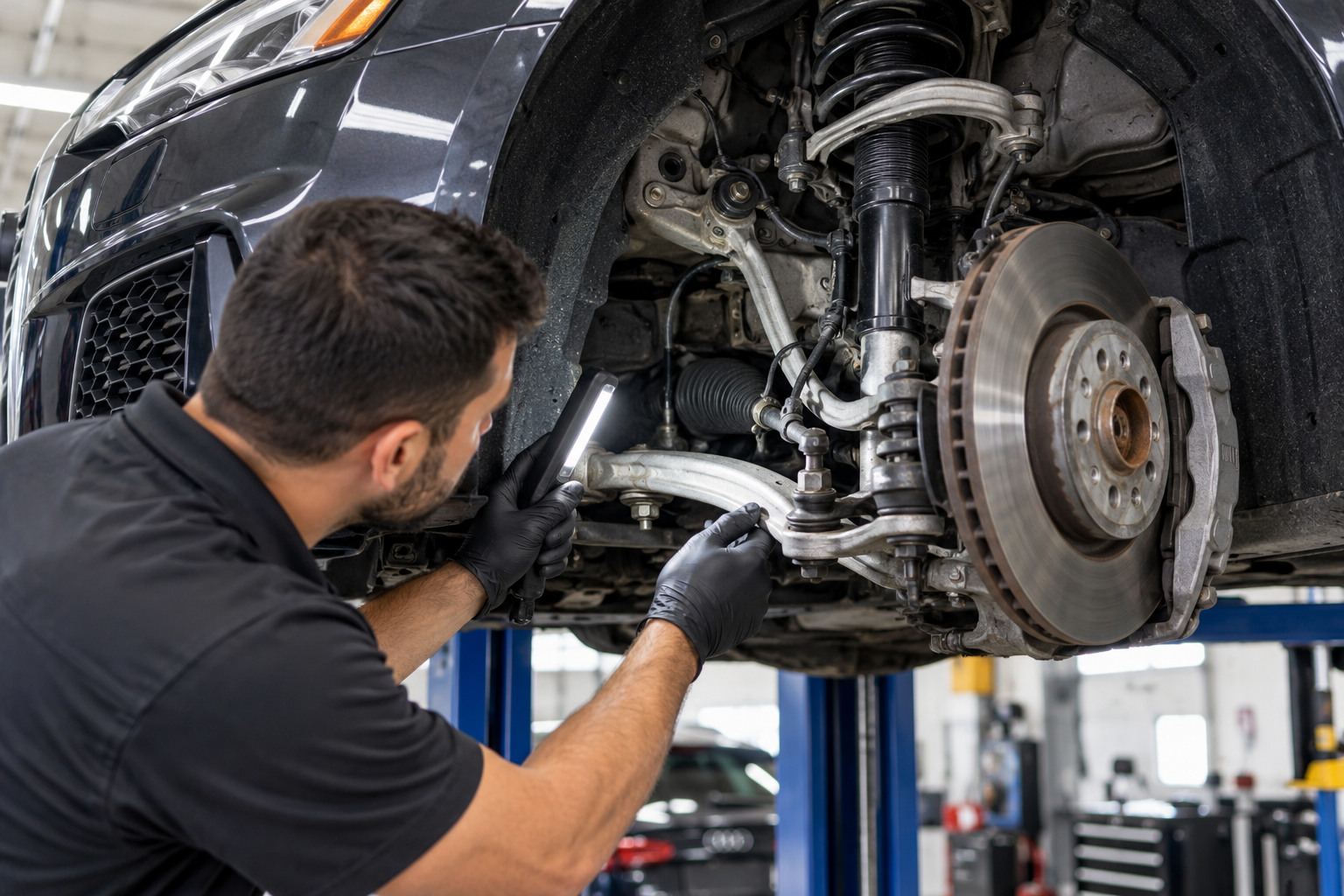
Collision-related suspension and structural damage
A wheel impact can affect more than the suspension. Loads can travel into the subframe, body structure, wheelhouse, steering system, and mounting points. New tire contact, uneven gaps, door or fender changes, or a wheel that no longer centers in the opening may indicate damage beyond a normal alignment issue.
A coordinated collision repair inspection can determine whether the concern is isolated to replaceable suspension parts or connected to surrounding structure. Correct body and mounting geometry is important before final alignment and calibration.
Repair options depend on the confirmed fault
The correct repair may involve replacing a damaged wheel or tire, servicing worn bushings or joints, replacing a bent arm, shock, strut, spring, link, sensor, or bearing, repairing wiring, correcting subframe position, addressing an air leak, or replacing another verified failed component. Fasteners, one-time-use hardware, ride-height procedures, alignment, and calibration requirements depend on the exact Audi and repair information.
Frequently asked questions
Can a pothole knock an Audi out of alignment without bending a part?
Yes, alignment can change without an obviously bent component. However, the surrounding wheel, tire, steering, suspension, and mounting areas should still be inspected before adjustment.
Why does my Audi clunk over small bumps?
A clunk may involve links, bushings, joints, mounts, dampers, loose hardware, or another component. The location and conditions of the noise help guide inspection but do not identify the cause by themselves.
Why does my Audi sit lower on one side?
Possible causes include spring, damper, air-suspension, sensor, mounting, load, or structural concerns depending on the configuration. Avoid assuming that the air spring or compressor is the only possible cause.
Does quattro change suspension diagnosis?
Audi quattro models still require the same basic checks, but drivetrain layout, wheel and tire matching, subframe configuration, and model-specific procedures may affect diagnosis and repair. The exact vehicle configuration should be identified first.
How long does Audi suspension repair take?
Diagnosis and repair time depend on the fault, impact history, suspension type, access, parts availability, alignment condition, and any required calibration. An inspection is needed before a reliable schedule can be provided.
Schedule Audi suspension diagnosis in Hollywood, FL
Car Geeks Collision helps Audi owners in Hollywood and surrounding South Florida communities evaluate suspension symptoms, pothole and curb impacts, collision-related damage, wheel alignment concerns, and adjacent structural issues. The first step is to identify the cause before recommending a repair.
If your Audi is pulling, clunking, vibrating, sitting unevenly, or showing a chassis warning, request an estimate and share the model, year, recent impact or repair history, and when the symptom occurs. That information helps the diagnostic process begin efficiently.